
Riga's Art Nouveau District: A Self-Guided Architectural Tour
Step into a living museum as you explore Riga's stunning Art Nouveau district, a UNESCO World Heritage site renowned for its extraordinary architectural heritage. This self-guided tour invites you to wander through streets adorned with elaborate facades, revealing the city's turn-of-the-century elegance and artistic innovation.
Discovering Riga's Architectural Gem
Riga boasts one of the world's finest collections of Art Nouveau architecture, with an estimated 800 buildings showcasing this distinctive style. Flourishing between 1900 and 1914, the movement coincided with a period of rapid economic growth and urban expansion in Riga, then a major port city of the Russian Empire. This allowed architects to experiment freely, resulting in a unique blend of local traditions and international trends.
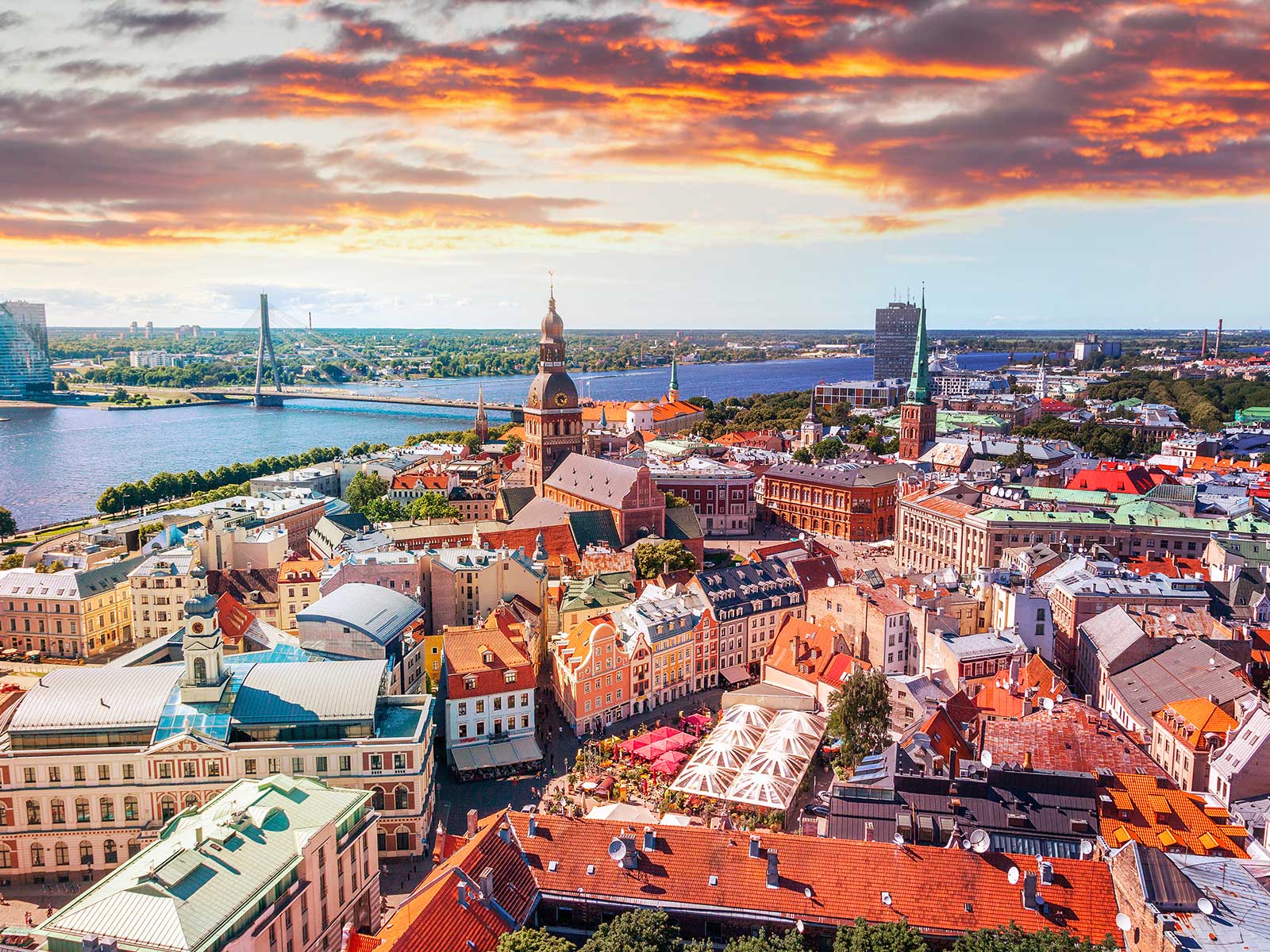
While the historic Old Town Riga captivates with its medieval charm, the Art Nouveau district, often referred to as the "Quiet Centre," offers a dramatically different aesthetic experience. Here, every building tells a story through its intricate details, from mythical creatures and floral motifs to geometric patterns and expressive human figures.
A Brief History of Art Nouveau in Riga
At the turn of the 20th century, Riga experienced unprecedented expansion. The city walls had been dismantled, opening up vast areas for new development. This coincided with the rise of Art Nouveau (or Jugendstil, as it was known in German-speaking areas), an artistic movement that rejected the academic historicism of the 19th century in favor of organic forms, asymmetry, and a synthesis of various arts.
Riga's Art Nouveau architects, many of whom studied in Germany or had strong links to European design schools, adapted the style to local conditions. Three main strands emerged: the highly decorativeEclectic Art Nouveau, the more streamlinedPerpendicular Art Nouveau, and the nationally inspiredNational Romantic Art Nouveau. This rich diversity makes Riga's collection particularly fascinating and a must-see for any architecture enthusiast.
Did you know?Approximately one-third of all buildings in Riga's city center are built in the Art Nouveau style, making it one of the highest concentrations globally. This remarkable heritage contributes significantly to Riga's status as a UNESCO World Heritage site.
Preparing for Your Self-Guided Tour
Embarking on your self-guided architectural tour is straightforward. The Art Nouveau district is compact and easily walkable.
- Best Time to Visit:Spring, summer, and early autumn offer pleasant walking weather. Clear skies enhance photography, allowing the elaborate facades to truly shine.
- What to Wear:Comfortable walking shoes are essential, as you'll be on your feet for several hours.
- Starting Point:A good place to begin is near the Freedom Monument, then head north towards Elizabetes iela and Alberta iela. Alternatively, start directly on Alberta iela for an immediate immersion.
- Tools:A smartphone with a map application will be helpful. Consider downloading an offline map if you anticipate limited data access.
Key Streets and Architectural Masterpieces
The heart of Riga's Art Nouveau district lies within a few key streets. Take your time, look up, and observe the incredible detail on each building.
Alberta iela (Albert Street)
Alberta iela is arguably the most famous and visually striking street in the district, a true open-air museum. Dominated by the works of Mikhail Eisenstein (father of film director Sergei Eisenstein), these buildings are a prime example ofEclectic Art Nouveau, characterized by lavish ornamentation, vibrant colors, and often dramatic, symbolic figures.
- Alberta iela 2a:Known for its striking blue facade, sphinxes, and busts.
- Alberta iela 4:Features grotesque masks, peacocks, and intricate friezes.
- Alberta iela 6:A masterpiece by Eisenstein, with its bold geometric and floral patterns, and expressive female figures.
- Alberta iela 8:Another Eisenstein creation, notable for its large sculptural figures and contrasting textures.
- Alberta iela 12:This building houses the Riga Art Nouveau Centre, offering insights into the period's interiors and providing context for your exterior tour.
Elizabetes iela (Elizabeth Street)
Running parallel to Alberta iela, Elizabetes iela showcases a broader spectrum of Art Nouveau styles, including many excellent examples ofPerpendicular Art Nouveau. These buildings often feature more restrained, vertical lines, geometric forms, and a sense of monumental elegance.
- Elizabetes iela 10b:Designed by Eisenstein, this building is a riot of blue, white, and yellow, adorned with mythological creatures and stylized forms. It stands out even among its decorated neighbors.
- Elizabetes iela 33:A fine example of the more geometric and vertical style, with clean lines and decorative elements integrated seamlessly into the structure.
Strelnieku iela (Riflemen Street)
Connecting Alberta and Elizabetes iela, Strelnieku iela offers more splendid examples, often by architects like Konstantīns Pēkšēns and Eižens Laube, who contributed significantly to theNational Romanticstyle.
- Strelnieku iela 4a:A beautiful example combining Art Nouveau elements with a more traditional, rustic feel, indicative of National Romanticism.
- Strelnieku iela 4b:Features a striking combination of brick and plaster, with unique window shapes and decorative motifs.
Other Notable Streets
Don't limit yourself solely to these main arteries. Venture slightly off the beaten path to explore buildings onAntonijas iela,Dzirnavu iela, andVilandes iela, where you'll discover more hidden gems and varying interpretations of the Art Nouveau aesthetic.
Understanding Riga's Art Nouveau Styles
While exploring, you'll begin to notice the distinct characteristics of the three primary Art Nouveau styles prevalent in Riga:
- Eclectic (Decorative) Art Nouveau:This early and most flamboyant style is characterized by its rich, often excessive ornamentation. Look for flowing organic lines, mythological figures, animal motifs (especially lions, owls, and sphinxes), and vibrant colors. Mikhail Eisenstein's works are the quintessential examples.
- Perpendicular (Vertical) Art Nouveau:Emerging slightly later, this style adopted a more rational and geometric approach. Facades emphasize verticality, often through tall, narrow windows and pilasters. Ornamentation is present but more integrated and less overtly "applied," focusing on symmetry and structural clarity.
- National Romantic Art Nouveau:A distinctly Latvian interpretation, this style drew inspiration from local folk art, medieval architecture, and natural materials like rough-hewn stone, brick, and timber. Motifs often include stylized pinecones, squirrels, and ethnographic symbols. These buildings often have a more robust, fortress-like appearance, departing from the typical smooth curves of international Art Nouveau. While concentrated elsewhere, you'll find examples integrated into the district.
Beyond the Facades: A Glimpse Inside
While many of Riga's Art Nouveau buildings are private residences or offices, some offer a peek inside. The Riga Art Nouveau Centre(Alberta iela 12) provides a restored apartment interior, showcasing the period's furnishings and domestic design. It's an excellent way to complement your exterior tour and understand the complete Art Nouveau experience.
Tips for an Enriching Experience
- Look Up and Down:Don't just focus on eye-level details. Many of the most intricate sculptures and patterns are found above windows, on cornices, and even on the ground-level entrances.
- Patience is Key:Allow yourself ample time to truly appreciate the craftsmanship. Rushing through will diminish the experience.
- Photography:The district is incredibly photogenic. Experiment with angles and close-ups to capture the unique details.
- Combine Your Visit:After immersing yourself in Art Nouveau, consider a leisurely stroll back to Old Town Riga for a completely different historical perspective, or explore other Latvian gems like the majestic Rundale Palace further afield. If you're looking for natural beauty,Gauja National Park offers stunning landscapes and historic castles like those in Cesis.
Conclusion
Riga's Art Nouveau district is more than just a collection of buildings; it's a testament to an era of artistic innovation, economic prosperity, and cultural identity. By taking this self-guided tour, you're not just observing architecture; you're stepping into a vibrant chapter of Latvian history. Prepare to be captivated by the sheer beauty and imaginative power of this extraordinary urban landscape.