
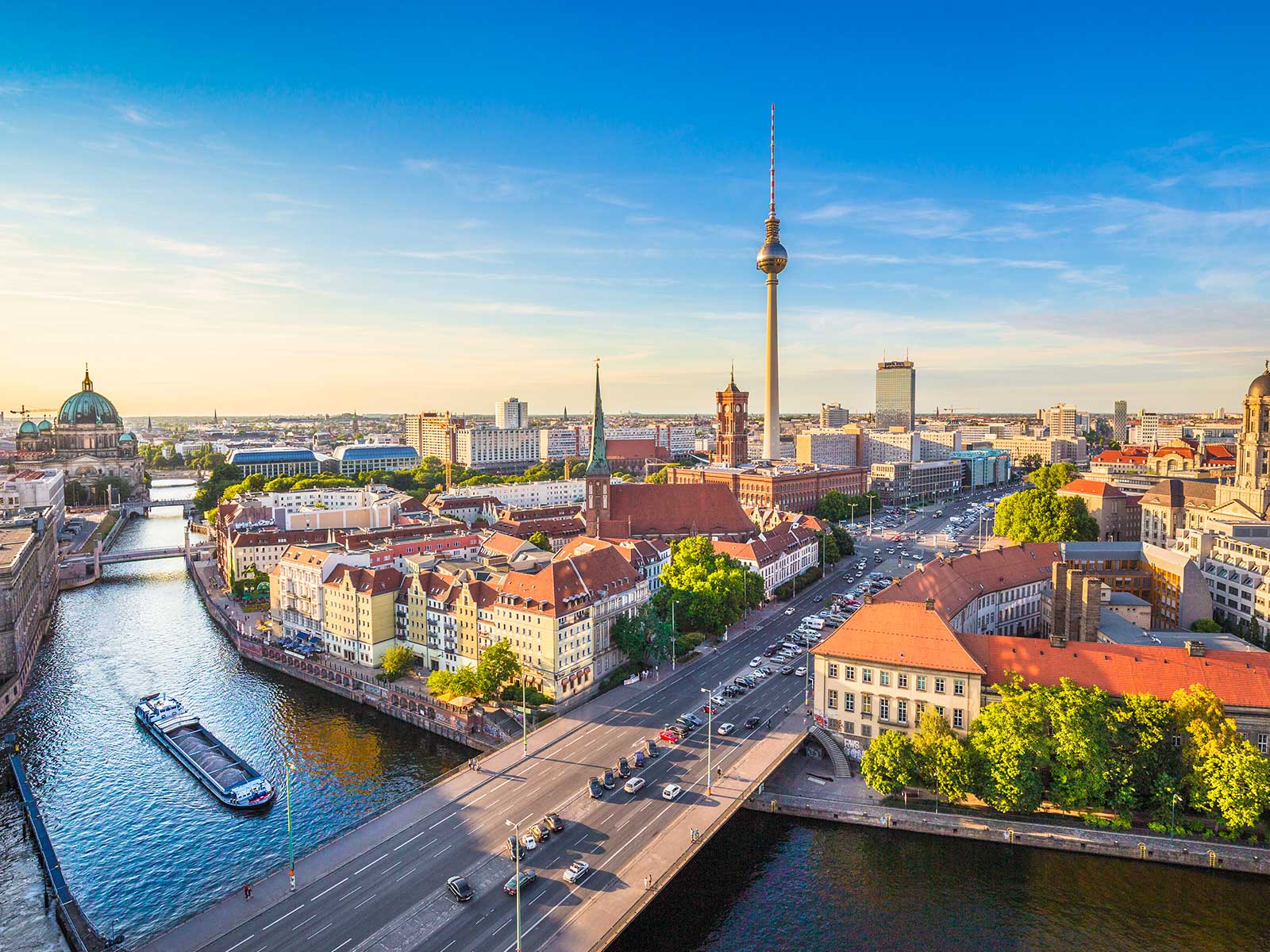
A Brief History of Germany for Tourists: From Ancient to Modern
Germany, a land of enchanting castles, vibrant cities, and picturesque landscapes, boasts a history as rich and complex as its diverse regions. Understanding its past is key to appreciating the layers of culture, architecture, and traditions you'll encounter on your travels. Join us on a journey through the pivotal moments that shaped modern Germany, from ancient tribal lands to a unified European powerhouse.
Ancient Roots & Roman Encounters (c. 1000 BC - AD 476)
Long before Germany existed as a unified nation, its territory was inhabited by various Germanic tribes. These tribes, known for their fierce independence and warrior culture, frequently clashed with the expanding Roman Empire. While the Romans established provinces and built fortifications like the Limes along the Rhine and Danube rivers, they never fully conquered the lands east of the Rhine.
One of the most significant events was the Battle of Teutoburg Forest in AD 9, where a coalition of Germanic tribes annihilated three Roman legions, effectively halting Roman expansion into Magna Germania. Today, cities like Cologne trace their origins back to Roman settlements, with remnants of Roman walls and mosaics still visible. The majestic Cologne Cathedral, though built much later, stands on ground with a deep Roman past, reminding visitors of the city's ancient roots.
The Holy Roman Empire: A Millennium of Decentralization (AD 800 - 1806)
The Middle Ages saw the emergence of the Holy Roman Empire, a sprawling entity that dominated Central Europe for over a thousand years. Its origins are often tied to Charlemagne, crowned Emperor in 800 AD, whose vast Frankish Empire laid the groundwork. However, it was Otto I, crowned Emperor in 962 AD, who solidified the German branch of this empire.
Unlike a modern nation-state, the Holy Roman Empire was a patchwork of hundreds of smaller states, duchies, bishoprics, and free imperial cities, each with considerable autonomy. This decentralization gave rise to a rich diversity of regional cultures and architectural styles. Medieval towns like Quedlinburg, with its UNESCO-listed half-timbered houses, and the remarkably preserved Rothenburg ob der Tauber, offer vivid glimpses into this era. The powerful princes and electors built magnificent residences like Schwerin Castle, testament to their independent might.
The Reformation, sparked by Martin Luther in the early 16th century, dramatically reshaped the religious and political landscape. This religious upheaval contributed to the devastating Thirty Years' War (1618-1648), which left much of Germany ravaged and further fragmented. The Empire finally dissolved in 1806 under pressure from Napoleon Bonaparte.
Travel Tip:When exploring historic towns like Munich Old Town or Heidelberg Old Town, look for clues of their medieval past – winding streets, ancient fortifications, and grand marketplaces often tell tales of their Holy Roman Empire origins.
From Fragmentation to Unification: The Rise of a Nation (19th Century)
Following the Holy Roman Empire's dissolution, Germany remained a collection of independent states, albeit loosely organized into the German Confederation. The 19th century was marked by growing nationalism and the increasing dominance of Prussia, a powerful and militaristic kingdom in the north.
Under the astute leadership of Otto von Bismarck, Prussia spearheaded a series of wars that ultimately led to the unification of Germany. The Franco-Prussian War (1870-1871) proved to be the final catalyst, culminating in the proclamation of the German Empire in 1871, with the Prussian King Wilhelm I as Emperor. This new nation quickly industrialized, becoming a major economic and military power in Europe.
Visitors can still experience the grandeur of this era. The iconic Neuschwanstein Castle, though built by King Ludwig II of Bavaria before full unification, embodies the romantic nationalism of the period. In Potsdam,Sanssouci Park and its palaces reflect the artistic and intellectual aspirations of the Prussian monarchs who laid the groundwork for the unified state.
The 20th Century: Turmoil, Division, and Rebirth
World Wars and the Weimar Republic
The 20th century was a period of immense upheaval for Germany. The newly unified nation's ambitions contributed to the outbreak of World War I (1914-1918), which ended in defeat and the abdication of the Kaiser. The subsequent Weimar Republic, Germany's first democratic government, faced economic hardship, political instability, and hyperinflation, yet also fostered a vibrant cultural and artistic scene in cities like Berlin.
Nazi Germany and World War II
The fragility of the Weimar Republic paved the way for the rise of Adolf Hitler and the Nazi Party in the 1930s. This dark chapter saw the systematic persecution and murder of millions during the Holocaust and the initiation of World War II (1939-1945), a conflict that devastated much of Europe and resulted in Germany's catastrophic defeat.
Post-War Division and the Cold War
After World War II, Germany was divided into four Allied occupation zones, which soon solidified into two separate states: West Germany (Federal Republic of Germany) and East Germany (German Democratic Republic). Berlin, similarly divided, became a focal point of the Cold War. The construction of the Berlin Wall in 1961 dramatically symbolized this division, separating families and communities for nearly three decades. The Brandenburg Gate, once a symbol of division, now stands as a powerful emblem of unity.
Did You Know?Berlin's Museumsinsel(Museum Island) was severely damaged during World War II but has been meticulously restored, showcasing Germany's commitment to preserving its cultural heritage despite the ravages of conflict.
Reunification and Modern Germany (1990 - Present)
The late 1980s saw growing unrest in East Germany, culminating in mass protests and the peaceful fall of the Berlin Wall on November 9, 1989. Less than a year later, on October 3, 1990, Germany was officially reunified. This momentous event marked the end of the Cold War division and heralded a new era for the country.
Today, Germany is a unified, democratic, and prosperous nation, a leading member of the European Union, and a major player on the world stage. It has embraced its complex history, memorializing its past while looking towards a future of innovation and cultural exchange. From the reconstructed beauty of Dresden Old Town to the vibrant, modern pulse of Berlin, visitors can witness the resilience and evolution of a nation that has continually redefined itself.
Exploring Germany means journeying through these layers of history. Whether you're standing amidst ancient Roman ruins, wandering through medieval alleyways, or contemplating the remnants of the Cold War, each experience offers a deeper understanding of this fascinating country. So pack your bags and prepare to uncover the stories that make Germany an unforgettable destination.