
The Fascinating History of Azerbaijan for Tourists
Nestled at the crossroads of Europe and Asia, Azerbaijan boasts a history as rich and diverse as its landscapes. From ancient civilizations to powerful empires and its modern resurgence, this "Land of Fire" offers a captivating journey through time for every curious traveler. Understanding its past is key to appreciating the vibrant culture and architectural marvels you'll encounter today.
Ancient Roots: From Stone Age to Fire Worship
Azerbaijan's story begins deep in prehistory, with evidence of human settlement dating back hundreds of thousands of years. The most compelling testament to this ancient past can be found in Qobustan, a UNESCO World Heritage site where thousands of petroglyphs depict life from the Upper Paleolithic to the Middle Ages. These rock carvings offer a unique window into the rituals, hunting practices, and daily existence of early inhabitants.
The region's abundant natural gas reserves led to phenomena like eternal flames, shaping its spiritual landscape. This gave rise to Zoroastrianism, one of the world's oldest monotheistic religions, which revered fire as a symbol of divine purity. You can witness this enduring legacy at sites like Yanar Dag, the "Burning Mountain," where natural gas fires have blazed continuously for centuries, and the Ateshgah of Baku, a fire temple where Zoroastrians, Hindus, and Sikhs once worshipped.
Crossroads of Empires: A Tapestry of Influences
Strategically positioned along the ancient Silk Road, Azerbaijan became a magnet for various empires and cultures. Its territory was coveted and controlled by a succession of powerful entities, each leaving an indelible mark on its cultural fabric. Persians, Romans, Khazars, and Arabs all exerted influence over the centuries, contributing to a unique blend of traditions, languages, and architectural styles.
The arrival of Arab armies in the 7th century brought Islam, which gradually became the dominant religion and profoundly shaped Azerbaijani society. Mosques, madrasahs, and Islamic scholarly traditions flourished. Later, Turkic tribes migrated to the region, eventually leading to the Turkification of the local population and the development of the Azerbaijani language, a member of the Turkic language family.
The Rise of Local Dynasties: Shirvanshahs and Beyond
Despite periods of foreign domination, local Azerbaijani dynasties often asserted their independence. One of the most significant was the Shirvanshahs, who ruled for nearly a thousand years, from the 9th to the 16th centuries. Their capital, Baku, prospered under their patronage, evolving into a major cultural and commercial hub.
The architectural masterpiece of their reign is undoubtedly The Palace of Shirvanshahs, a UNESCO-listed complex located within Icherisheher, Baku's Old City. This stunning ensemble of palaces, mosques, and mausoleums offers an unparalleled glimpse into medieval Azerbaijani statehood and artistry. Walking through its ancient streets feels like stepping back in time.
Travel Tip:Don't just visit The Palace of Shirvanshahs; explore the entire Icherisheher. Its labyrinthine alleys reveal hidden caravanserais, bathhouses, and ancient mosques, each telling a story of centuries past.
Beyond Baku, other regional powers emerged. The city of Sheki, nestled in the Greater Caucasus mountains, became a significant khanate in the 18th century, renowned for its craft traditions and Silk Road trade. The magnificent Sheki Khan's Palace, with its exquisite stained glass and intricate frescoes, is a testament to this period of local autonomy and artistic flourishing.
Under Imperial Rule: Russian and Soviet Eras
By the early 19th century, Azerbaijan found itself caught between the ambitions of the Russian and Persian Empires. Following a series of wars, the Russian Empire annexed most of Azerbaijani territory, profoundly altering its political and social landscape. The discovery of vast oil reserves in Baku in the late 19th century transformed the city into a booming industrial center, attracting workers and investors from across the globe. This "oil fever" fueled rapid modernization but also intensified geopolitical interest in the region.
After the collapse of the Russian Empire in 1917, Azerbaijan declared independence, establishing the Azerbaijan Democratic Republic (ADR) in 1918 – the first secular democratic republic in the Muslim world, granting women suffrage even before many Western nations. However, this independence was short-lived, as the Soviet Red Army invaded in 1920, incorporating Azerbaijan into the Soviet Union.
During the Soviet period, Azerbaijan underwent significant industrialization and secularization. While it lost its immediate political independence, it retained a distinct cultural identity. The Soviet era left its architectural and social imprints, many of which are still visible today. The Heydar Aliyev Center, though built in independent Azerbaijan, stands as a symbol of the nation's aspirations for a modern identity, distinct from its Soviet past while acknowledging its complex history.
Independent Azerbaijan: A Modern Nation Reborn
With the dissolution of the Soviet Union in 1991, Azerbaijan once again declared its independence. This new era marked a period of nation-building, economic development, and cultural revival. The country embarked on a path of modernization, leveraging its rich natural resources and strategic location to re-establish itself on the global stage.
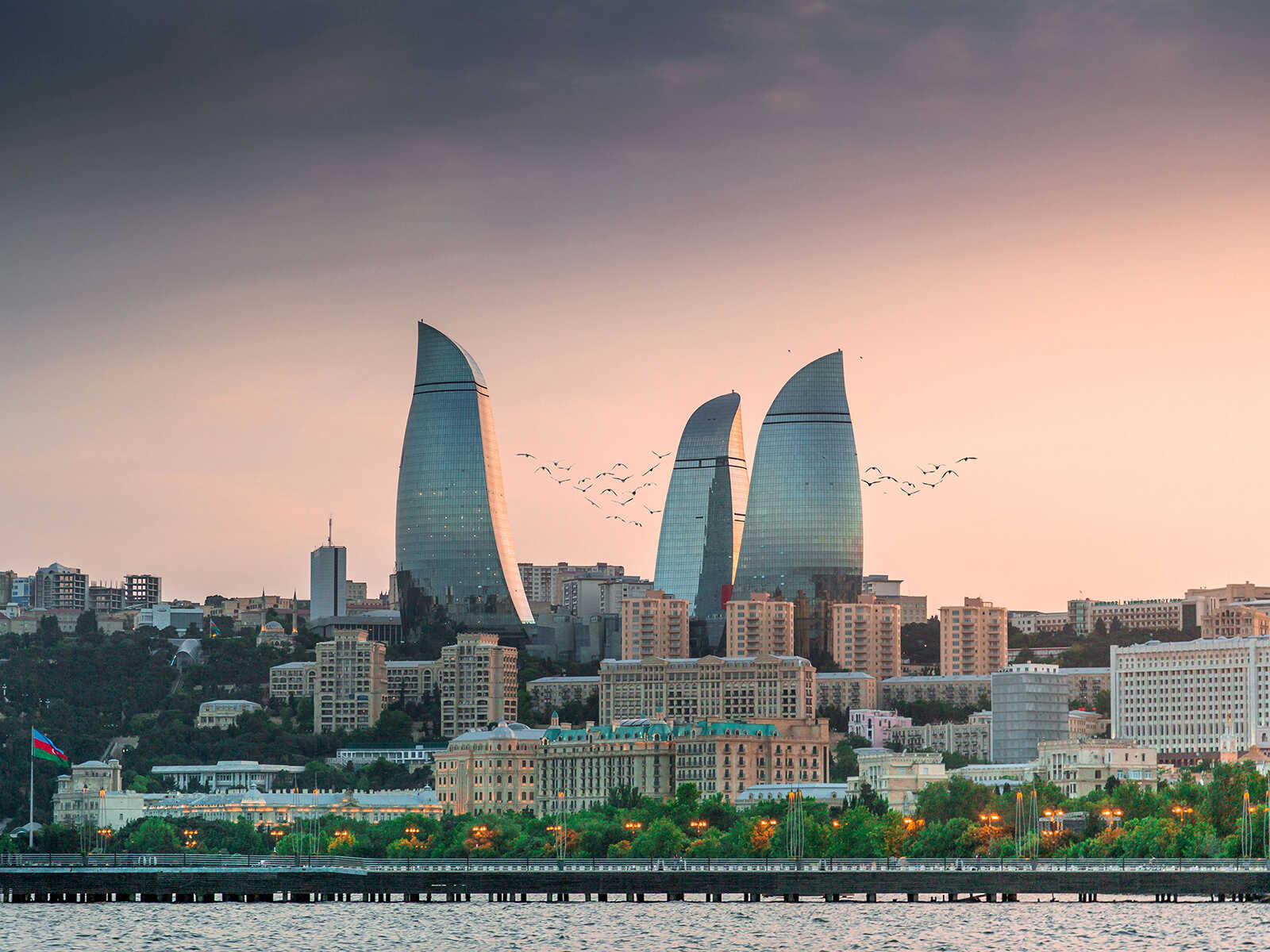
Today, Azerbaijan is a vibrant, forward-looking country that proudly embraces its diverse heritage. From the gleaming skyscrapers of Baku to the ancient villages like Khinalug, where unique languages and traditions persist, the nation is a fascinating blend of old and new. The Caspian Sea continues to be a vital economic and cultural artery, and modern developments like the Seaside boulevard offer a glimpse into contemporary Azerbaijani life.
Experiencing History Today: What Tourists Can See
For tourists, Azerbaijan's history is not confined to museums; it's alive in its cities, landscapes, and people. You can:
- Explore Ancient Civilizations:Wander among the petroglyphs of Qobustan and feel the spiritual pull of Yanar Dag and the Ateshgah Fire Temple.
- Walk Through Medieval Grandeur:Lose yourself in the UNESCO-listed Icherisheher, home to The Palace of Shirvanshahs, and marvel at the intricate artistry of the Sheki Khan's Palace.
- Witness Imperial Legacies:See the grand architecture from the Russian oil boom era in Baku's city center, and reflect on the Soviet past through various monuments and buildings.
- Discover Modern Aspirations:Admire the futuristic architecture of the Heydar Aliyev Center and the impressive scale of the Heydar Mosque, symbols of contemporary Azerbaijan.
Azerbaijan's past is a compelling narrative of resilience, cultural synthesis, and constant renewal. By delving into its history, visitors gain a deeper appreciation for this dynamic country and its unique place in the world.