
Azerbaijan's Architectural Wonders: From Ancient to Modern
Azerbaijan, a land where East meets West, offers a captivating journey through architectural history. Its structures tell tales of ancient civilizations, medieval empires, oil booms, and a bold modern vision, creating a unique tapestry of styles that beckons exploration.
A Journey Through Time: Azerbaijan's Architectural Heritage
The architectural landscape of Azerbaijan is a living museum, reflecting millennia of cultural exchange and innovation. From prehistoric rock carvings to the intricate designs of Silk Road caravanserais, each era has left an indelible mark on the country's built environment.
Echoes of Antiquity: Petroglyphs and Early Settlements
The earliest architectural expressions in Azerbaijan date back thousands of years. The UNESCO World Heritage site of Qobustan provides a remarkable glimpse into prehistoric life, with over 6,000 rock carvings depicting ancient humans, animals, battle scenes, and ritual dances. While not "architecture" in the traditional sense, these petroglyphs offer profound insight into the artistic and communal life of early inhabitants, often found near ancient cave dwellings and settlements that formed the first human-made structures.
Medieval Masterpieces: Fortresses, Palaces, and Caravanserais
The medieval period saw the rise of sophisticated urban centers and defensive structures. Nowhere is this more evident than in Baku's Icherisheher, the Old City, a UNESCO World Heritage site. Encased within ancient walls, it's a labyrinth of narrow streets, mosques, bathhouses, and residential buildings that transport visitors back in time. Dominating its skyline are two iconic structures:
- The Maiden Tower:A mysterious cylindrical fortress whose exact purpose and origin remain debated, standing as a powerful symbol of Baku.
- The Palace of Shirvanshahs:A 15th-century complex that served as the residence of the Shirvanshah dynasty, renowned for its intricate stone carvings, mausoleum, and royal baths. It represents a pinnacle of medieval Azerbaijani architecture, showcasing a blend of Islamic and local design elements.
Beyond Baku, the city of Sheki, another UNESCO site, offers its own architectural gems. The most prominent is theSheki Khan's Palace, a magnificent 18th-century structure famous for its elaborate stained-glass windows (shebeke) and exquisite frescoes, all constructed without a single nail. High in the Caucasus Mountains, the remote village of Khinalug presents a unique example of traditional mountain architecture, with houses built into the hillside, often stacked atop one another, offering a fascinating insight into resilient, self-sufficient communities.
Fun Fact:The intricateshebekewindows of the Sheki Khan's Palace are made from small pieces of colored glass and wood, fitted together without glue or nails, a testament to ancient craftsmanship.
The Zoroastrian and Fire Temple Influence
Azerbaijan's historical connection to fire worship, stemming from its natural gas reserves, significantly influenced its early architecture. The Ateshgah of Baku, a fire temple located on the Absheron Peninsula, is a prime example. This ancient religious complex, built by Indian fire-worshippers and local Zoroastrians, features a central altar with eternal flames, surrounded by cells for pilgrims. While Yanar Dag(Burning Mountain) is a natural phenomenon, its eternal flames likely inspired and reinforced the spiritual significance of fire, leading to the construction of such temples.
The Oil Boom Era: European Grandeur in Baku
The late 19th and early 20th centuries brought an unprecedented oil boom to Baku, attracting European industrialists and architects. This period transformed Baku into a cosmopolitan city, with grand boulevards and opulent mansions. Architectural styles such as Baroque, Neo-Gothic, Art Nouveau, and Eclecticism flourished, creating a unique fusion often referred to as "Baku Baroque" or "Oil Baroque." Many of these magnificent buildings, like the Azerbaijan State Philharmonic Hall or the Palace of Happiness, still adorn the city center, reflecting the wealth and ambition of the era.
Soviet Era Architecture: Functionalism and Monumentality
Under Soviet rule, architecture in Azerbaijan shifted towards functionalism and monumentalism. Large administrative buildings, grand squares, and extensive residential complexes were constructed. While often perceived as utilitarian, some Soviet-era structures showcased impressive mosaics, sculptures, and a distinctive aesthetic that aimed to reflect socialist ideals and national identity within a broader Soviet framework. Examples include the government house and various metro stations.
Modern Azerbaijan: Bold and Visionary Designs
The post-independence era has ushered in a new age of architectural innovation, particularly in Baku. The city's skyline has been dramatically redefined by ambitious, often futuristic designs that symbolize Azerbaijan's rapid modernization and global aspirations. Key examples include:
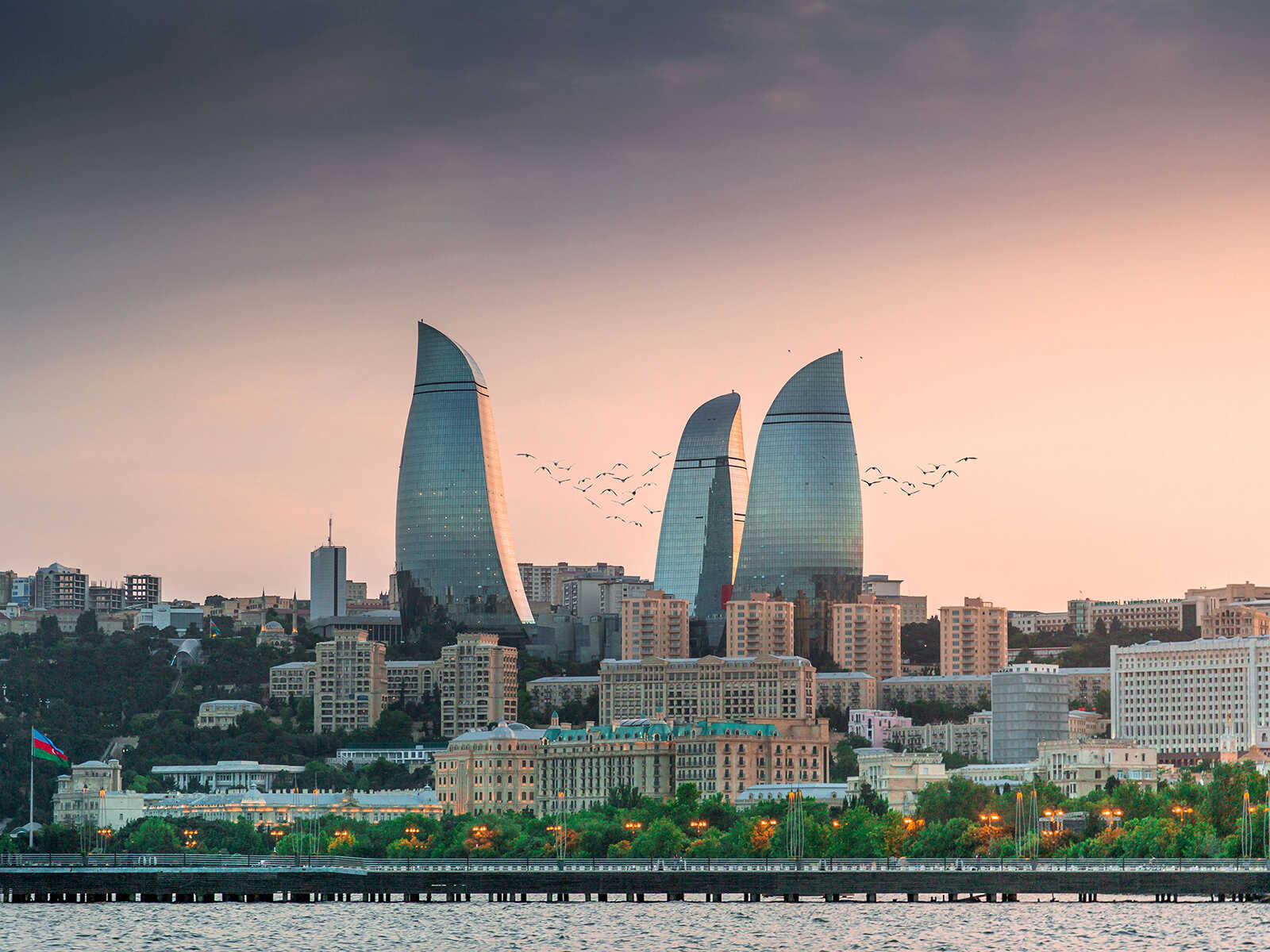
- The Flame Towers:Three iconic skyscrapers that dominate the Baku skyline, resembling flickering flames, especially when illuminated at night. They are a powerful symbol of Azerbaijan's "Land of Fire" heritage.
- Heydar Aliyev Center:A masterpiece of contemporary architecture designed by Zaha Hadid. Its fluid, wave-like forms are devoid of sharp angles, symbolizing a break from rigid Soviet architecture and embracing a futuristic vision. It hosts exhibitions, concerts, and cultural events.
- Heydar Mosque:One of the largest mosques in the Caucasus, completed in 2014. Its striking design blends traditional Azerbaijani and Islamic architectural elements with modern grandeur, featuring four towering minarets and intricate golden decorations.
- The Seaside Boulevard(Baku Boulevard):While not a single building, this extensive promenade along the Caspian Sea is an architectural and urban planning marvel, featuring modern parks, fountains, and contemporary structures that integrate seamlessly with the city's modern identity.
Travel Tip:To fully appreciate Baku's modern architecture, consider a night stroll along the Seaside Boulevard, when the Flame Towers and other illuminated buildings create a spectacular light show.
Practical Tips for Architectural Exploration
- Walking Tours:Many architectural wonders, especially in Icherisheher and the city center, are best explored on foot. Consider joining a guided tour for deeper insights.
- Comfortable Footwear:Be prepared for extensive walking, especially on cobblestone streets in the Old City.
- Photography:Azerbaijan's diverse architecture offers countless photographic opportunities. Early mornings or late afternoons provide the best light.
- Respect Local Customs:When visiting religious sites like mosques or fire temples, dress modestly (shoulders and knees covered) and remove your shoes if entering.
- Combine Eras:Plan your itinerary to experience both the ancient and modern sites to fully grasp Azerbaijan's architectural evolution.
Azerbaijan's architectural landscape is a testament to its rich history and dynamic future. From the ancient petroglyphs of Qobustan to the futuristic curves of the Heydar Aliyev Center, every building, wall, and design element tells a story, inviting visitors to uncover the layers of this fascinating crossroads of civilizations.