
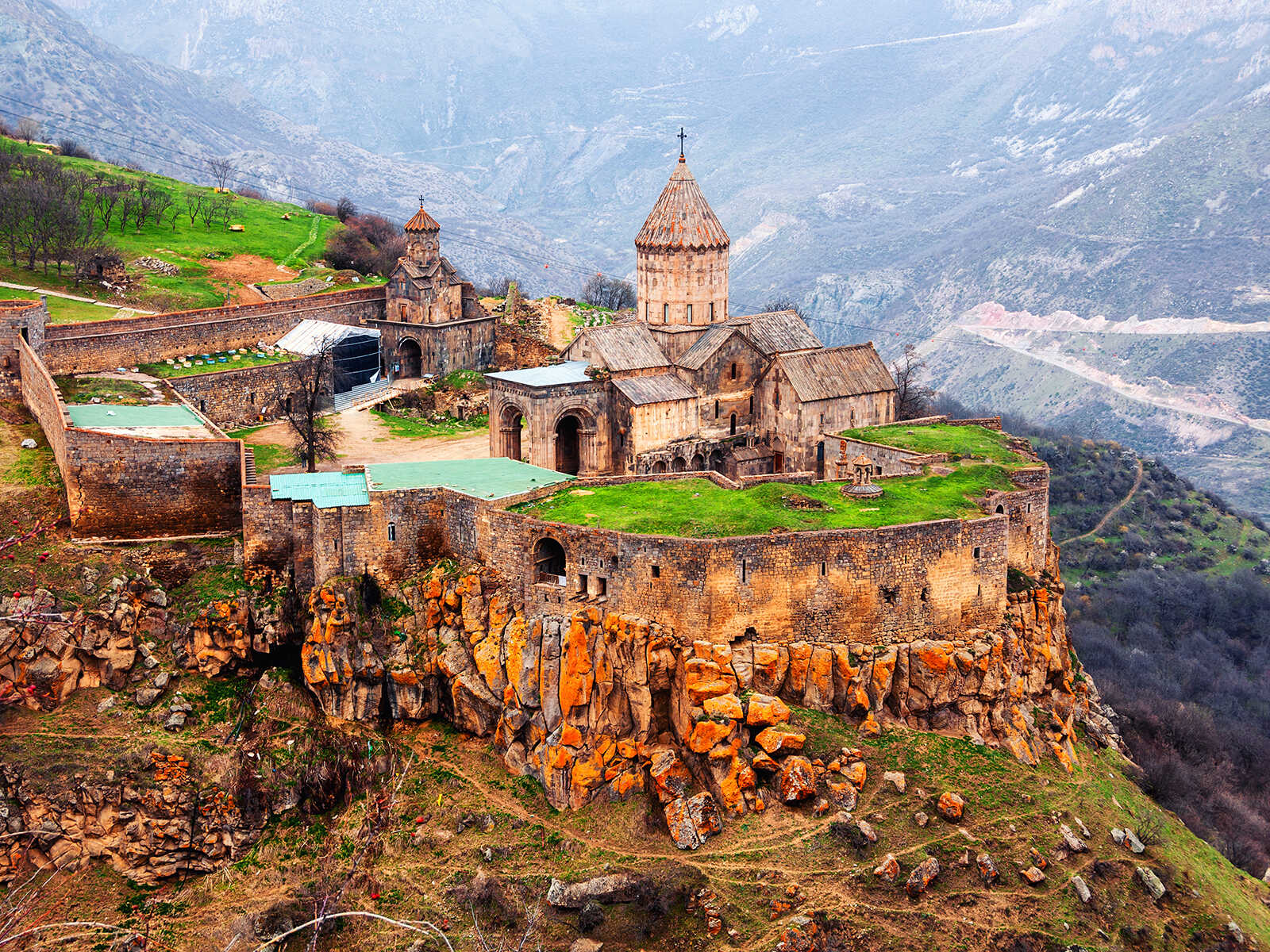
Zvartnots Cathedral Guide: Exploring Armenia's Ancient UNESCO Ruins
Step back in time to witness the grandeur of ancient Armenia at Zvartnots Cathedral, a magnificent 7th-century masterpiece now standing as a captivating ruin. This UNESCO World Heritage site offers a profound glimpse into the country's rich architectural and spiritual past, inviting travelers to explore its unique history and enduring legacy.
A Glimpse into the Past: History of Zvartnots Cathedral
Zvartnots Cathedral, often translated as "celestial angels," was constructed between 643 and 652 AD under the patronage of Catholicos Nerses III, known as "the Builder." This ambitious project was conceived during a period of significant architectural innovation in Armenia, intended to be a grand patriarchal cathedral and a new spiritual center for the Armenian Apostolic Church, possibly even to house holy relics brought from Constantinople.
The cathedral stood for approximately 300 years before a powerful earthquake in the 10th century tragically reduced it to ruins. For centuries, its remains lay buried, its exact form lost to memory until systematic excavations began in the early 20th century. Today, the excavated foundations and reconstructed lower sections offer a powerful testament to its original splendor.
Interesting Fact:The design of Zvartnots was so revolutionary for its time that it is believed to have influenced Byzantine and even Islamic architecture in subsequent centuries, demonstrating Armenia's significant contribution to early medieval art and construction.
Architectural Marvel and Innovation
What makes Zvartnots truly remarkable is its pioneering architectural design. It was one of the earliest examples of atetraconch with an ambulatory, meaning it featured a central circular core with four large apses (semicircular projections) radiating outwards, all enclosed within a larger circular wall. This complex plan was topped by a massive dome, supported by a system of arches and columns, creating a breathtaking three-tiered structure that soared towards the heavens.
The ruins reveal an astonishing level of craftsmanship. Intricate carvings adorn fallen capitals and column drums, depicting motifs like eagles, grapevines, pomegranates, and geometric patterns. These decorative elements not only served an aesthetic purpose but also conveyed symbolic meaning, reflecting the deep Christian faith and rich cultural heritage of Armenia.
The discovery of Zvartnots radically changed scholarly understanding of early Christian architecture, highlighting the originality and advanced engineering capabilities of Armenian builders during the "Golden Age" of Armenian architecture.
Exploring the Ruins and Museum
A visit to Zvartnots today is an immersive experience. As you wander through the excavated site, you'll encounter the robust foundations that outline the cathedral's unique circular plan, offering a tangible sense of its immense scale. Piles of intricately carved stone fragments, fallen columns, and capitals are scattered across the ground, inviting visitors to piece together the cathedral's former glory in their imagination.
Adjacent to the ruins is a well-curatedon-site museum. Here, detailed models and digital reconstructions help visualize the cathedral as it once stood, providing context to the ruins outside. The museum also houses various artifacts unearthed during excavations, including tools, pottery, and fragments of frescoes, offering deeper insights into the daily life and artistic practices of the 7th century. A notable exhibit includes a reconstruction of a wine press, indicating the presence of a monastic complex and vineyard.
Beyond the architectural marvel, the location of Zvartnots offers stunning panoramic views, particularly of the majestic Mount Ararat on clear days, adding a dramatic backdrop to this ancient site.
Planning Your Visit to Zvartnots
Location and Getting There
Zvartnots Cathedral is conveniently located approximately 15 kilometers west of Armenia's capital, Yerevan, and just a few kilometers east of Vagharshapat (Etchmiadzin), the spiritual center of the Armenian Church. Its proximity makes it an easy day trip from Yerevan.
- By Taxi/Ride-sharing:The most straightforward option from Yerevan. The ride typically takes 20-30 minutes.
- By Marshrutka (Minibus):You can take a marshrutka from Yerevan to Etchmiadzin, and then a short taxi ride will bring you to Zvartnots. This is a more budget-friendly option.
- Guided Tours:Many tour operators in Yerevan offer excursions that combine Zvartnots with Khor Virap Monastery and Garni Temple and Geghard Monastery, providing transportation and expert commentary.
Best Time to Visit
The most pleasant times to visit Zvartnots are during the spring (April-May) and autumn (September-October), when the weather is mild and the landscapes are lush or vibrant with fall colors. Summers (June-August) can be hot, so if visiting then, plan for early mornings or late afternoons to avoid the midday sun. Winters can be cold but offer a unique, stark beauty.
What to Bring
- Comfortable Walking Shoes:The site involves walking on uneven terrain.
- Water:Especially important during warmer months.
- Hat and Sunscreen:The site is largely open and exposed to the sun.
- Camera:For capturing the impressive ruins and views of Ararat.
- Cash:For entrance fees and any small purchases.
Combining Zvartnots with Other Armenian Treasures
Zvartnots Cathedral is often visited as part of a larger itinerary exploring Armenia's rich historical and cultural landscape. Its strategic location makes it an ideal starting point or addition to several popular routes:
- Etchmiadzin:The site is very close to Etchmiadzin Cathedral and the Mother See of Holy Etchmiadzin, the spiritual and administrative headquarters of the Armenian Apostolic Church. Combining these two sites offers a comprehensive look at Armenian Christian heritage.
- Yerevan:As a short drive from the capital, Zvartnots can easily be paired with exploring Yerevan's attractions like the Cascade Complex or the Republic Square.
- Khor Virap Monastery:Many tours link Zvartnots with a visit to Khor Virap Monastery, famous for its dramatic views of Mount Ararat, creating a powerful spiritual and scenic journey.
- Garni Temple and Geghard Monastery:For those on a full-day excursion, Zvartnots can be the first stop before heading east to the pagan Garni Temple and the rock-hewn Geghard Monastery.
The Enduring Legacy of Zvartnots
Despite its ruined state, Zvartnots Cathedral remains one of Armenia's most significant historical and architectural landmarks. Its designation as a UNESCO World Heritage site underscores its universal value and importance. It stands not merely as a testament to ancient Armenian ingenuity but also as a symbol of resilience, a silent witness to centuries of history, faith, and artistic achievement.
Visiting Zvartnots offers a unique opportunity to connect with Armenia's deep roots, to marvel at the innovation of its early medieval architects, and to reflect on the enduring power of human creation in the face of time and natural forces. It is an essential stop for anyone seeking to understand the spiritual and cultural heart of Armenia.