
The Rich History of Armenia: A Journey Through Time
Embark on an unforgettable journey through Armenia's ancient lands, where every stone tells a story of empires, faith, and resilience. As one of the world's oldest civilizations, Armenia offers a profound historical narrative that spans millennia, inviting travelers to explore its rich heritage firsthand.
Early Beginnings: From Urartu to the Kingdom of Armenia
Armenia's roots stretch deep into antiquity, with evidence of human habitation dating back to the Stone Age. The region was home to the powerful Kingdom of Urartu (9th-6th centuries BC), a formidable Iron Age state whose fortresses and artifacts still dot the landscape. Following Urartu's decline, the Armenian plateau saw the rise of various Armenian dynasties.
The classical Kingdom of Armenia reached its zenith underKing Tigran the Greatin the 1st century BC, expanding its empire from the Caspian Sea to the Mediterranean. This era saw significant cultural development, blending Hellenistic influences with indigenous traditions. Vestiges of this period include the remarkably preserved pagan Garni Temple, a Greco-Roman colonnaded structure dedicated to the sun god Mihr, which stands as a testament to Armenia's pre-Christian past.
The Dawn of Christianity: A Nation Reborn
A pivotal moment in Armenian history, and indeed world history, occurred in 301 AD when Armenia officially adopted Christianity as its state religion, becoming the first nation to do so. This transformative decision irrevocably shaped the nation's identity, culture, and architecture.
Did you know?Armenia's adoption of Christianity predates that of the Roman Empire by several decades, marking a unique early commitment to the faith that profoundly influenced its future trajectory.
The conversion led to a rapid proliferation of churches and monasteries, many of which are still standing and active today. Iconic sites like Khor Virap Monastery, set against the stunning backdrop of Mount Ararat, symbolize the very birthplace of Armenian Christianity. Similarly, the ruins of Zvartnots Cathedral, a magnificent 7th-century circular church, showcase the innovative architectural prowess of early Christian Armenia.
Another monumental achievement of this era was the creation of the Armenian alphabet by Mesrop Mashtots in 405 AD. This unique script was crucial for translating the Bible and other religious texts, fostering a distinct literary tradition, and solidifying Armenian national identity. The Armenian Alphabet Monument, featuring 39 giant carved letters, pays tribute to this enduring cultural legacy.
Medieval Golden Age: Fortresses, Monasteries, and Manuscripts
Despite periods of foreign domination, Armenia experienced a significant cultural and architectural renaissance during its medieval period, particularly under the Bagratid Kingdom (9th-11th centuries). This era saw the construction of countless magnificent churches, monasteries, and fortresses, transforming the landscape into an open-air museum of Christian art.
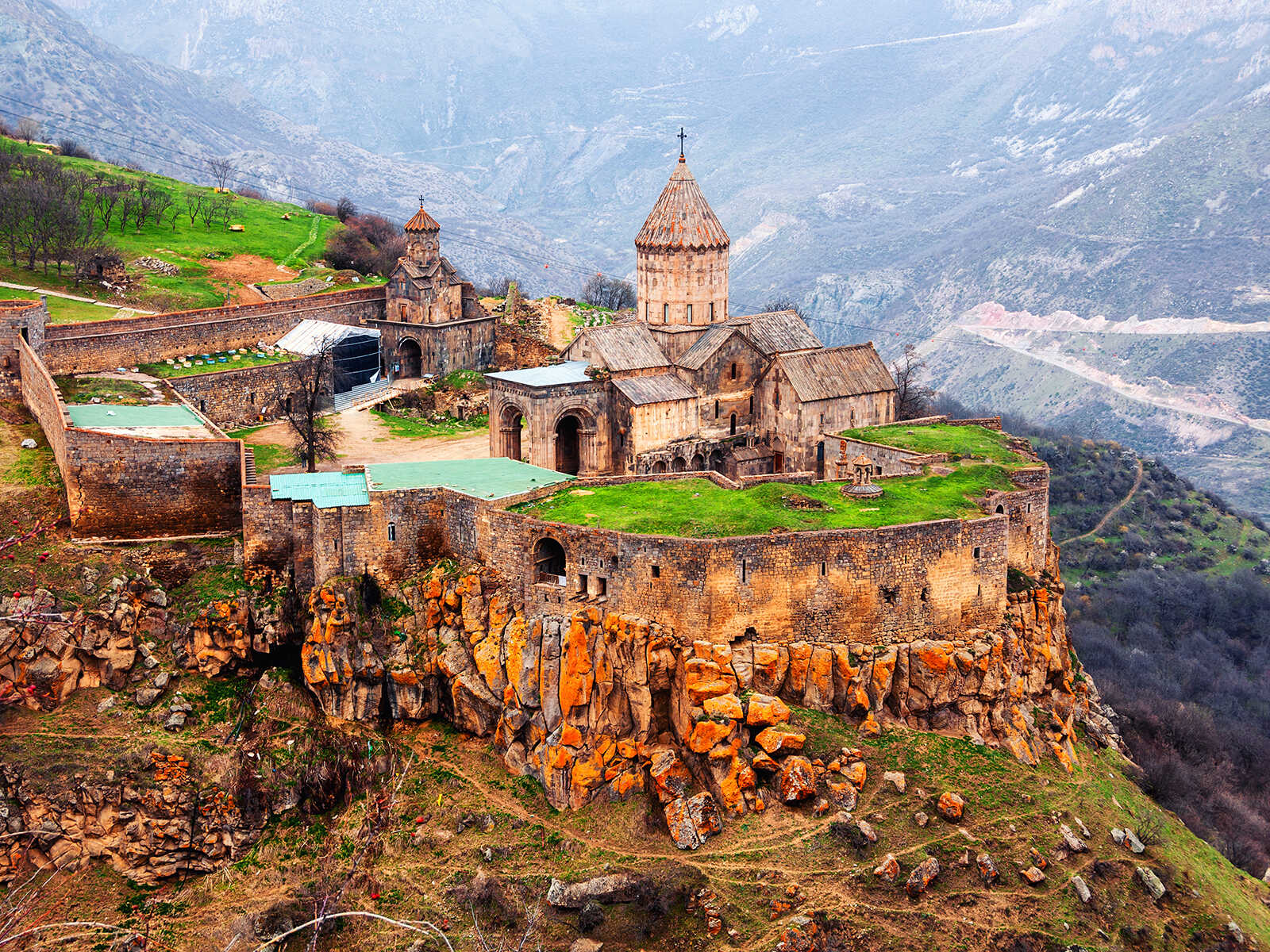
Monastic complexes like Noravank Monastery, nestled within a dramatic red rock canyon, and the UNESCO World Heritage site of Tatev Monastery, accessible via the world's longest reversible aerial tramway, exemplify the sophisticated Armenian ecclesiastical architecture. These sites were not only centers of worship but also vital hubs for education, manuscript illumination, and scientific study.
The art ofkhachkars(cross-stones), intricately carved memorial steles unique to Armenian culture, also flourished during this time. These exquisite stone laceworks are found throughout the country, each telling a story through its unique patterns and symbols.
Periods of Turmoil and Resilience: Survival Through Empires
Following its medieval golden age, Armenia endured centuries of invasions and foreign rule by various empires, including the Byzantines, Seljuks, Mongols, Persians, and Ottomans. Despite losing its independent statehood for extended periods, the Armenian people demonstrated extraordinary resilience, preserving their unique identity primarily through their language, church, and cultural traditions.
The Armenian Apostolic Church remained a unifying force, acting as a custodian of national memory and culture. Communities scattered across the globe, forming a vibrant diaspora that would play a crucial role in supporting the homeland. This era also saw the tragic events of the Armenian Genocide in the early 20th century, a dark chapter that underscores the Armenian people's enduring spirit in the face of immense adversity.
The Modern Era: Rebirth and Independence
The 20th century brought both immense challenges and renewed hope for Armenia. After the collapse of the Russian Empire, the First Republic of Armenia was established in 1918, albeit briefly. It was then absorbed into the Soviet Union in 1920, becoming the Armenian Soviet Socialist Republic.
During the Soviet era, Armenia experienced significant industrial and urban development, alongside a complex relationship with its cultural heritage. Many historical sites were preserved, and new cultural institutions emerged, such as the impressive Cascade Complex in Yerevan, an monumental staircase housing an art museum and offering panoramic city views. The nation also made strides in education and science.
With the dissolution of the Soviet Union, Armenia declared its second independence in 1991, marking a new chapter in its long history. Today, Armenia is a sovereign nation navigating its path in the global community, actively working to preserve its ancient legacy while building a modern future. Travelers can witness this dynamic blend, from the bustling streets of Yerevan to the tranquil shores of Lake Sevan and the lush landscapes of Dilijan National Park, all steeped in history.
Experiencing Armenia's History Today: A Traveler's Guide
For visitors, Armenia offers an unparalleled opportunity to walk through living history. Imagine standing where ancient kings once ruled, or meditating in monasteries that have stood for over a millennium. Beyond the major sites, countless hidden gems await discovery.
- Explore the basalt columns of The Symphony of Stone, a natural wonder that feels like an ancient monument.
- Journey to the ancient cave village of Khndzoresk, where dwellings are carved into cliffsides, offering a glimpse into a bygone era.
- Wander through medieval towns and discover local crafts, connecting with the living traditions passed down through generations.
Armenia's history is not just a collection of dates and events; it's a vibrant narrative woven into the fabric of its people, its landscape, and its enduring spirit. A visit here is more than a trip; it's an immersive historical adventure, promising profound insights and unforgettable memories.