
Discovering Armenia's Spiritual Heritage: A Guide to Its Ancient Monasteries
Embark on a profound journey through Armenia, the world's first Christian nation, where faith and history are etched into breathtaking landscapes. Its ancient monasteries, many of which are UNESCO World Heritage Sites, stand as enduring testaments to a rich spiritual legacy. This guide will help you navigate these architectural marvels, offering insights into their significance and practical tips for your visit.
Armenia: The Cradle of Christianity
In 301 AD, Armenia officially adopted Christianity as its state religion, predating even Rome. This pivotal moment shaped the nation's identity, leading to the construction of countless churches, cathedrals, and monastic complexes across its rugged terrain. These sites are not merely ancient ruins; they are living places of worship, pilgrimage, and cultural preservation, each telling a unique story of devotion and resilience.
Iconic Monasteries Not to Miss
Khor Virap Monastery: A Symbol of Faith
Perched dramatically against the backdrop of majestic Mount Ararat,Khor Virap Monastery is arguably Armenia's most iconic spiritual site. Its name, meaning "deep dungeon," refers to the pit where St. Gregory the Illuminator was imprisoned for 13 years before he cured King Trdat III of a mysterious illness, leading to the king's conversion to Christianity. Visitors can descend into the very dungeon where St. Gregory suffered, offering a tangible connection to Armenia's foundational Christian history. The panoramic views of Ararat from the monastery grounds are truly unforgettable, making it a photographer's dream.
Fun Fact:While Mount Ararat is a potent symbol for Armenians and integral to their spiritual identity, it technically lies within modern-day Turkey, just across the border.
Noravank Monastery: A Masterpiece in Red
Tucked away in a narrow gorge framed by stunning red cliffs,Noravank Monastery is a masterpiece of 13th-century Armenian architecture. The complex, primarily designed by the gifted architect Momik, is renowned for its intricate stone carvings, elaborate khachkars (cross-stones), and the unique two-story Surb Astvatsatsin (Holy Mother of God) church, accessible by a narrow stone staircase. The natural beauty of the surrounding canyon perfectly complements the monastery's exquisite craftsmanship, creating a harmonious blend of art and nature.
Geghard Monastery: Carved from Rock
A UNESCO World Heritage site, Geghard Monastery is an extraordinary example of medieval Armenian monastic architecture, with much of its complex carved directly into the solid rock face of the surrounding mountains. Founded in the 4th century, its name means "Monastery of the Spear," referring to the Holy Lance that pierced Jesus' side, allegedly brought to Armenia and kept here for centuries. Visitors can explore various churches, chapels, and tombs, some entirely subterranean, marveling at the skill required to sculpt such intricate details from stone. The acoustics inside the rock-cut churches are particularly impressive, often filled with the haunting sounds of Armenian liturgical chants.
Tatev Monastery: Above the Vorotan Gorge
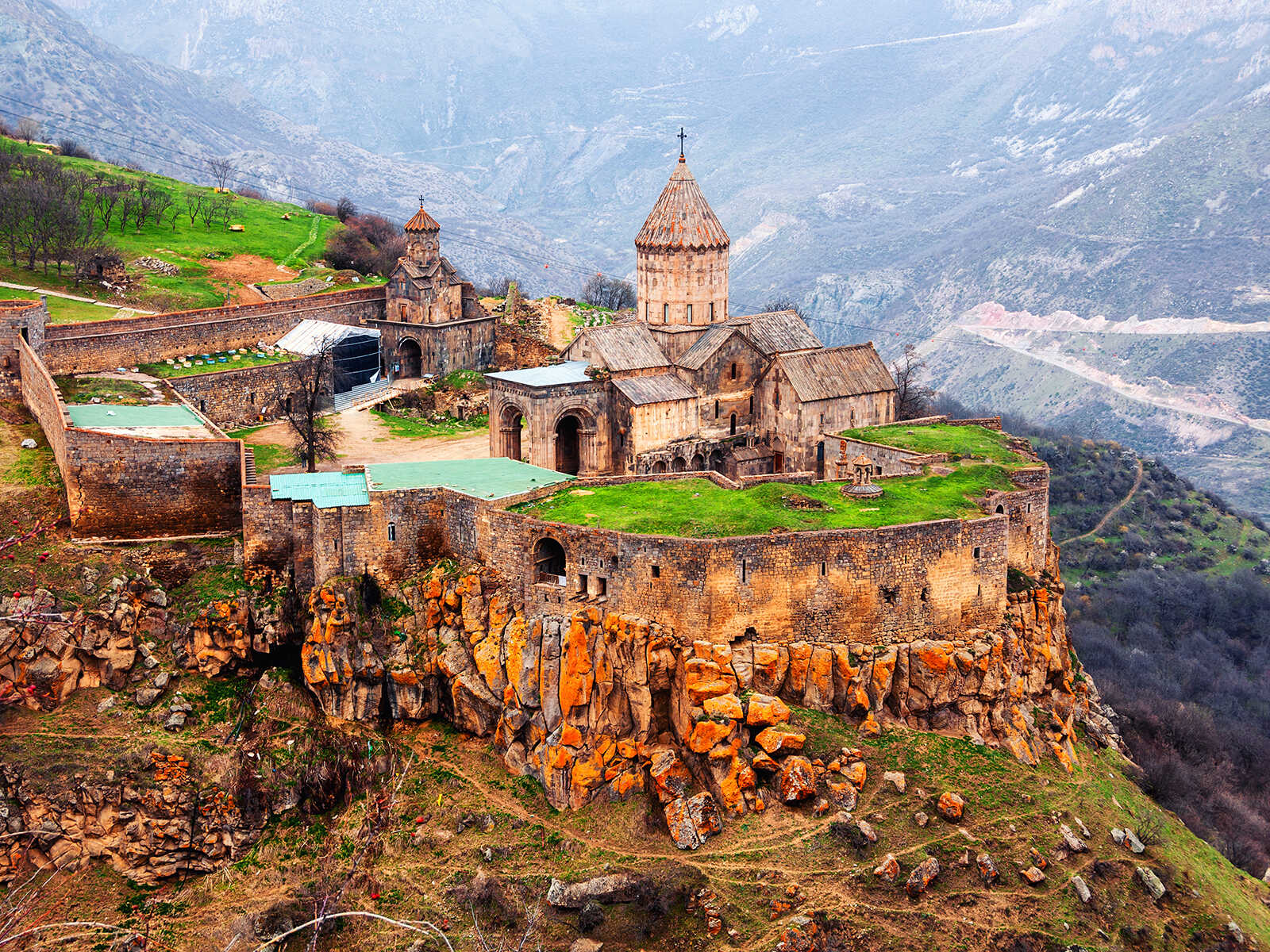
In Armenia's southern Syunik region, the magnificent Tatev Monastery stands majestically atop a basalt plateau overlooking the dramatic Vorotan River Gorge. Dating back to the 9th century, Tatev was a prominent medieval university and a major spiritual and cultural center. Today, it's famous for being accessible via the "Wings of Tatev," the world's longest reversible aerial tramway, offering breathtaking views of the rugged landscape during the 12-minute ride. The complex includes three churches, a bell tower, and numerous ancillary buildings, showcasing Armenian architectural prowess and historical significance.
Haghpat and Sanahin Monasteries: UNESCO Gems of Lori
Located in Armenia's northern Lori region, the monastic complexes of Haghpat and Sanahin are also UNESCO World Heritage sites, celebrated for representing the flourishing of Armenian religious architecture in the 10th-13th centuries. These complexes, often visited together, feature distinctive architectural styles that blend Byzantine and traditional Caucasian elements. They were significant educational centers, known for their scriptoriums and schools. Exploring their numerous churches, chapels, gavits (narthexes), and libraries offers a deep dive into medieval Armenian intellectual and spiritual life.
Etchmiadzin Cathedral and Zvartnots: The Mother See and its Ruins
The Mother See of Holy Etchmiadzin is the spiritual and administrative headquarters of the Armenian Apostolic Church, often referred to as the "Vatican of the Armenians." The main cathedral, founded in 303 AD, is considered the oldest cathedral in the world. The complex includes several churches, a theological academy, and museums, making it a vibrant center of Armenian Christianity. Just a short distance away lie the impressive ruins of Zvartnots Cathedral, a magnificent circular temple built in the 7th century. Though largely destroyed by an earthquake, its remnants provide a fascinating glimpse into early Christian Armenian architecture and engineering.
Sevanavank Monastery: Island Serenity
Perched on a peninsula overlooking the azure waters of Lake Sevan,Sevanavank Monastery offers one of Armenia's most picturesque settings. Dating back to the 9th century, the complex consists of two churches, Surp Arakelots (Holy Apostles) and Surp Astvatsatsin (Holy Mother of God). The monastery was once home to numerous monks and served as a place of exile for Armenian nobility. The stunning backdrop of the lake and surrounding mountains makes Sevanavank a tranquil and visually rewarding stop.
Understanding Armenian Monastic Architecture
Armenian monasteries are characterized by their sturdy stone construction, typically utilizing volcanic tuff in various hues. Key architectural features include the domed central-plan church, often with a unique conical roof. Many complexes also feature a "gavit" or narthex, a large vaulted hall preceding the main church, used for gatherings and burials. Perhaps most distinctive are thekhachkars(cross-stones), intricately carved memorial stelae unique to Armenian art, found in abundance at almost every monastic site.
Practical Tips for Visiting Monasteries
- Dress Code:While less strict than some other regions, it's respectful to dress modestly. Shoulders and knees should be covered, especially when entering churches.
- Footwear:Many monasteries are in rugged, mountainous areas. Comfortable walking shoes are essential, as you'll often encounter uneven paths and stairs.
- Respectful Behavior:These are active places of worship. Be mindful of ongoing services, keep your voice down, and ask permission before taking photos of worshippers.
- Best Time to Visit:Spring (April-May) and Autumn (September-October) offer pleasant weather and vibrant landscapes. Summers can be hot, especially in lower altitudes, while winters bring snow, creating a magical but potentially challenging travel experience.
- Transportation:
- Organized Tours:Many tour operators in Yerevan offer day trips to popular monastery routes (e.g., Khor Virap, Noravank, Geghard, Garni).
- Private Drivers:Hiring a private driver provides flexibility and local insight.
- Marshrutkas (Minibuses):For the adventurous, marshrutkas connect towns, though reaching remote monasteries might require additional taxi rides.
- Rental Cars:Offers maximum flexibility, but roads can be challenging in some regions.
- Combine Your Visits:Many monasteries are located near other attractions. For example, Geghard is often visited alongside the pagan Garni Temple and the natural wonder of The Symphony of Stone. Similarly, a trip to Noravank Monastery can include a stop at the Areni wine region.
Beyond the Monasteries
While the monasteries are central to Armenia's spiritual identity, your journey can extend to other incredible sites. Explore the natural beauty of Dilijan National Park, known for its lush forests and other monasteries like Haghartsin and Goshavank. Visit the vibrant capital, Yerevan, with its modern attractions like the Cascade Complex, offering city views and art. Each stop provides a deeper understanding of this ancient land's rich tapestry.
Discovering Armenia's monasteries is more than just sightseeing; it's an immersive experience into a nation's soul. Each stone, carving, and remote location tells a story of faith, resilience, and artistic brilliance that continues to inspire visitors from around the world.