
The History of Zambia: From Ancient Kingdoms to Modern Nation
Zambia, a landlocked nation in Southern Africa, boasts a history as rich and diverse as its vibrant cultures and stunning landscapes. From the earliest human settlements to powerful pre-colonial kingdoms and the complexities of colonial rule, its journey has shaped the resilient and peaceful modern nation we know today.
Understanding Zambia's past provides invaluable insight into its present, revealing the enduring spirit of its people and the profound influences that have sculpted its identity.
Early Inhabitants and Ancient Kingdoms
The story of human presence in Zambia stretches back hundreds of thousands of years. Archaeological evidence, most notably the discovery of the Kabwe Skull(formerly known as Broken Hill Man) near Kabwe, indicates the presence of early hominids during the Middle Stone Age. These ancient ancestors carved out a living in Zambia's fertile lands, adapting to their environment and laying the groundwork for future civilizations.
Around 300 AD, the Bantu migrations brought new waves of people to the region. These groups introduced Iron Age technology, revolutionizing agriculture, tool-making, and warfare. They established settled communities, cultivating crops like millet and sorghum, and raising livestock. This period marked the emergence of more complex social structures and the beginnings of organized societies.
Pre-Colonial Kingdoms and Trade Networks
By the 15th century, several powerful kingdoms had emerged across what is now Zambia. These included the Luba-Lunda kingdoms in the north and northwest, the Maravi Confederacy in the east, and the Lozi Kingdom in the west, particularly in the Barotse Floodplain. These kingdoms were characterized by sophisticated political systems, extensive trade networks, and distinct cultural practices.
- The Lozi Kingdom:Known for its unique annual Kuomboka ceremony, symbolizing the movement of the Litunga (King) and his people from the flooded plains to higher ground. They built a powerful state based on agriculture and cattle.
- Luba-Lunda Kingdoms:These groups established long-distance trade routes, exchanging goods such as copper, ivory, salt, and slaves with coastal traders, linking the interior with the broader African and Indian Ocean trade networks.
Did you know? The copper trade was central to many pre-colonial Zambian societies, with copper crosses and ingots serving as a form of currency and a symbol of wealth and power.
European Exploration and Colonial Rule
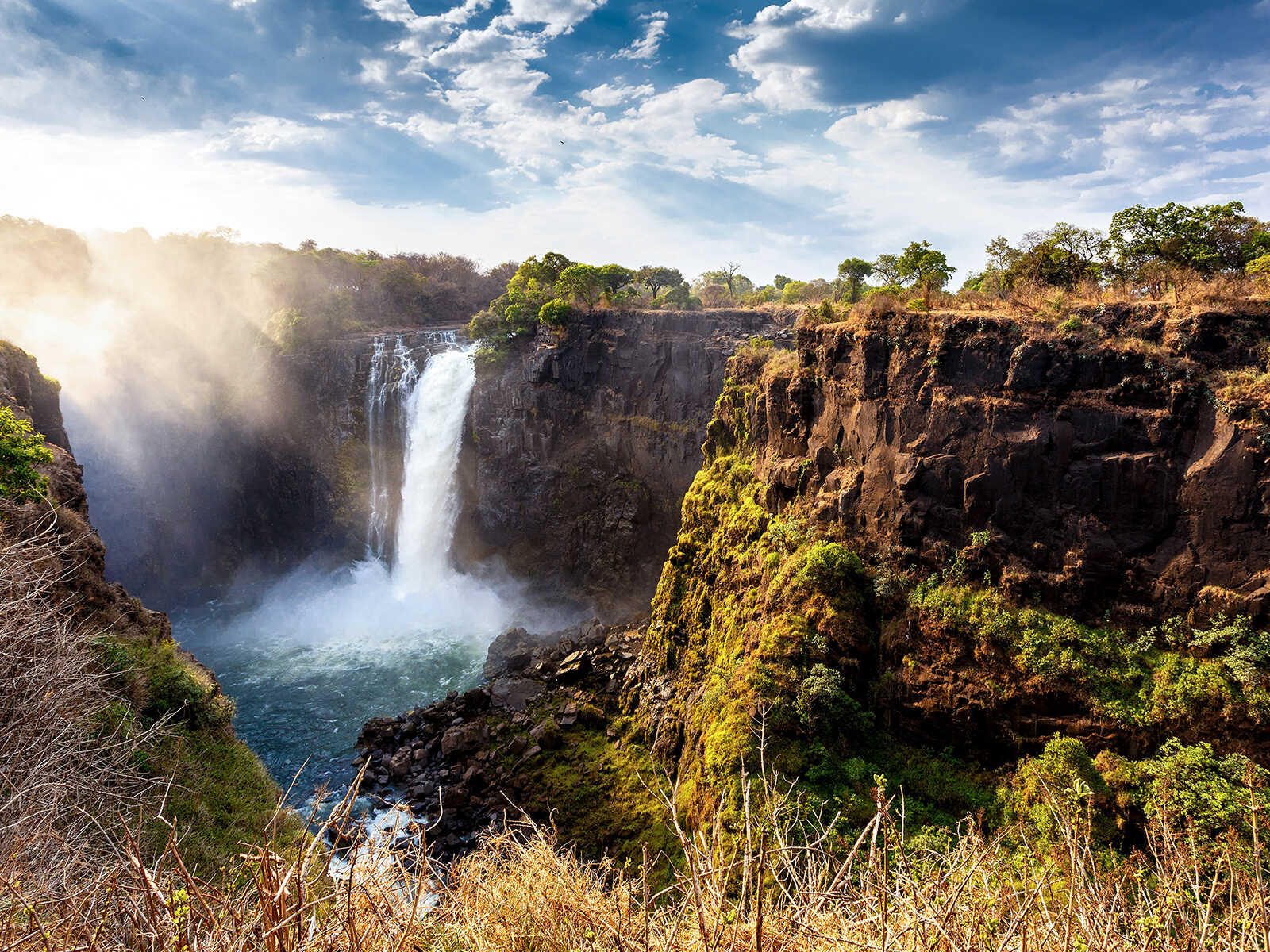
European contact with the region that would become Zambia began in the late 18th century, but it was the mid-19th century that saw significant exploration. Scottish missionary and explorer David Livingstone was the first European to extensively explore the area, reaching the magnificent Victoria Falls in 1855, which he famously named after Queen Victoria (though the local name, Mosi-oa-Tunya, meaning "The Smoke that Thunders," endures). His expeditions opened up the interior of Africa to European scrutiny and interest.
The Scramble for Africa and British Influence
The late 19th century witnessed the "Scramble for Africa," as European powers vied for control of the continent. Cecil Rhodes' British South Africa Company (BSAC) played a pivotal role in colonizing the region. Through a combination of treaties (often coerced or misunderstood) and military force, the BSAC gained control over vast territories, primarily driven by the prospect of mineral wealth.
In 1895, the territory was formally named 'Northern Rhodesia' and administered by the BSAC. By 1924, direct British colonial rule was established, and Northern Rhodesia became a British Protectorate. The colonial administration focused on exploiting the region's rich mineral resources, particularly copper, leading to the development of the Copperbelt region.
- Economic Exploitation:African communities faced forced labor, land alienation, and heavy taxation designed to drive them into the colonial economy.
- Infrastructure Development:Railways were built to transport copper to the coast, connecting the Copperbelt to other parts of Southern Africa.
The Road to Independence
The mid-20th century saw a rise in African nationalism across the continent, and Northern Rhodesia was no exception. The injustices of colonial rule and the desire for self-determination fueled a growing independence movement.
The Federation and Nationalist Struggle
In 1953, the British government established the Federation of Rhodesia and Nyasaland, comprising Southern Rhodesia (Zimbabwe), Northern Rhodesia (Zambia), and Nyasaland (Malawi). This federation was largely seen by Africans as a means to perpetuate white minority rule and economic exploitation. This move intensified nationalist sentiments and galvanized resistance.
African political parties, such as the African National Congress (ANC) led by Harry Nkumbula, and later the United National Independence Party (UNIP) led by Kenneth Kaunda, emerged as powerful voices for independence. Through strikes, protests, and political organizing, these leaders mobilized the population against colonial rule. Kenneth Kaunda, a charismatic leader, became the face of the independence movement, advocating for peaceful resistance.
Achieving Self-Rule
After years of political struggle, negotiations, and growing international pressure, the Federation was dissolved in 1963. On 24 October 1964, Northern Rhodesia gained its independence and was renamed Zambia, with Kenneth Kaunda becoming its first President.
Post-Independence Zambia: Forging a Nation
Upon gaining independence, Zambia faced significant challenges: a lack of skilled labor, dependence on a single commodity (copper), and the geopolitical complexities of Southern Africa, still largely under colonial or apartheid rule.
Under President Kaunda's leadership, Zambia adopted a philosophy of "Humanism," emphasizing communal welfare, self-reliance, and egalitarianism. The government pursued nationalization policies to gain control over key industries, particularly copper mining, aiming to redirect profits towards national development.
Zambia played a crucial role in supporting liberation movements in neighboring countries like Angola, Mozambique, Zimbabwe, and South Africa, often at great economic and security cost. The construction of projects like the Kariba Dam, initiated before independence but expanded upon, symbolized efforts towards national development and regional cooperation.
Transition to Multi-Party Democracy
By the late 1980s, economic difficulties, partly due to falling copper prices and structural adjustment programs, led to widespread discontent. In response to popular demand, Zambia transitioned from a one-party state back to multi-party democracy in 1991. Frederick Chiluba won the historic elections, marking a peaceful transfer of power.
Zambia Today: A Nation Forging Ahead
Today, Zambia is a stable, democratic nation known for its friendly people and incredible natural beauty. The country continues to grapple with the legacy of its past, working towards economic diversification beyond copper, with growing sectors like agriculture, tourism, and services.
Visitors to Zambia can explore its rich history through its museums, historical sites, and vibrant cultural traditions. From the awe-inspiring Victoria Falls, where you can even experience the thrilling Devils Pool during certain months, to vast wilderness areas like Lower Zambezi National Park and Kafue National Park, Zambia offers a profound journey through time and nature.
The Mosi-oa-Tunya National Park near Livingstone provides a glimpse into Zambia's conservation efforts, home to rhinos and other wildlife, just a stone's throw from the majestic falls. Zambia's history is a testament to resilience, self-determination, and a commitment to peace, making it a truly compelling destination for any traveler.