
Best Time to Visit Zambia for Safari & Victoria Falls
Zambia, often hailed as the "Real Africa," offers an unparalleled blend of dramatic landscapes, abundant wildlife, and one of the world's most spectacular natural wonders. Deciding the Victoria Falls. Understanding Zambia's distinct seasons is key to planning your perfect adventure.
Zambia experiences three primary seasons, each offering unique advantages and considerations for travelers:
- The Dry Season (May – October):Known for prime wildlife viewing and ideal conditions for most activities.
- The Wet Season (November – April):Often called the "Emerald Season," this period brings lush scenery, migratory birds, and dramatic Victoria Falls.
- The Shoulder Seasons (May, November):Transition periods offering a balance of benefits, often with fewer crowds.
The Dry Season: Prime Safari & Moderate Falls (May – October)
This is widely considered the best time to visit Zambia for a classic safari experience. The lack of rain means vegetation thins out, making wildlife easier to spot as animals congregate around shrinking water sources.
May – June: The Post-Rain Bloom
As the rains subside, the landscape is still relatively green, offering beautiful photographic opportunities. Temperatures are pleasant, and the air is clear. Safari conditions are excellent, with animals becoming more visible. The Victoria Falls are still flowing powerfully but are starting to recede, allowing for some activities to commence.
July – August: Peak Safari, Cooler Temperatures
These months represent the heart of the dry season. Wildlife viewing is at its absolute best, particularly in renowned parks like Lower Zambezi National Park and Kafue National Park. Game drives, walking safaris, and boat trips are incredibly rewarding. Temperatures are cooler, especially in the mornings and evenings, making for comfortable safari conditions. The Victoria Falls water levels continue to drop, making activities like white-water rafting more thrilling and allowing access to Devils Pool towards late August.
September – October: Hot & Intense Safari, Low Falls
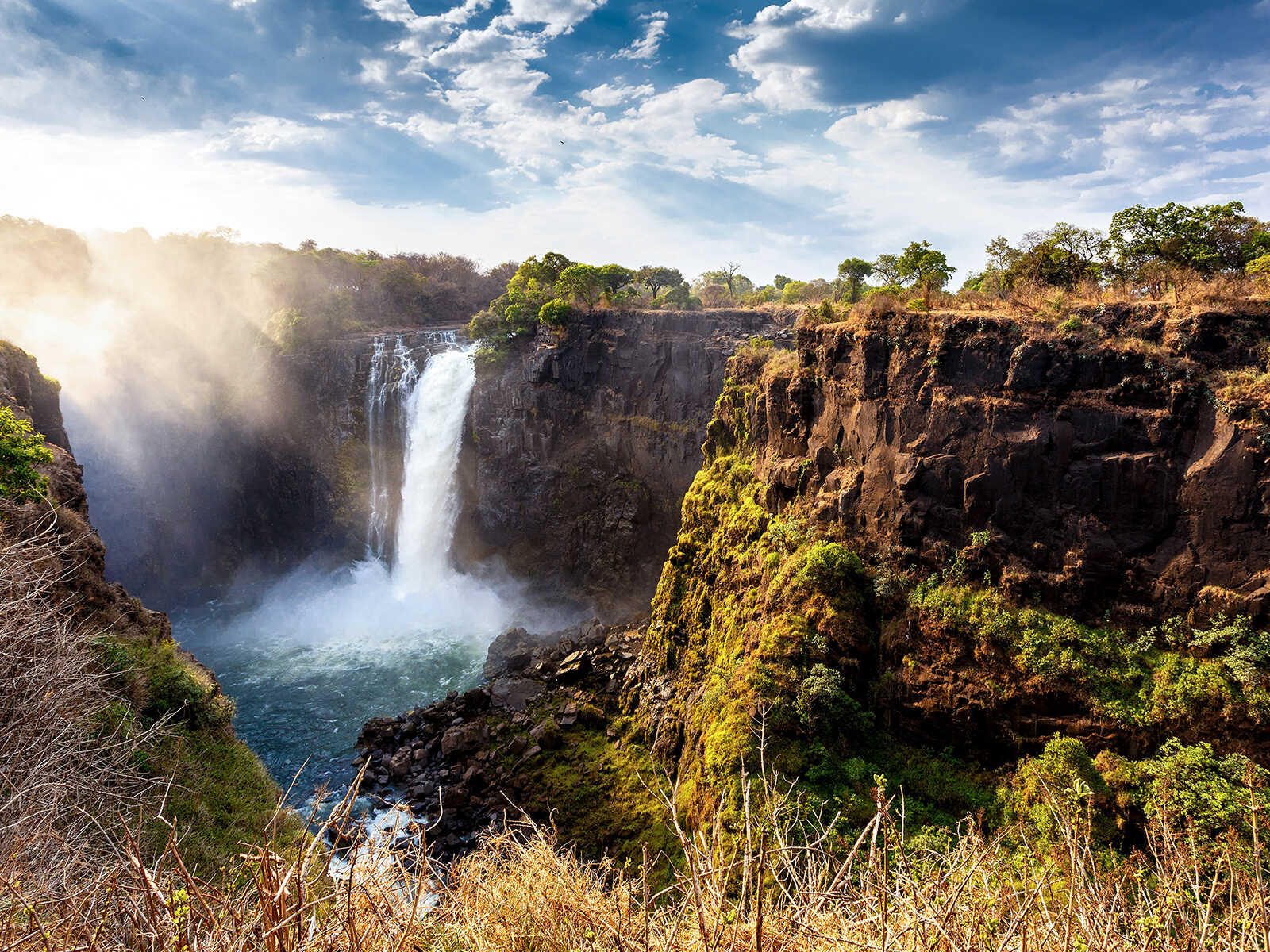
These are the hottest and driest months, intensifying the safari experience. Animals are heavily concentrated around permanent water sources, leading to dramatic wildlife encounters. This is an incredible time for photographers. However, temperatures can be very high. At Victoria Falls, water levels are at their lowest. While this means the sheer volume of water is less impressive, it offers unparalleled access to the very edge of the falls, including the famous Devils Pool(usually open from mid-August to mid-January, depending on water levels) and exhilarating gorge activities.
Tip:The dry season is also prime time for walking safaris, a Zambian specialty. The thinner vegetation and clearer sightlines make for an intimate and thrilling bush experience.
The Wet Season: The Emerald Season & Mighty Falls (November – April)
Also known as the "Green Season" or "Emerald Season," this period transforms Zambia into a lush, vibrant landscape. While safaris present different challenges and rewards, the Victoria Falls reach their magnificent peak.
November – December: The Rains Begin, Birding Paradise
The first rains arrive, rejuvenating the landscape. Migratory birds return, making this a fantastic time for birdwatching. Newborn animals are often seen, and the air is fresh. Safari conditions become more challenging as vegetation thickens, and animals disperse. Some remote camps may close. At Victoria Falls, water levels begin to rise, offering a preview of their grandeur.
January – February: Peak Rains, Impassable Roads
These are the wettest months, with heavy rainfall. Many safari camps, particularly in more remote areas like parts of Kafue National Park, close due to impassable roads. However, for those seeking a unique experience, the scenery is incredibly lush and dramatic. Birdwatching is exceptional. The Victoria Falls are rapidly gaining momentum, with spray visible for miles. Activities like Devils Pool are typically closed during this time due to high water.
March – April: Falls at Their Peak, Lingering Rains
The rains start to taper off, but the rivers and waterfalls are at their fullest. This is arguably the most spectacular time to witness the sheer power of Victoria Falls, with the "Smoke That Thunders" living up to its name, drenching visitors in its mighty spray. Safari camps begin to reopen towards the end of April, and the landscapes remain wonderfully green. Birding remains excellent.
Victoria Falls Specifics: When to See the "Smoke That Thunders"
The experience at Victoria Falls varies dramatically with the seasons:
- High Water (March – May):The Falls are at their most powerful, creating an immense curtain of water and a drenching spray. Visibility can be obscured by the mist, but the sheer volume and roar are awe-inspiring. Activities like white-water rafting are closed, and Devils Pool is inaccessible.
- Medium Water (February, June – July):A great balance. The Falls are still mighty, but the spray is less intense, allowing for better views. Most activities begin to open.
- Low Water (August – January):The Falls recede, revealing the rock face and allowing for adventurous activities right to the edge, including the famous Devils Pool on the Zambian side. While the main curtain of water may be less impressive, the sheer scale of the gorge and the dramatic drops are still stunning, and the opportunity for unique perspectives is high. You can often see the full length of the falls from one end to the other without too much spray.
The Zambian side of the Falls, located within Mosi-oa-Tunya National Park, offers excellent vantage points year-round, often providing a closer, more intense experience of the spray during high water, and direct access to Livingstone Island and Devils Pool during low water.
Safari Specifics: Wildlife & Accessibility
Zambia's safari parks, including Lower Zambezi National Park and Kafue National Park, offer distinct experiences across seasons:
- Dry Season:Best for traditional game viewing, walking safaris, and excellent accessibility. Animals are concentrated, making sightings more predictable.
- Wet Season:Ideal for birdwatching, stunning green landscapes, and seeing newborn animals. Some roads may be impassable, and certain camps close. It's a quieter, more intimate safari experience for those who venture out.
Fun Fact:Zambia is renowned for pioneering and perfecting the walking safari, offering an immersive way to connect with the bush on foot.
Shoulder Seasons: A Balanced Choice (May & November)
For those seeking a balance of good weather, wildlife, and fewer crowds, the shoulder months of May and November are excellent choices.
- May:Marks the transition from wet to dry. The landscape is still green and beautiful, but safari conditions are rapidly improving, and the Falls are still powerful.
- November:The onset of the rains can be unpredictable, but it brings dramatic thunderstorms and the return of migratory birds. Safari conditions are still good before the heavy rains, and the Falls are starting to swell. This period often offers excellent value.
Other Considerations
- Birdwatching:The Wet Season (November-April) is exceptional, with migratory birds arriving in droves.
- Photography:Dry season offers clear skies and concentrated wildlife. Wet season offers dramatic skies, lush greens, and powerful waterfalls.
- Crowds:The Dry Season (especially July-October) sees the most visitors. The Wet Season is generally much quieter.
- Activities:White-water rafting, bungee jumping, and Devils Pool are highly seasonal at Victoria Falls, depending on water levels. Safari activities like walking safaris are best in the dry season.
- What to Pack:Always bring layers, regardless of the season, as mornings and evenings can be cool. Sun protection is essential year-round. During the wet season, waterproof gear is a must.
Conclusion: Tailoring Your Zambian Adventure
Ultimately, the "best" time to visit Zambia depends on your priorities:
- Forpeak wildlife viewing and classic safaris, aim for theDry Season (July – October).
- For themost spectacular Victoria Fallsand an incrediblebirdwatching experienceamidst lush landscapes, choose theWet Season (March – May).
- For a blend of good conditions, fewer crowds, and potentially better value, consider theShoulder Seasons (May or November).
No matter when you choose to visit, Zambia promises an unforgettable African adventure, a true testament to its wild beauty and welcoming spirit.