
A Brief History of Vietnam: From Ancient Kingdoms to Modern Nation
Vietnam boasts a history as rich and vibrant as its landscapes, a narrative woven through millennia of resilience, cultural exchange, and fierce independence. Understanding this deep historical tapestry is key to appreciating the vibrant nation you see today, from its ancient traditions to its modern dynamism.
Ancient Origins and Early Kingdoms
The story of Vietnam begins long before recorded history, with archaeological evidence pointing to human presence dating back hundreds of thousands of years. The sophisticated Bronze Age Dong Son culture, flourishing around 1000 BCE, is particularly significant, known for its intricate bronze drums and advanced agricultural practices. These early communities laid the groundwork for Vietnam's foundational myths and the emergence of its first legendary kingdoms.
According to legend, the Hùng Kings established the kingdom of Văn Lang, considered the precursor to the Vietnamese state, around 2879 BCE. This mythical era is deeply ingrained in the national consciousness, symbolizing the birth of the Vietnamese people. Later, the kingdom of Âu Lạc emerged, uniting various tribes under King An Dương Vương, who built the impressive Cổ Loa Citadel, characterized by its unique spiral design.
A Millennium of Chinese Domination
In 111 BCE, the Han Dynasty of China conquered Âu Lạc, initiating over a thousand years of Chinese rule. This period, known asBắc Thuộc(Northern Domination), profoundly influenced Vietnamese culture, administration, and technology, introducing Confucianism, Taoism, and Chinese writing. Despite this deep influence, the Vietnamese people fiercely resisted assimilation, launching numerous rebellions to regain their independence.
Fun Fact:The Trung Sisters, Trưng Trắc and Trưng Nhị, led a famous rebellion against Chinese rule in 40 CE, establishing an independent state for a few years. They remain national heroines, symbolizing Vietnamese courage and female leadership.
Other notable figures like Lady Triệu and Lý Bí also rose against foreign rule. True independence was finally achieved in 938 CE when Ngô Quyền defeated the Southern Han fleet at the Battle of Bạch Đằng River, ending Chinese domination and ushering in an era of self-rule.
Independent Dynasties and Southward Expansion
Following Ngô Quyền's victory, Vietnam entered a long period of independence under a succession of powerful dynasties. The Lý (1009-1225), Trần (1225-1400), and Lê (1428-1789) dynasties solidified the nation's identity, fostered a distinct Vietnamese culture, and repelled numerous foreign invasions, including three Mongol invasions in the 13th century.
During these centuries, the capital, Thăng Long (modern-day Hanoi), flourished as a center of learning and culture. This era also saw significant southward expansion (Nam Tiến), as the Vietnamese pushed their borders, gradually absorbing the territories of the Champa kingdom (whose impressive ruins can be seen at Mỹ Sơn) and the Khmer Empire, extending Vietnamese influence all the way to the Mekong Delta.
By the 17th and 18th centuries, Vietnam was divided between the Trịnh lords in the north and the Nguyễn lords in the south, leading to internal conflicts. The Tây Sơn Rebellion briefly unified the country, but eventually, Nguyễn Ánh, with French assistance, established the Nguyễn Dynasty in 1802, proclaiming himself Emperor Gia Long. He moved the capital to Huế, where the magnificent Imperial City still stands as a testament to this powerful era. The coastal trading port of Hội An also thrived during this period.
French Colonialism
The 19th century brought a new foreign power: France. Initially drawn by trade and missionary interests, France gradually asserted control, using military force and diplomatic pressure. By 1887, Vietnam, along with Laos and Cambodia, was incorporated into French Indochina. French rule brought infrastructure development, including railways and roads, but also exploited Vietnam's resources and suppressed local resistance.
During this period, cities like Saigon (now Ho Chi Minh City) grew into major administrative and economic hubs. Despite the modernization, the Vietnamese people continued their struggle for independence, with figures like Phan Bội Châu and Phan Chu Trinh advocating for different paths to liberation. By the early 20th century, a young Nguyễn Sinh Cung, later known as Ho Chi Minh, emerged as a key leader, advocating for communist revolution as the means to achieve national liberation.
The Vietnam Wars
World War II dramatically altered the political landscape. Japan occupied Vietnam, weakening French control and inadvertently fostering Vietnamese nationalism. After Japan's surrender in 1945, Ho Chi Minh declared Vietnam's independence, but France sought to re-establish its authority, leading to the First Indochina War (1946-1954). This brutal conflict culminated in the decisive Vietnamese victory at Điện Biên Phủ, forcing France to withdraw.
The 1954 Geneva Accords temporarily divided Vietnam into North and South, with the promise of nationwide elections that never materialized. This division set the stage for the Second Indochina War, famously known as the Vietnam War or American War (1955-1975). The conflict pitted communist North Vietnam and its allies (the Viet Cong) against South Vietnam and its primary supporter, the United States.
The war was devastating, marked by intense guerrilla warfare, widespread destruction, and immense human cost. Sites like the Củ Chi Tunnels became symbols of Vietnamese ingenuity and resilience. After years of fighting, American forces withdrew, and in April 1975, the North Vietnamese army captured Saigon, reunifying the country under communist rule. The city was subsequently renamed Ho Chi Minh City.
Modern Vietnam: Renovation and Development
The post-war period was challenging, marked by economic hardship, international isolation, and conflicts with neighboring countries. However, in 1986, Vietnam launched theĐổi Mới(Renovation) economic reforms, shifting from a centrally planned economy to a socialist-oriented market economy. These reforms liberalized trade, encouraged foreign investment, and revitalized the private sector.
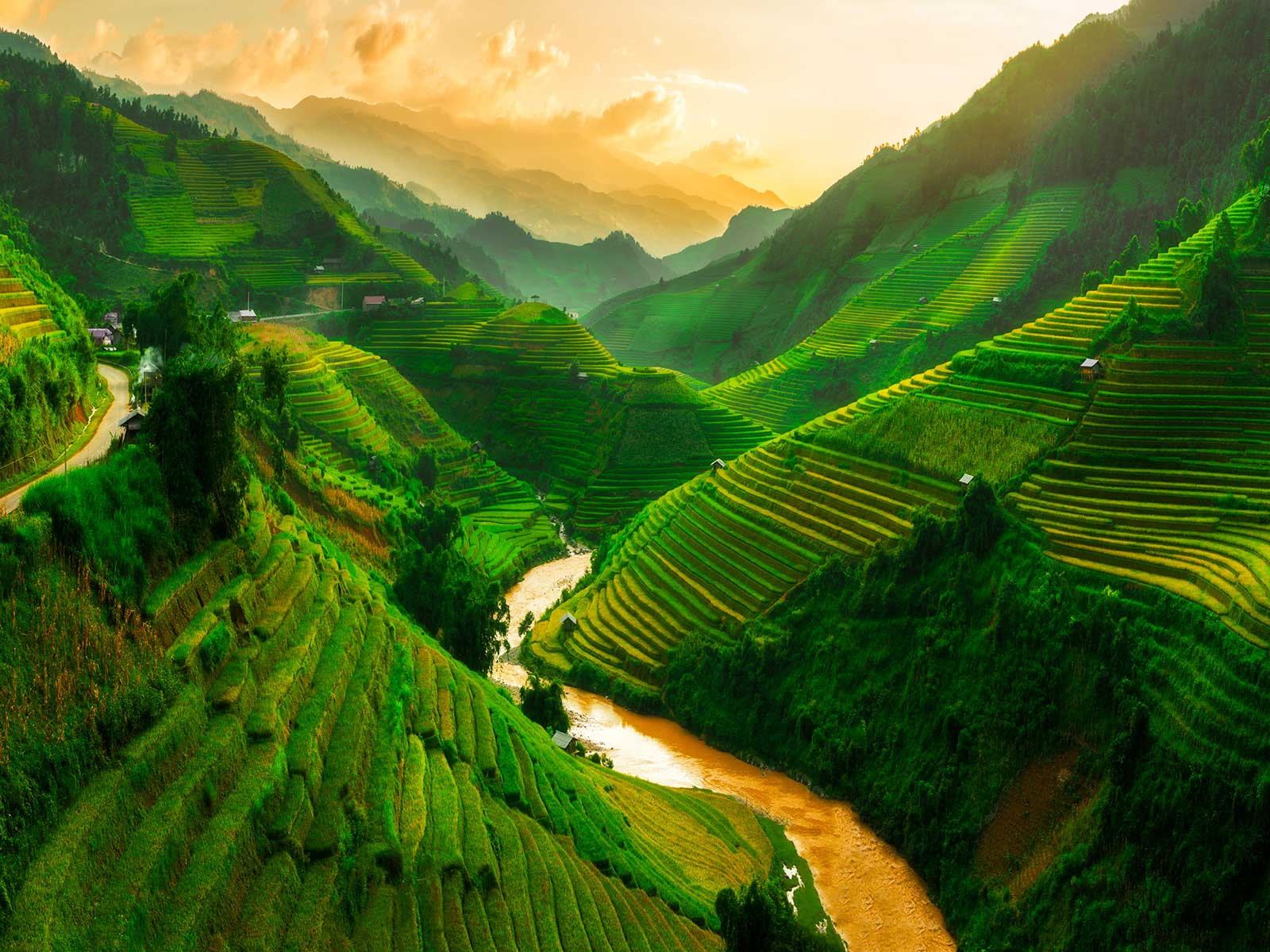
Since then, Vietnam has experienced remarkable economic growth and social development. It has emerged as a dynamic player on the global stage, attracting tourists and investors alike. The country has embraced its diverse natural beauty, from the terraced rice fields of Sa Pa and the dramatic landscapes of Hà Giang to the stunning caves of Phong Nha Ke Bang and the beautiful beaches of Nha Trang and Mũi Né. The Mekong Delta, with cities like Cần Thơ, remains the agricultural heartland.
Today, Vietnam is a nation looking firmly to the future while deeply respecting its past. Its history of struggle and triumph has forged a resilient, resourceful, and welcoming people. Exploring Vietnam's historical sites, from ancient citadels to war memorials, offers invaluable insight into the soul of this captivating country.