
Piazza San Pietro: Unraveling Bernini's Architectural Genius
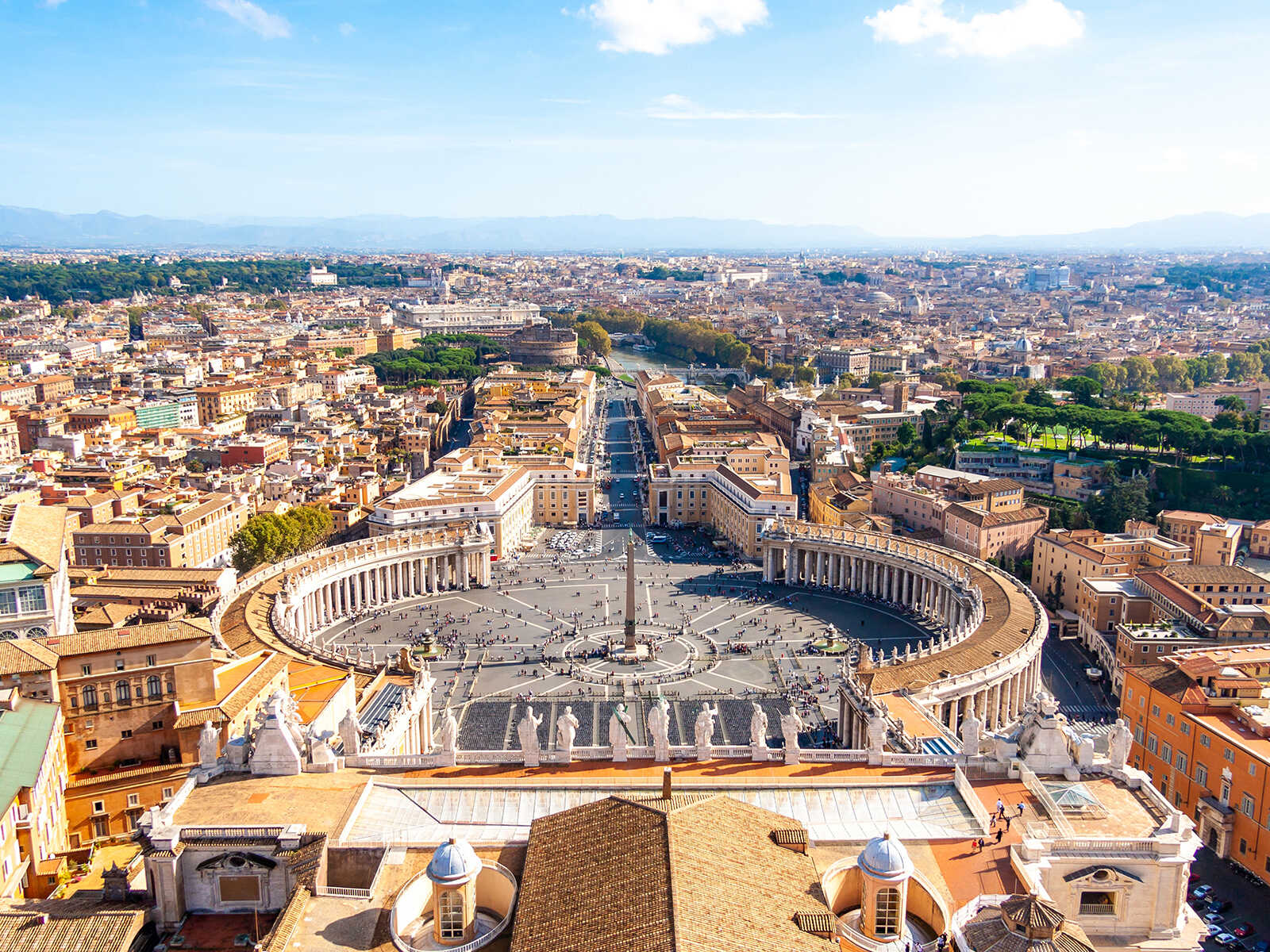
Piazza San Pietro, or St. Peter's Square, stands as a monumental testament to Baroque artistry and urban planning. Designed by Gian Lorenzo Bernini, this iconic piazza serves as the majestic forecourt to St. Peter's Basilica, welcoming pilgrims and visitors from across the globe into the heart of Vatican City.
The Grand Welcome: An Introduction to Piazza San Pietro
More than just an open space,Piazza San Pietro is a masterclass in architectural design, orchestrated to evoke awe and a sense of sacred embrace. Conceived in the 17th century under Pope Alexander VII, Bernini's vision transformed a previously irregular and often muddy space into one of the world's most recognizable and significant public squares. It is here that millions gather for papal blessings, Easter celebrations, and other major events, making it a living, breathing symbol of the Catholic Church.
Bernini's Vision: A Masterpiece of Baroque Design
Gian Lorenzo Bernini, a titan of the Italian Baroque, was entrusted with the monumental task of designing a piazza that would appropriately frame St. Peter's Basilica and accommodate vast crowds. His challenge was to create a space that was both grand and welcoming, capable of conveying the majesty of the Church while drawing people in with open arms. His solution was an elliptical piazza bordered by magnificent colonnades, creating a harmonious and symbolically rich environment.
The Colonnades: An Embrace for Humanity
The most striking feature of the piazza is undoubtedly its colossal Doric colonnades, forming two semicircles that stretch out like the "maternal arms of Mother Church," as Bernini himself described them. These four-deep rows of 284 columns and 88 pilasters create an overwhelming sense of scale and perspective. Atop these majestic structures stand 140 statues of saints, each approximately 3.2 meters (10.5 feet) tall, sculpted by Bernini's pupils and gazing down upon the faithful below. The sheer number and uniformity of the columns create a powerful visual rhythm, guiding the eye towards the Basilica.
The Obelisk: An Ancient Heart
At the very center of the elliptical piazza stands the ancient Egyptian obelisk, a red granite monument dating back to 1300 BC. Originally brought to Rome by Emperor Caligula in 37 AD, it stood in Nero's Circus, the site where St. Peter was martyred. Its relocation to the center of the piazza in 1586 by Domenico Fontana was an engineering marvel of its time, involving hundreds of men and horses. Bernini ingeniously integrated this ancient relic into his design, making it the central focal point around which the entire piazza revolves, symbolizing the triumph of Christianity over paganism.
Fun Fact:The moving of the Vatican Obelisk in 1586 was such a perilous feat that Fontana issued a strict silence order, punishable by death. However, during a critical moment when the ropes were fraying, a sailor famously shouted "Acqua alle funi!" (Water on the ropes!), saving the operation and earning him a pardon and a lifelong pension.
The Fountains: Symphony of Water and Stone
Flanking the obelisk are two magnificent fountains, adding a dynamic element to the piazza's grandeur. The northern fountain was designed by Carlo Maderno in 1613, predating Bernini's work on the piazza. Bernini, in his pursuit of perfect symmetry, added a matching fountain on the southern side in 1677, aligning it precisely with the obelisk and the main axis of the Basilica. The continuous flow of water from these fountains provides a soothing auditory backdrop and a refreshing visual contrast to the solid stone architecture, symbolizing purification and renewal.
The Paving: A Canvas Underfoot
Even the paving of Piazza San Pietro is part of Bernini's meticulous design. The geometric patterns laid out in travertine marble further emphasize the elliptical shape and guide visitors' movements. Radial lines emanating from the obelisk create a sense of expansive space while subtle designs reinforce the overall harmony and balance of the square.
Architectural Brilliance and Optical Illusions
Bernini was not merely an architect; he was a master of theatricality and illusion. His design for Piazza San Pietro incorporates clever optical effects that enhance the visitor's experience and underscore his genius.
The Optical Illusion of the Colonnades
One of Bernini's most celebrated optical tricks can be experienced by standing on one of two circular marble discs embedded in the paving, located between the obelisk and each fountain. From these specific points, the four rows of columns in the colonnades appear to merge into a single, perfectly aligned row. This ingenious effect creates a sense of wonder and illustrates Bernini's profound understanding of perspective and human perception.
Tip for Visitors:To fully appreciate Bernini's optical illusion, locate the marble discs (marked "Centro del Colonnato") between the obelisk and the fountains. Stand on one, and witness the four rows of columns miraculously align into one!
The "Keyhole" Effect
While less known, another fascinating perspective awaits visitors approaching the piazza along the Via della Conciliazione, the grand boulevard leading up to the Vatican. As one walks, the dome of St. Peter's Basilica appears and disappears multiple times, creating a captivating "keyhole" effect that builds anticipation for the reveal of the full piazza. This deliberate design choice enhances the dramatic approach to the spiritual heart of Catholicism.
Beyond Architecture: The Piazza's Living Role
While Bernini's architectural brilliance is undeniable,Piazza San Pietro is far more than a static monument. It is a vibrant, living space that continues to serve its original purpose: to gather humanity.
Papal Audiences and Celebrations
Every Wednesday, when the Pope is in Rome, the piazza becomes the venue for the Papal Audience, drawing thousands who wish to receive a blessing. On Sundays, crowds gather for the Angelus prayer, when the Pope appears at his apartment window overlooking the square. Major Catholic holidays, such as Easter and Christmas, transform the piazza into a global stage for celebration, with the Pope delivering his "Urbi et Orbi" blessing to the city and the world.
Access and Experience
Piazza San Pietro is always open and accessible to the public, offering a welcoming atmosphere at any time of day. Visiting in the early morning or late evening can provide a more serene experience, allowing for quiet contemplation of Bernini's masterpiece and the grandeur of St. Peter's Basilica, especially when lit up. It serves as the gateway to other significant Vatican attractions, including the vast collections of the Vatican Museums and the breathtaking Sistine Chapel, making it an essential starting point for any visit to Vatican City.
Conclusion
Piazza San Pietro stands as an enduring testament to Gian Lorenzo Bernini's unparalleled architectural genius. His ability to blend monumental scale with intimate human experience, to create both practical space and profound symbolism, resulted in a piazza that continues to inspire and unite millions. More than just a square, it is a grand, welcoming embrace, forever etched into the fabric of Vatican City and the hearts of those who visit it.