
Exploring St. Peter's Basilica: Masterpieces, History, and Spiritual Significance
St. Peter's Basilica stands as an unparalleled testament to faith, art, and architectural brilliance, drawing millions of pilgrims and tourists each year. As the spiritual heart of the Catholic Church, it offers a profound journey through centuries of history, showcasing some of the world's most breathtaking masterpieces within its hallowed walls. Prepare to delve into the grandeur and spiritual resonance of this iconic Vatican landmark.
A Legacy Forged in Stone: The History of St. Peter's Basilica
The history of St. Peter's Basilica is as vast and intricate as its architecture. Its foundations lie on what is traditionally believed to be the burial site of Saint Peter, one of Jesus's twelve apostles and the first Pope. Emperor Constantine the Great commissioned the first basilica in the 4th century, which stood for over a millennium.
By the 15th century, the Old St. Peter's Basilica was in disrepair, prompting Pope Julius II to embark on a colossal project: the construction of a new basilica. This ambitious undertaking spanned over 120 years, from 1506 to 1626, involving a succession of the greatest Renaissance and Baroque architects. Donato Bramante laid the initial plans, followed by Raphael, Antonio da Sangallo the Younger, and most famously, Michelangelo, who designed the magnificent dome. Later, Carlo Maderno extended the nave and added the facade, while Gian Lorenzo Bernini contributed significantly to the interior and the surrounding Piazza San Pietro, completing the basilica's iconic appearance.
Architectural Marvels and Artistic Treasures
Stepping inside St. Peter's Basilica is to enter a realm where art and spirituality intertwine seamlessly. Every corner reveals a masterpiece, each with its own story and profound significance.
Michelangelo's Pietà
Immediately upon entering the basilica, to your right, you'll encounter one of the most moving sculptures ever created: Michelangelo'sPietà. Carved from a single block of Carrara marble when Michelangelo was just 24, this masterpiece depicts the Virgin Mary cradling the body of the crucified Jesus. Its exquisite detail, emotional depth, and serene beauty are breathtaking. It is the only work Michelangelo ever signed, with his name inscribed across Mary's sash.
Bernini's Baldachin
Dominating the central crossing of the basilica is Gian Lorenzo Bernini's awe-inspiringBaldachin. This monumental bronze canopy, nearly 100 feet tall, stands directly over the high altar, which is itself positioned above what is believed to be St. Peter's tomb. Its twisting Solomonic columns, adorned with intricate details and symbolic bees (the Barberini family crest), create a dramatic focal point, drawing the eye upwards towards the dome.
Fun Fact:The bronze used for Bernini's Baldachin was partly sourced from the Pantheon's portico, a decision that famously led to the Roman Pasquinade: "What the barbarians didn't do, the Barberini did."
The Dome of St. Peter's
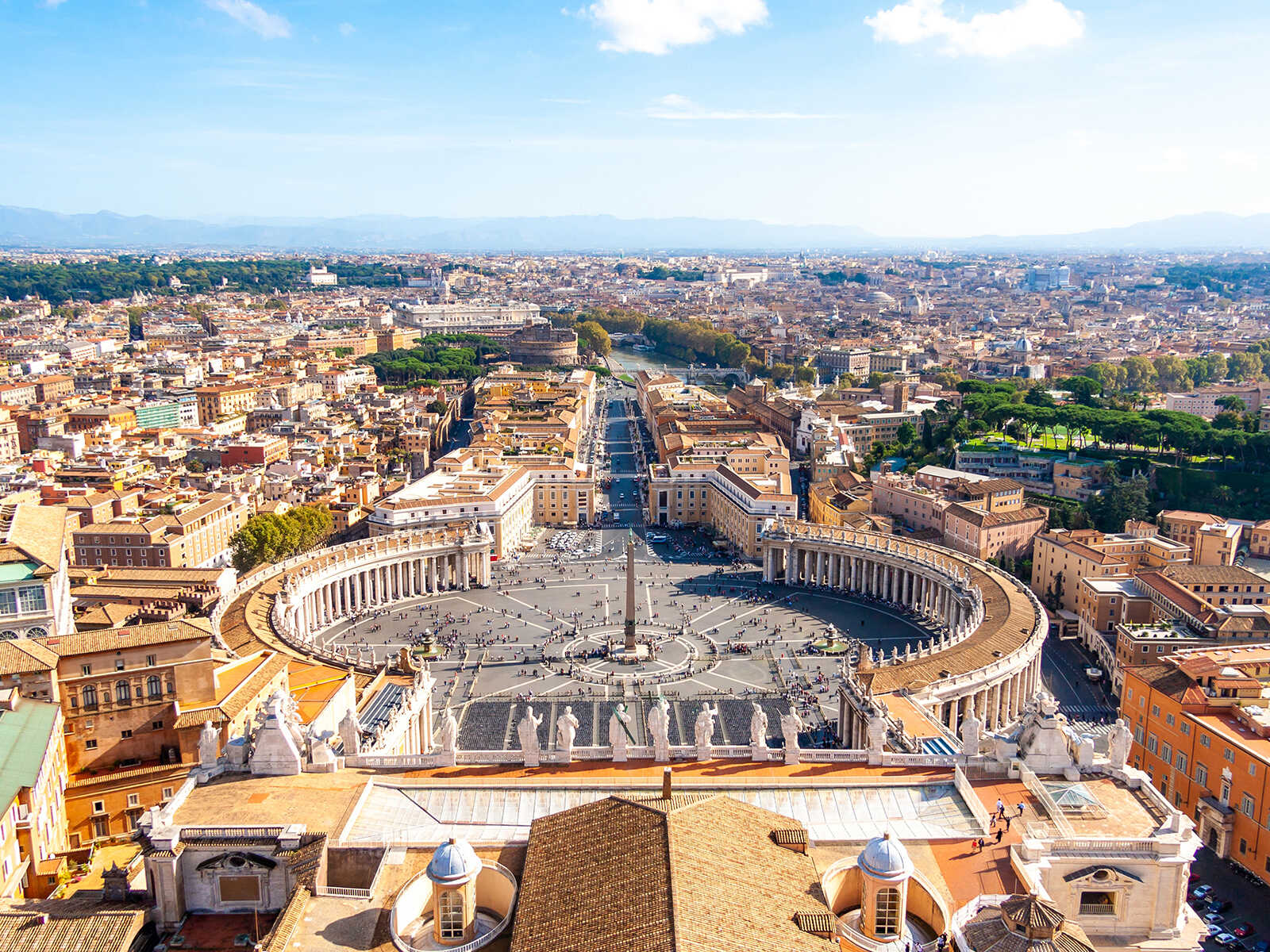
Michelangelo's magnificent dome, completed after his death by Giacomo della Porta and Domenico Fontana, is an engineering marvel and an artistic triumph. Its elegant lines and impressive scale are a defining feature of the Roman skyline. Visitors have the option to ascend the dome, either by elevator part-way or by climbing hundreds of stairs. The panoramic views from the top, encompassing Piazza San Pietro, the Vatican Museums, and the entire city of Rome, are absolutely unforgettable.
Papal Altars and Tombs: The Vatican Grottoes
Beneath the main floor of the basilica lie the Vatican Grottoes, a fascinating labyrinth where many Popes, including St. Peter himself, are entombed. This sacred space allows visitors to walk among the resting places of centuries of pontiffs, offering a direct connection to the Church's long history. The Grottoes also contain fragments of the original Constantinian basilica.
Other Notable Artworks
Beyond these iconic pieces,St. Peter's Basilica is replete with other significant works: intricate mosaics (which replaced most paintings due to humidity), numerous statues of saints, and elaborate funerary monuments, such as Bernini'sTomb of Urban VIIIand Antonio Canova'sTomb of Clement XIII. Each chapel and niche tells a story, contributing to the basilica's overwhelming sense of grandeur and spiritual richness.
The Spiritual Heart of Catholicism
St. Peter's Basilica is more than just a museum of magnificent art; it is a living, breathing center of Christian faith. As the principal church of the Catholic Church, it serves as a major pilgrimage site, a place where the faithful gather from across the globe. Papal Masses and important ceremonies are held here, drawing immense crowds to witness the Pope deliver blessings and celebrate liturgy.
The sheer scale and beauty of the basilica evoke a profound sense of awe and reverence. For many, it is a place of deep personal reflection, prayer, and connection to their faith. The atmosphere, whether during a quiet moment of contemplation or amidst a bustling service, is undeniably powerful, making it a truly unique spiritual experience.
Planning Your Visit to St. Peter's Basilica
To make the most of your visit to this incredible landmark, here are some practical tips:
- Dress Code:Adhere to the strict dress code. Shoulders and knees must be covered for both men and women. You will be denied entry if not appropriately dressed.
- Security Checks:Expect airport-style security checks, which can lead to long queues, especially during peak season.
- Best Time to Visit:Arrive early in the morning (before 9:00 AM) or late in the afternoon (after 4:00 PM) to avoid the largest crowds. Wednesdays, especially if there's a Papal audience in Piazza San Pietro, can be exceptionally busy.
- Guided Tours:Consider a guided tour to gain deeper insights into the basilica's history, art, and symbolism. Audio guides are also available.
- Ascending the Dome:This is a separate experience with an additional fee. Be prepared for a significant number of stairs, especially for the final ascent. The views are worth the effort if you're physically able.
- Vatican Grottoes:Access to the Papal Grottoes is usually free and located beneath the basilica. Follow the signs inside.
- Combined Visits:St. Peter's Basilica is often visited in conjunction with the nearby Vatican Museums and Sistine Chapel. Plan your itinerary carefully, as these sites require significant time.
Exploring St. Peter's Basilica is an unforgettable journey that combines profound spiritual significance with unparalleled artistic and architectural achievement. It's an essential stop for anyone visiting Vatican City, promising an experience that will stay with you long after you've left its magnificent embrace.