
A Brief History of Vanuatu: Unraveling Its Island Story
Vanuatu, an archipelago nation in the South Pacific, boasts a history as vibrant and diverse as its coral reefs and active volcanoes. From ancient migrations to colonial complexities and a hard-won independence, its story is a compelling tapestry woven through millennia. Understanding Vanuatu's past is key to appreciating its unique culture and resilient spirit today.Ancient Roots: The First Islanders and Melanesian Heritage
The earliest chapters of Vanuatu's history trace back over 3,000 years, with evidence pointing to the arrival of the Lapita people, skilled seafarers who spread across the Pacific. These ancestors of modern Polynesians and Melanesians brought with them distinctive pottery, agricultural practices, and sophisticated navigational techniques, establishing communities across the islands.
Over centuries, these early settlements evolved into the diverse Melanesian societies that characterize Vanuatu today. Isolation between islands led to an astonishing array of cultures, traditions, and languages – Vanuatu is recognized as one of the most linguistically diverse places on Earth, with over 100 indigenous languages spoken among its roughly 80 islands. Traditional governance, centered on chiefs and complex social systems, thrived, deeply connected to the land, sea, and ancestral spirits.
European Contact and Colonial Influence
The first documented European sighting of Vanuatu occurred in 1606 when Portuguese explorer Pedro Fernandes de Queirós, sailing under the Spanish flag, stumbled upon the largest island and, believing he had found the great southern continent, named itAustrialia del Espíritu Santo. His grand claims, however, proved premature.
It wasn't until 1768 that French explorer Louis Antoine de Bougainville charted several northern islands. Then, in 1774, Captain James Cook extensively explored the archipelago, naming it theNouvelles Hébrides(New Hebrides) due to its resemblance to the Scottish Hebrides. This name would stick for nearly two centuries.
The 19th century brought a new wave of European influence. Missionaries arrived, introducing Christianity, while traders sought sandalwood and bêche-de-mer (sea cucumber). A darker chapter unfolded with the practice of "blackbirding," where thousands of ni-Vanuatu (the indigenous people of Vanuatu) were coercively recruited or kidnapped to work on plantations in Queensland, Australia, and Fiji. This period caused immense social disruption and population decline.
As French and British interests in the islands grew, particularly concerning land ownership and plantations, neither nation wished for the other to gain sole control. This led to the establishment of the unique and often chaotic Anglo-French Condominium in 1906. This dual colonial rule, famously dubbed "the Pandemonium" by locals, meant parallel administrations, laws, and even currencies. It was a system ripe for inefficiencies and cultural clashes.
Interesting Fact:The Anglo-French Condominium was so notoriously inefficient that it had two police forces, two prison systems, and even two sets of street signs in some areas. It created a complex administrative maze that deeply shaped the ni-Vanuatu experience.
World War II: A Strategic Pacific Hub
The outbreak of World War II dramatically altered Vanuatu's trajectory. Its strategic location in the South Pacific made it a vital Allied military base, particularly for the United States. Major airfields, ports, and support facilities were rapidly constructed on islands like Efate and Santo, transforming the tranquil islands into bustling logistical hubs.
The presence of tens of thousands of American troops brought unprecedented exposure to Western goods, technology, and culture. While the war effort provided employment and new skills, it also introduced a stark contrast to the traditional way of life and the colonial administration. The abrupt departure of the Americans at the war's end, leaving behind vast amounts of surplus equipment, contributed to the emergence of "cargo cults" in some areas, most notably the John Frum movement on Tanna Island, often associated with the area near Yasur Volcano.
Path to Independence: A Nation Forged
Post-war, the call for self-determination grew louder across the Pacific. In Vanuatu, the Condominium's inefficiencies and the desire for greater local control fueled a strong independence movement. Nationalist political parties began to form in the 1970s, advocating for an end to colonial rule and the creation of a unified ni-Vanuatu nation.
One prominent figure was Walter Lini, an Anglican priest who led the Vanua'aku Pati, pushing for immediate independence. However, the path was not without challenges. On the island of Espiritu Santo, a secessionist movement led by Jimmy Stevens and his Nagriamel movement, supported by some foreign interests, briefly declared independence for the "Republic of Vemerana." This attempted secession was ultimately quelled with the assistance of Papua New Guinean forces.
Despite these internal struggles, the momentum for independence was unstoppable. On July 30, 1980, the Republic of Vanuatu proudly raised its new flag, declaring its sovereignty and adopting its indigenous name. Walter Lini became the nation's first Prime Minister, guiding the young country through its initial years of self-governance.
Vanuatu Today: A Living History
Today, Vanuatu stands as a testament to its rich and complex history. The legacy of ancient customs, diverse languages, and traditional island life continues to thrive alongside modern developments. The capital, Port Vila on Efate, buzzes with activity, reflecting the blend of cultures and influences that have shaped the nation.
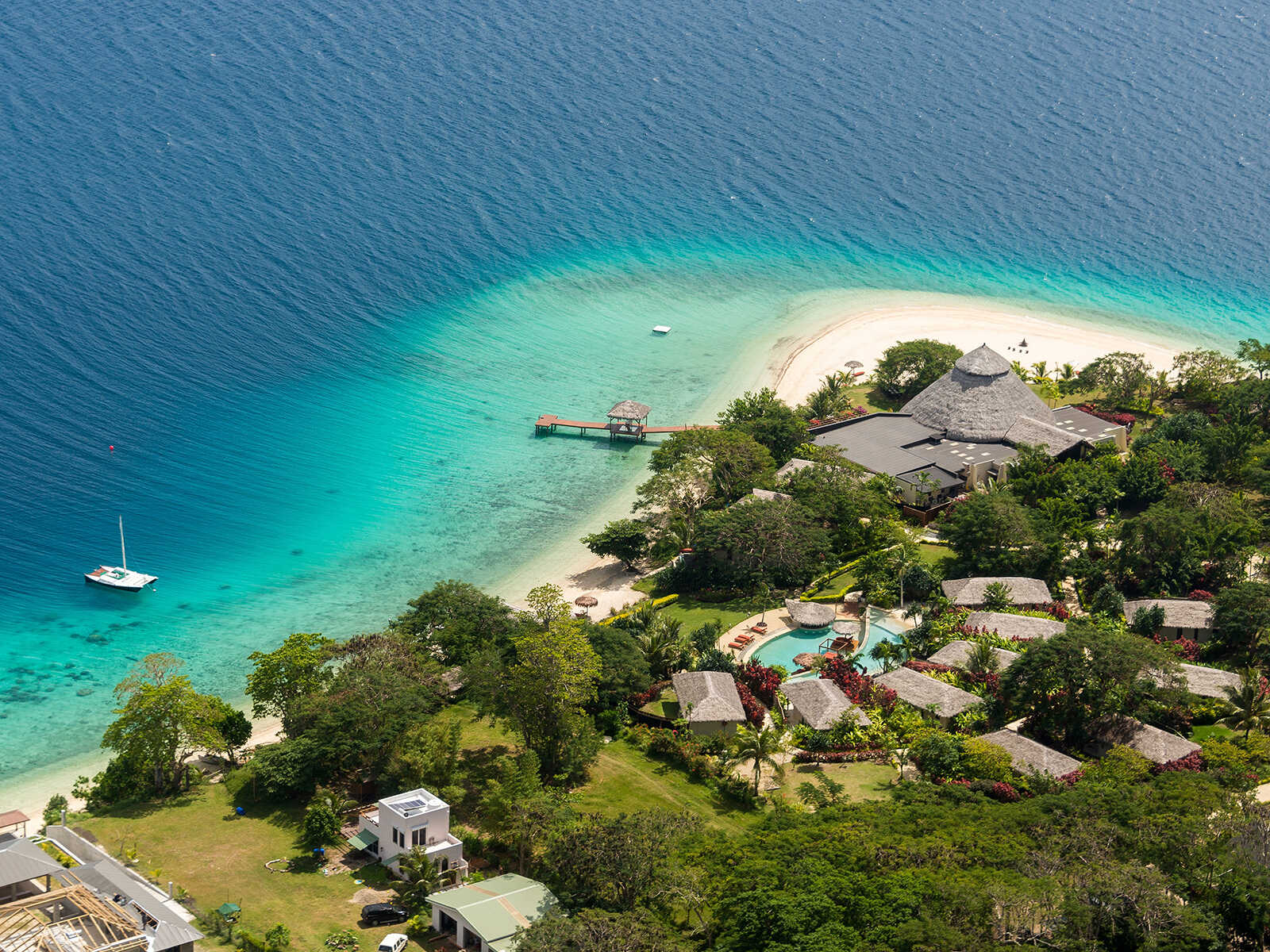
Visitors can immerse themselves in this living history, from exploring the vibrant local markets to witnessing traditional Kastom ceremonies. The islands' natural beauty, such as the stunning Blue Lagoon or the tranquil Eton Beach on Efate, and the impressive Rarru Rentapao River Cascade and Evergreen Cascades Waterfall, complement the deep cultural experiences. Places like Champagne Beach on Santo or the pristine shores of Mystery Island offer glimpses into the untouched paradise that has drawn people to these shores for millennia.
Vanuatu's history is not just a collection of past events; it is a dynamic force that continues to shape its identity, its people, and its future. From the whispers of ancient navigators to the echoes of independence, Vanuatu's island story is a fascinating journey worth unraveling.