
A Brief History of the United Arab Emirates for Visitors
The United Arab Emirates stands today as a beacon of modernity, innovation, and luxury, yet its remarkable transformation is rooted in a rich and enduring history. From ancient trading posts to a global powerhouse, understanding the UAE's past offers invaluable context to its vibrant present.
Ancient Roots: Pre-Oil Era
Before the gleaming skyscrapers and bustling metropolises, the land that now constitutes the UAE was home to resilient communities shaped by the harsh desert and the bountiful sea. Archaeological evidence points to human habitation dating back thousands of years, with settlements thriving due to strategic locations along ancient trade routes connecting Mesopotamia, Persia, and the Indus Valley. Early inhabitants were primarily involved in fishing, pearl diving, and nomadic pastoralism. The Bedouin tribes, with their deep knowledge of the desert and unwavering hospitality, formed the cultural backbone of the region, their lives dictated by the rhythm of the seasons, the availability of water, and the demands of trade. Fortifications like Al Bidya Mosque in Fujairah, one of the oldest mosques in the UAE, stand as a testament to these early settlements and their enduring faith. This era was characterized by self-sufficiency, deep community ties, and a profound respect for the natural environment.
The Trucial States and British Influence
By the 16th century, European powers began to assert their influence in the Gulf. The British, seeking to secure trade routes to India, became increasingly involved in policing the waters against piracy, which was prevalent in the region. This led to a series of treaties in the 19th century with the various tribal sheikhdoms along the coast, collectively known as the "Trucial Coast" or "Trucial States." Under these treaties, the British provided protection in exchange for a cessation of maritime conflict, effectively establishing a British protectorate. Life during this period remained largely traditional, centered around pearl diving – which was the primary source of wealth – fishing, and trade. The pearl industry, however, faced a severe decline in the 1930s due to the Great Depression and the advent of cultured pearls, plunging the region into significant economic hardship and forcing many to seek alternative livelihoods. This period of scarcity forged a resilient spirit that would later be crucial for nation-building.
The Discovery of Oil and Rapid Transformation
The mid-20th century marked a pivotal turning point for the Trucial States. In the late 1950s and early 1960s, vast reserves of oil were discovered, first in Abu Dhabi (1958), and then in Dubai (1966) and other emirates. This discovery heralded an era of unprecedented wealth and rapid modernization. Oil revenues provided the resources needed to build essential infrastructure: schools, hospitals, roads, and modern housing. The traditional way of life began to give way to a vision of progress. As the British prepared to withdraw from the East of Suez in the late 1960s, the need for a unified entity became paramount to ensure stability and prosperity for the newly wealthy states.
The Birth of the Federation: A Vision Realized
Recognizing the strength in unity, the visionary leaders of the Trucial States, particularly Sheikh Zayed bin Sultan Al Nahyan of Abu Dhabi and Sheikh Rashid bin Saeed Al Maktoum of Dubai, initiated discussions for a federation. Their foresight and diplomatic efforts culminated in the historic agreement to form the United Arab Emirates. On December 2, 1971, six emirates – Abu Dhabi, Dubai, Sharjah, Ajman, Umm Al Quwain, and Fujairah – officially joined to form the UAE. Ras Al Khaimah joined the federation in 1972. Sheikh Zayed bin Sultan Al Nahyan was elected as the first President, a role he held until his passing in 2004, earning him the revered title of "Father of the Nation." His legacy of unity, progress, and environmental stewardship continues to shape the nation.
Did You Know?The UAE's flag, designed by a young Emirati, was hoisted for the first time on December 2, 1971, symbolizing the birth of the nation. The four colors represent traditional Arab unity: green for fertility, white for peace, black for strength, and red for sovereignty.
Modern UAE: Growth and Diversification
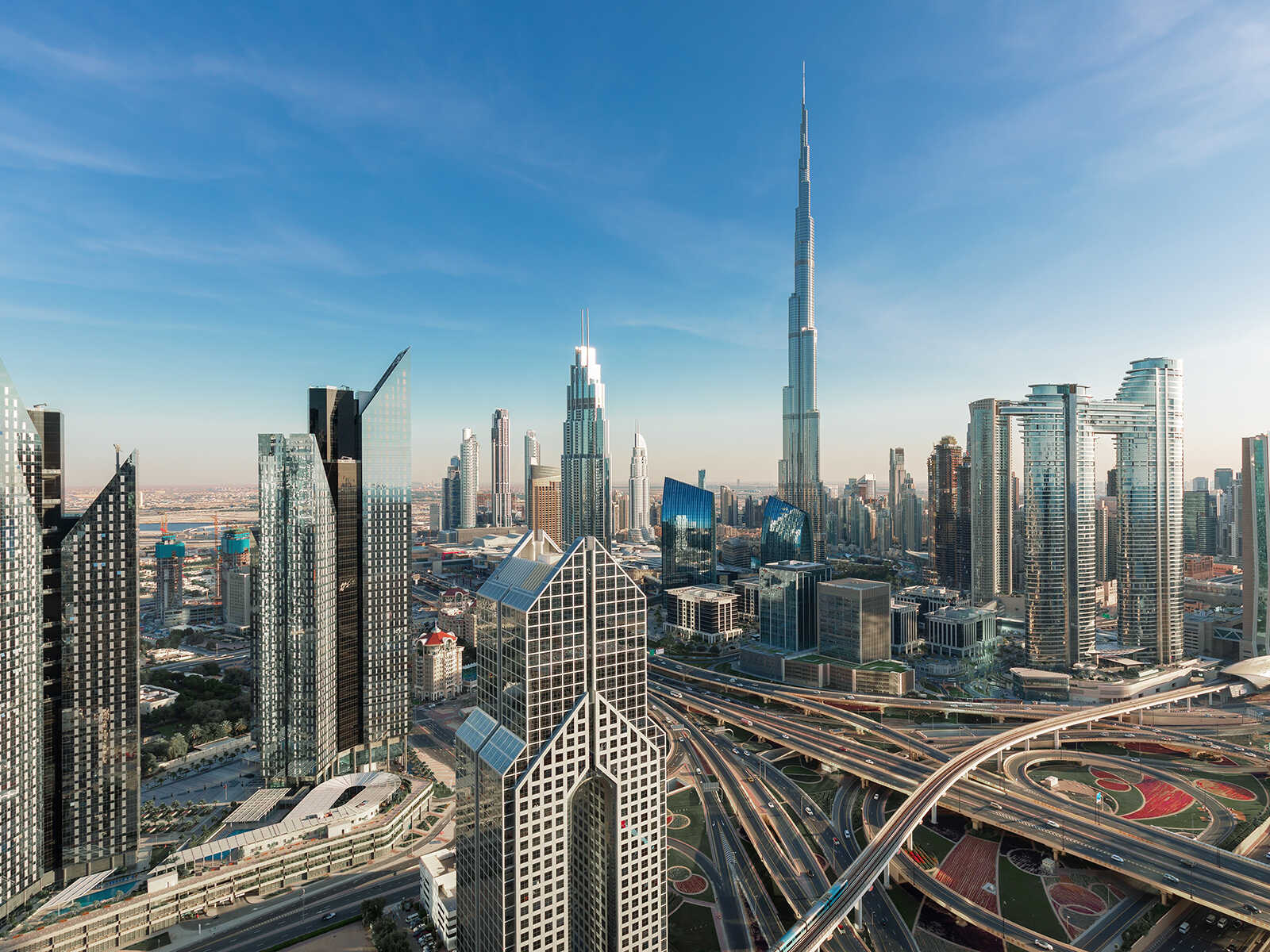
Since its formation, the UAE has embarked on an extraordinary journey of growth and diversification. Under the guidance of its visionary leaders, the nation has strategically invested its oil wealth into developing world-class infrastructure, fostering a diverse economy, and creating a global hub for trade, tourism, and innovation. Dubai rapidly emerged as a major commercial and tourism center, home to iconic landmarks such as the towering Burj Khalifa and the vibrant Dubai Miracle Garden. Abu Dhabi, the capital, has also transformed into a cultural and economic powerhouse, exemplified by the breathtaking Sheikh Zayed Grand Mosque and the world-renowned Louvre Abu Dhabi.
Beyond these two major cities, other emirates have also carved out unique identities and contributed significantly to the federation's success. Sharjah is celebrated as the cultural capital, with a strong focus on heritage, arts, and education. Fujairah, on the East Coast, leverages its stunning mountainous landscapes and coastal beauty, attracting visitors to natural attractions like Snoopy Island. Ajman, the smallest emirate, is growing with its beautiful Ajman Beach and developing infrastructure, while Umm Al Quwain and Ras Al Khaimah offer a blend of history, nature, and adventure, including the majestic Jebel Jais mountain. The UAE's vision extends beyond oil, focusing on a knowledge-based economy, advanced technology, aerospace, and renewable energy, positioning the nation as a leader in regional and global affairs.
A Legacy of Innovation and Hospitality
The remarkable speed of the UAE's development is often attributed to the strong leadership and the pioneering spirit of its people. The nation seamlessly blends its rich cultural heritage with a relentless pursuit of the future. Traditional values of hospitality, tolerance, and community remain at its core, even as it embraces cutting-edge technology and global trends. This unique synthesis creates a dynamic and welcoming environment for visitors from around the world.
Experiencing the UAE's History Today
For visitors, exploring the UAE's history is an enriching experience that adds depth to their trip. You can walk through the narrow alleyways of the past and witness the grandeur of the present.
- Step Back in Time:Visit the Al Fahidi Historical District in Dubai, where meticulously restored wind-tower houses and museums offer a glimpse into life before oil. Explore traditional souks and art galleries.
- Ancient Fortifications:Discover the ancient Al Bidya Mosque in Fujairah, a simple yet profound testament to early Islamic architecture.
- Cultural Icons:Marvel at the architectural splendor of the Sheikh Zayed Grand Mosque in Abu Dhabi, a symbol of modern Islamic art and a tribute to the nation's founder.
- Art and Heritage:Immerse yourself in the global art and artifacts at the Louvre Abu Dhabi, which bridges ancient civilizations with contemporary culture.
- Coastal Heritage:Explore the beautiful beaches like Jumeirah Beach or Kite Beach in Dubai, or Ajman Beach, where the legacy of pearl diving and fishing once shaped livelihoods. Even destinations like Jebel Jais offer a connection to the rugged terrain that shaped Bedouin life for centuries.
The blend of ancient traditions and futuristic ambition is what makes the UAE truly unique.
Conclusion
From its humble beginnings as a collection of desert and coastal settlements, the United Arab Emirates has transformed into a global icon in just a few short decades. Its history is a compelling narrative of resilience, vision, and rapid progress. As you explore its modern wonders, take a moment to appreciate the journey that brought this extraordinary nation to life.