
A Brief History of Uganda: Key Milestones for Travelers
Uganda, often called the "Pearl of Africa," boasts a rich and complex history that has profoundly shaped its vibrant culture and stunning landscapes. Understanding its past offers travelers a deeper appreciation for the country's resilience, its diverse peoples, and the remarkable natural wonders awaiting discovery.
Ancient Roots and Powerful Kingdoms
Uganda's human history stretches back millennia, with evidence of early hominids dating back millions of years. The earliest known inhabitants were likely hunter-gatherer communities. Around 500 AD, Bantu-speaking peoples began migrating into the region, bringing with them agricultural practices and ironworking. These migrations led to the establishment of sophisticated societal structures and, eventually, powerful kingdoms that would dominate the landscape for centuries.
Among the most prominent of these pre-colonial entities were the kingdoms of Buganda, Bunyoro-Kitara, Ankole, and Toro. The Kasubi Royal Tombs in Kampala are a UNESCO World Heritage site, serving as a poignant reminder of the Buganda Kingdom's enduring legacy and its profound influence on the region. Buganda, in particular, rose to become the most powerful and organized kingdom by the 18th century, with a highly centralized administration and a formidable army. Its intricate political system and cultural traditions laid much of the groundwork for the modern Ugandan state.
The Arrival of Europeans and Colonial Rule
The mid-19th century marked a significant turning point with the arrival of European explorers, missionaries, and traders. Notable explorers like John Hanning Speke, who was searching for the source of the Nile, and Henry Morton Stanley, traversed the region, bringing it to the attention of the wider world. Following closely were Christian missionaries – both Protestant and Catholic – who sought to convert the local populations, often leading to internal conflicts within the kingdoms as new faiths challenged traditional beliefs.
By the late 19th century, the scramble for Africa saw European powers carving up the continent. In 1894, the British declared a protectorate over Buganda, gradually extending it to cover the entire territory that would become modern Uganda. British colonial rule, though relatively short compared to some other African nations, brought significant changes. It introduced a cash crop economy, primarily focusing on cotton and coffee, built infrastructure like roads and railways, and established administrative systems that often favored certain ethnic groups, particularly the Baganda, leading to future ethnic tensions. The colonial administration also delineated the boundaries of national parks, inadvertently setting the stage for future conservation efforts in places like Murchison Falls and Queen Elizabeth National Park.
Traveler's Insight:Many of Uganda's current administrative divisions and major towns have their roots in the colonial era, making historical maps surprisingly relevant to modern travel routes.
The Road to Independence and Early Challenges
As the mid-20th century approached, a wave of nationalism swept across Africa. Ugandans began to demand self-rule. Political parties emerged, advocating for independence and shaping the future direction of the nation. On October 9, 1962, Uganda proudly gained its independence from British rule, with Milton Obote becoming the country's first Prime Minister.
The euphoria of independence was soon tempered by political instability. The early years saw struggles between the central government and the traditional kingdoms, particularly Buganda, over the distribution of power. In 1966, Obote abolished the traditional kingdoms and declared Uganda a republic, consolidating power and laying the groundwork for further political upheaval.
Decades of Turmoil: Amin and Post-Amin Era
The most tumultuous period in Uganda's history began in 1971 when General Idi Amin Dada seized power in a military coup, overthrowing Obote. Amin's eight-year rule was marked by extreme human rights abuses, political repression, and economic decline. His regime led to the expulsion of the Asian community, who were vital to the country's economy, and the brutal killing of an estimated 300,000 Ugandans. Tourism, once a promising sector, collapsed entirely during this era.
In 1979, the Uganda-Tanzania War led to Amin's overthrow, but the period immediately following was characterized by continued instability, power struggles, and a devastating civil war. Several interim governments rose and fell, and the country struggled to find its footing amidst widespread conflict and economic ruin. This challenging period underscores the incredible resilience of the Ugandan people.
A New Dawn: Stability and Reconstruction
In 1986, the National Resistance Movement (NRM), led by Yoweri Museveni, came to power, marking a significant turning point. Museveni's government embarked on a path of political stability, economic reform, and national reconstruction. Over the subsequent decades, Uganda experienced a remarkable period of recovery and growth. The economy diversified, social services improved, and the rule of law was gradually re-established.
Crucially for travelers, this era also saw a renewed focus on conservation and tourism development. National parks, once neglected, were rehabilitated and expanded. Efforts to protect endangered species, particularly the mountain gorillas in Bwindi Impenetrable National Park and Mgahinga Gorilla National Park, gained international recognition. Today, these parks, alongside others like Kidepo Valley National Park,Lake Mburo, and Rwenzori Mountains National Park, are cornerstones of Uganda's vibrant tourism industry.
Modern Uganda: A Traveler's Perspective
Today's Uganda is a nation brimming with optimism, hospitality, and incredible natural beauty, deeply informed by its historical journey. Travelers will find a country that has embraced its past while looking forward to a bright future. The echoes of ancient kingdoms can be found in cultural sites and traditional practices. The colonial legacy is visible in architectural styles and infrastructure, while the recent decades of peace have allowed for the flourishing of tourism and conservation.
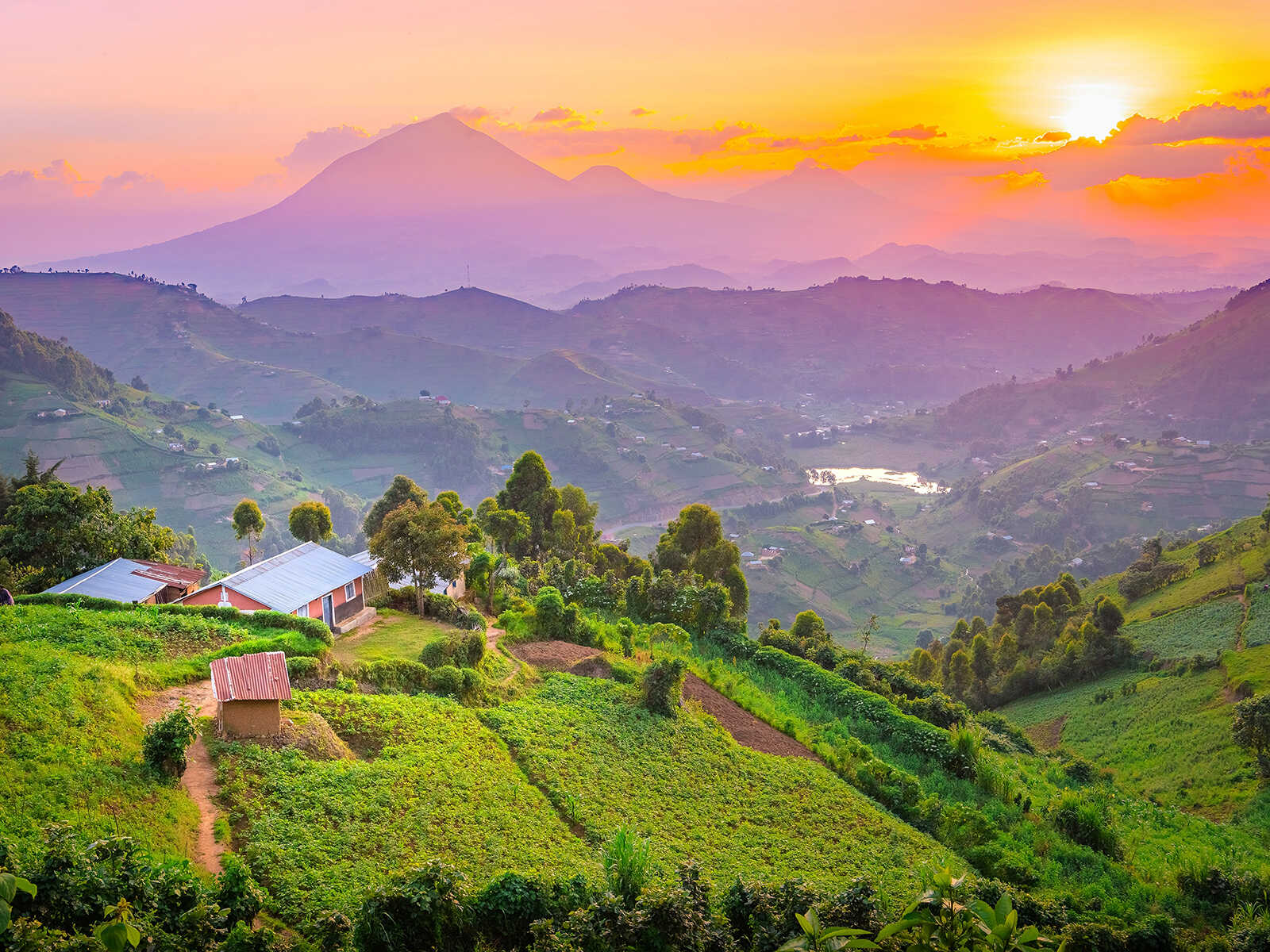
From trekking to see the magnificent mountain gorillas and chimpanzees, to exploring the source of the Nile, or embarking on safaris across diverse landscapes, Uganda offers unparalleled experiences. You can hike the stunning slopes of Mount Elgon or visit the picturesque Sipi Falls. The serene waters of Lake Bunyonyi offer a tranquil escape, while the bustling capital of Kampala showcases a modern African city, complete with impressive landmarks like the Gaddafi National Mosque. Every interaction, every landscape, and every cultural encounter tells a part of Uganda's compelling story.
Fun Fact:Uganda is home to over 50 different indigenous ethnic groups, each with its unique language, customs, and traditions, contributing to the country's rich cultural tapestry.
Conclusion: Embracing Uganda's Story
Uganda's history is a powerful narrative of ancient civilizations, colonial influence, periods of profound challenge, and ultimately, inspiring resilience and rebirth. For the modern traveler, this rich tapestry provides a profound context for understanding the nation's present vibrancy. By exploring its historical sites, engaging with its diverse cultures, and experiencing its breathtaking natural wonders, you're not just visiting a country; you're stepping into a living story. Come and discover the enduring spirit of the Pearl of Africa.