
Switzerland's History & Culture: A Fascinating Journey Through Time
Switzerland, often celebrated for its breathtaking Alpine landscapes, also boasts a rich and complex tapestry of history and culture that has shaped its unique identity. From ancient Roman settlements to the birth of its enduring neutrality, and from diverse linguistic traditions to world-renowned innovations, a journey through Switzerland is truly a fascinating voyage through time.
A Tapestry Woven Through Time: Historical Highlights
Early Beginnings & Roman Influence
The story of Switzerland begins long before its official formation. Evidence of Stone Age settlements dates back millennia, followed by various Celtic tribes, most notably the Helvetii. By 15 BC, the Roman Empire had conquered the region, integrating it as the province of Helvetia. Roman roads, towns, and villas left an indelible mark, influencing early infrastructure and agricultural practices. After the fall of Rome, Germanic tribes like the Alemanni and Burgundians settled, laying the groundwork for the linguistic divisions seen today.
The Birth of the Confederacy
The pivotal moment in Swiss history arrived on August 1, 1291. Representatives from the three founding cantons – Uri, Schwyz, and Unterwalden – swore the Rütli Oath, forming an "Everlasting Alliance" against the Habsburg rulers. This act, often romanticized by the legend of William Tell, marked the birth of the Old Swiss Confederacy. Over the centuries, more cantons joined, expanding the confederacy's territory and solidifying its independence through various battles against powerful European empires.
Reformation & Neutrality
The 16th century brought the Reformation, with figures like Huldrych Zwingli in Zürich and John Calvin in Geneva profoundly impacting Swiss society and politics. This period saw religious wars within the Confederacy, eventually leading to a more defined federal structure. Switzerland's policy of armed neutrality, though informally practiced earlier, gained formal international recognition with the Treaty of Westphalia in 1648 and was reaffirmed at the Congress of Vienna in 1815. This neutrality has been a cornerstone of its foreign policy ever since, even allowing Swiss mercenaries to serve foreign powers for centuries, earning a reputation for skill and discipline.
Modern Switzerland
The 19th and 20th centuries saw Switzerland evolve into a modern federal state with a strong emphasis on direct democracy. Industrialization brought prosperity and a burgeoning watchmaking industry, while its unique political system, allowing citizens to vote on specific laws and constitutional amendments, became a model for participatory governance. Switzerland's neutrality proved crucial during both World Wars, providing refuge and facilitating humanitarian efforts, including the establishment of the International Red Cross in Geneva. Today, it remains a stable, prosperous nation, a hub for international organizations, and a beacon of innovation.
The Vibrant Soul of Switzerland: Cultural Insights
Linguistic Diversity
One of Switzerland's most striking cultural features is its linguistic diversity. It boasts four official languages:German(spoken by about 63% of the population, primarily Swiss German dialects),French(23%, mainly in the west around Lake Geneva and Lausanne),Italian(8%, predominantly in Ticino, near Lugano), andRomansh(less than 1%, spoken in parts of Graubünden). This linguistic mosaic fosters a rich regional identity, influencing everything from local cuisine to architectural styles and social customs.
Alpine Traditions & Folklore
The Alps are not just a geographical feature but a profound cultural influence. Traditional Alpine life, with its focus on farming, cheesemaking, and mountain sports, has shaped many Swiss customs. Visitors can still experience elements of this heritage through:
- Yodeling and Alphorns:Iconic sounds echoing through the valleys.
- Schwingen:A unique form of Swiss wrestling, a popular national sport.
- Traditional Festivals:Celebrations like the Unspunnenfest near Interlaken, showcasing folklore, wrestling, and stone put.
- Folk Costumes:Still worn for special occasions, reflecting regional variations.
Culinary Delights
Swiss cuisine, like its languages, is a delightful blend of regional influences. Famous worldwide are:
- Cheese:From creamy Gruyère to pungent Appenzeller, Swiss cheese is central to dishes likefondueandraclette.
- Chocolate:Swiss chocolate is renowned for its quality and innovation, with a rich history dating back to the 19th century.
- Rösti:A hearty potato dish, often served as a side or main course.
- Zürcher Geschnetzeltes:Sliced veal in a mushroom-cream sauce, a specialty of Zürich.
- Local Wines:Many regions produce excellent wines, often consumed domestically.
Travel Tip:When exploring Switzerland's culinary scene, don't be afraid to venture beyond the famous dishes. Each region offers unique specialties, from hearty mountain fare to Mediterranean-inspired cuisine in Ticino.
Arts & Innovation
Switzerland has a long history of craftsmanship and innovation. Its watchmaking industry, centered in the Jura region, is globally recognized for precision and luxury. Beyond horology, Switzerland has contributed significantly to science (CERN, Albert Einstein), architecture (Le Corbusier), and fine arts. Its cities boast world-class museums and galleries, while its traditional villages preserve unique architectural styles, from charming chalets to grand Belle Époque hotels in places like St. Moritz.
Festivals & Celebrations
Throughout the year, Switzerland comes alive with a variety of festivals that showcase its diverse cultural heritage:
- Fasnacht (Carnival):Particularly vibrant in Basel, featuring elaborate costumes, parades, and music.
- Sechseläuten:Zürich's spring festival, culminating in the burning of the "Böögg," a snowman effigy, to predict the summer weather.
- Fête de l'Escalade:Celebrated in Geneva, commemorating the city's victory against a surprise attack in 1602.
- Paléo Festival Nyon:One of Europe's largest open-air music festivals, held near Lake Geneva.
Experiencing Switzerland's Heritage Today
Historic Cities & Towns
To truly immerse yourself in Switzerland's history and culture, explore its charming cities and towns:
- Bern:The capital city's UNESCO-listed Old Town, with its medieval arcades, fountains, and the iconic Zytglogge clock tower, is a living museum.
- Lucerne:Famous for its Chapel Bridge (Kapellbrücke) and water tower, surrounded by stunning mountain scenery.
- Zürich:A bustling financial hub with a beautifully preserved Old Town, impressive churches, and a vibrant arts scene.
- Lausanne:Perched on Lake Geneva, known for its Gothic cathedral and as the home of the International Olympic Committee.
- Lugano:In the Italian-speaking canton of Ticino, offering a Mediterranean flair with palm trees, lakeside promenades, and vibrant piazzas.
Museums & Galleries
Switzerland offers a plethora of museums catering to every interest. The Swiss National Museum in Zürich provides a comprehensive overview of the nation's history. The Olympic Museum in Lausanne celebrates sports heritage, while numerous watchmaking museums across the country delve into this intricate craft. Art galleries, from classic to contemporary, are found in every major city.
Natural Wonders & Cultural Landscapes
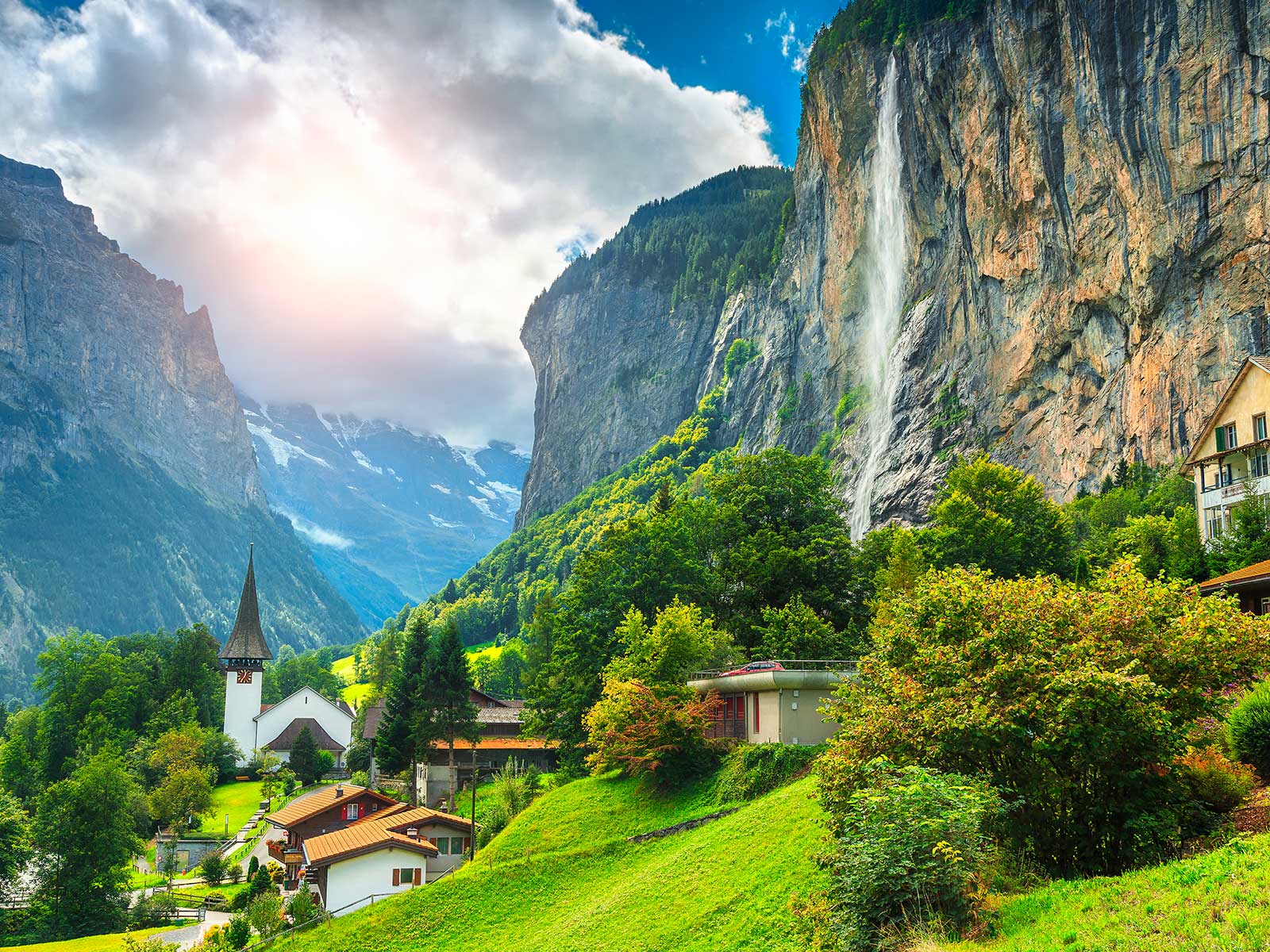
The dramatic landscapes of Switzerland have always been intertwined with its cultural identity. The majestic peaks, like The Matterhorn, are symbols of national pride and have inspired generations. Valleys like Lauterbrunnen Valley showcase traditional Alpine farming and village life, while engineering marvels like the bridges and tunnels through the Alps demonstrate human ingenuity in harmony with nature. Even natural spectacles like The Rhine Falls have played a role in local folklore and historical trade routes.
From the ancient echoes of Roman legions to the precise tick of a modern Swiss watch, and from the solemn oaths of confederates to the joyous sounds of an alphorn, Switzerland's history and culture offer an endlessly fascinating journey. It's a land where tradition seamlessly blends with innovation, and where every valley and peak tells a story of resilience, diversity, and enduring charm.