
Sweden History: A Timeline of Key Events & Turning Points
Sweden, a land of stunning natural beauty and innovative design, boasts a rich and complex history stretching back millennia. From its ancient roots to its modern status as a global leader in sustainability and welfare, understanding Sweden's past offers profound insights into its present identity. This timeline explores the pivotal moments and transformations that have shaped this fascinating Nordic nation.
Early History: From Ice Age to Viking Sagas
Evidence of human settlement in Sweden dates back to the Stone Age, around 10,000 BCE, as glaciers retreated. Hunter-gatherer cultures thrived, adapting to the changing landscape. The Bronze Age (c. 1800-500 BCE) brought advancements in metalworking and distinctive rock carvings, while the Iron Age (c. 500 BCE - 800 CE) saw the development of more complex societies and early trade networks.
The Viking Age (c. 800-1050 CE)
This era is arguably Sweden's most famous historical period. Swedish Vikings, often referred to as Varangians, primarily focused their expeditions eastward across the Baltic Sea, establishing trade routes and settlements in Eastern Europe, Russia, and even reaching Byzantium. They were merchants, raiders, and colonizers, leaving a lasting legacy. Sites like Visby on Gotland were vital trading hubs, and the impressive stone ship setting of Ales Stenar offers a glimpse into their ceremonial practices.Sigtuna emerged as one of Sweden's earliest towns and a significant center for trade and early Christianity.
The Emergence of a Kingdom: Unification and Union
Christianization and Unification (c. 1000-1250 CE)
The Viking Age gradually transitioned into the medieval period with the arrival of Christianity. Missionaries, notably Saint Anskar in the 9th century, began the slow process of converting the pagan Norse. Olof Skötkonung, often considered Sweden's first Christian king, was baptized around 1000 CE. This period saw the gradual consolidation of regional power centers into a unified kingdom, with the church playing a crucial role in administration and cultural development. Early capital cities like Sigtuna gave way to others as the kingdom solidified.
Medieval Growth and the Hanseatic League (c. 1250-1523 CE)
Sweden continued to develop, with Stockholm emerging as a key city. The Hanseatic League, a powerful medieval trading confederation, significantly influenced Swedish commerce, particularly in cities like Visby. This era also saw the construction of many of Sweden's beautiful medieval churches and castles, laying the groundwork for the modern nation.
The Kalmar Union (1397-1523 CE)
A pivotal moment was the formation of the Kalmar Union, uniting the kingdoms of Denmark, Norway, and Sweden under a single monarch, Queen Margaret I of Denmark. While intended to create a strong Nordic power, it was often marked by internal conflicts and Swedish aspirations for independence. The imposing Kalmar Castle, a historic fortress, stands as a testament to this period of royal power and contention.
The Rise of a Great Power: Empire and Reformation
Gustav Vasa and the Reformation (1523 CE)
The Union formally ended with the election of Gustav Vasa as King of Sweden, marking the birth of modern Sweden. Vasa skillfully consolidated power, established a hereditary monarchy, and initiated the Protestant Reformation, breaking ties with the Catholic Church and seizing its wealth. This move laid the foundation for a strong, centralized state and a distinct Swedish identity.
The Swedish Empire (17th Century)
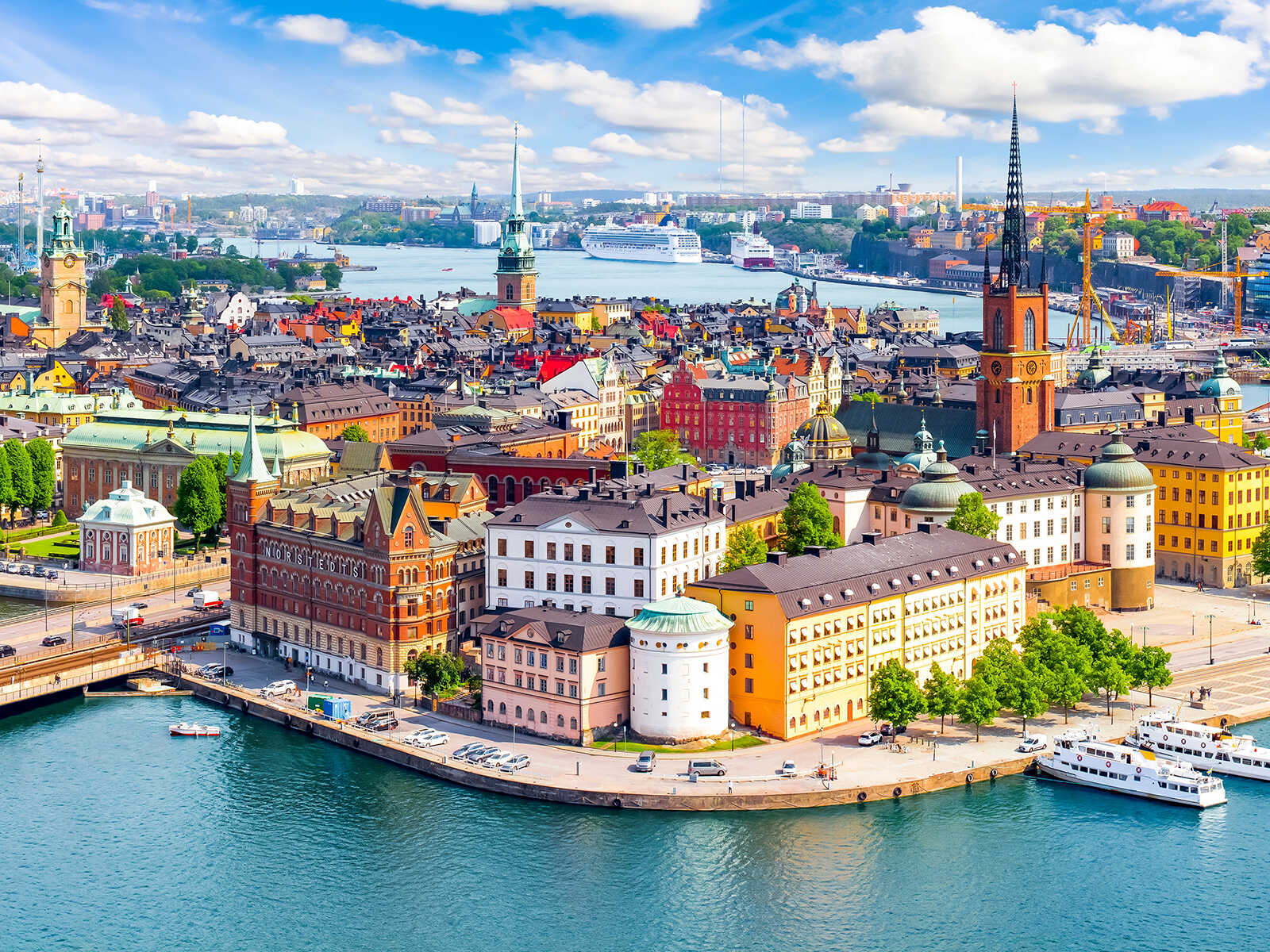
Under powerful monarchs like Gustavus Adolphus, Sweden rose to become a major European power. Its military prowess in the Thirty Years' War expanded its territories to include parts of modern-day Finland, the Baltic states, and northern Germany. This "Age of Greatness" saw significant architectural and cultural development, particularly in Stockholm. The iconic warship, the Vasa, which tragically sank on its maiden voyage in 1628, is now preserved at the Vasa Museum, offering an unparalleled glimpse into this era. Royal residences like Drottningholm Palace also began to take shape during this period. The winding cobblestone streets of Gamla Stan, Stockholm's old town, reveal much of the medieval and early modern city's character.
Decline and Modernization: Challenges and Transformations
Loss of Empire (18th Century)
The ambitious expansion eventually led to conflicts with neighboring powers, particularly Russia. The Great Northern War (1700-1721) resulted in significant territorial losses, ending Sweden's era as a major European power. This period was followed by a shift towards parliamentary rule, known as the Age of Liberty, which laid the groundwork for future democratic developments.
Union with Norway (1814-1905)
After the Napoleonic Wars, Sweden was compelled to enter a personal union with Norway, a politically tense arrangement that lasted nearly a century. This union ultimately dissolved peacefully in 1905, establishing Norway as an independent kingdom and fostering a new era of Nordic cooperation.
Industrialization and Emigration (19th Century)
The 19th century brought rapid industrialization, transforming Sweden from an agrarian society. However, poverty and social hardship also led to a significant wave of emigration, primarily to North America, with over a million Swedes seeking new opportunities and a better life abroad.
Did you know? During the peak of Swedish emigration to the United States, roughly one in five Swedes left the country, profoundly impacting both nations.
The 20th Century and Beyond: Neutrality and the Welfare State
Neutrality and the Welfare State (h3)
Sweden famously maintained its neutrality through both World Wars, though its position during WWII remains a subject of historical debate. Post-war, the Social Democratic Party spearheaded the development of the "Folkhemmet" (the People's Home), a model welfare state characterized by extensive social services, high taxation, and a strong commitment to equality and social justice.
Post-War Prosperity and Innovation
The latter half of the 20th century saw Sweden thrive economically, becoming a hub for engineering, technology, and design. Companies like Volvo, Ericsson, and IKEA gained global recognition, showcasing Sweden's innovative spirit and industrial prowess.
Modern Sweden
Today, Sweden is a constitutional monarchy and a parliamentary democracy, celebrated for its progressive policies, environmental leadership, and commitment to human rights. It joined the European Union in 1995. Iconic buildings like Stockholm City Hall, where the Nobel Prize banquet is held, symbolize its modern achievements and global connections. Cultural institutions like Skansen, the world's first open-air museum, continue to preserve and showcase Sweden's rich heritage for contemporary audiences.
Conclusion
Sweden's journey from Viking homeland to modern welfare state is a testament to its resilience, adaptability, and forward-thinking spirit. Each era has left an indelible mark, shaping the cultural landscape, political institutions, and national character. For visitors, exploring Sweden's historical sites, from ancient runestones to majestic castles and contemporary museums, offers a profound connection to this remarkable nation's enduring legacy.