
A Brief History of Suriname: From Colonial Past to Present Day
Suriname, a vibrant nation on South America's northeastern coast, boasts a rich and complex history shaped by centuries of diverse influences. From its indigenous roots to its colonial past and eventual independence, the story of Suriname is a fascinating tapestry of cultures, struggles, and resilience.
Early Inhabitants and European Arrival
Before European contact, Suriname was home to various indigenous groups, primarily the Carib and Arawak peoples. These communities lived off the land, fishing, hunting, and cultivating crops like cassava, long before any foreign flags were planted on their shores.
European explorers first sighted the Surinamese coast in the late 15th and early 16th centuries. Spanish navigators like Vicente Yáñez Pinzón and Diego de Lepe are credited with early sightings, but the Spanish never established a permanent settlement. The Dutch were among the first Europeans to attempt to trade and settle, followed by the British.
The Dutch Colonial Era and Plantation Economy
The first significant European settlement in Suriname was established by the British in the mid-17th century, led by Lord Willoughby of Parham. However, their control was short-lived. In 1667, during the Second Anglo-Dutch War, the Dutch captured Suriname. A pivotal moment in history occurred with the Treaty of Breda, where the Dutch formally ceded New Netherland (which included New Amsterdam, now New York City) to the English in exchange for Suriname. This exchange cemented Dutch control, which would last for nearly 300 years.
Did You Know?The Treaty of Breda in 1667 is a fascinating historical footnote, as it saw the Dutch exchange what is now New York City for Suriname, highlighting the perceived value of sugar plantations in the Caribbean at the time.
Under Dutch rule, Suriname transformed into a highly profitable plantation colony. The fertile lands were ideal for cultivating sugar, coffee, cocoa, and cotton. This economic model, however, was built on the brutal system of chattel slavery. Thousands of enslaved Africans were forcibly brought to Suriname to work on these plantations, enduring horrific conditions.
Resistance to slavery was widespread. Many enslaved people escaped into the dense rainforests, forming communities known as Maroons. These Maroon communities, such as the Saramaka, Ndyuka, and Kwinti, fought fiercely for their freedom, often clashing with colonial forces. Eventually, several peace treaties were signed between the Dutch and the Maroons in the 18th century, recognizing their autonomy and establishing boundaries.
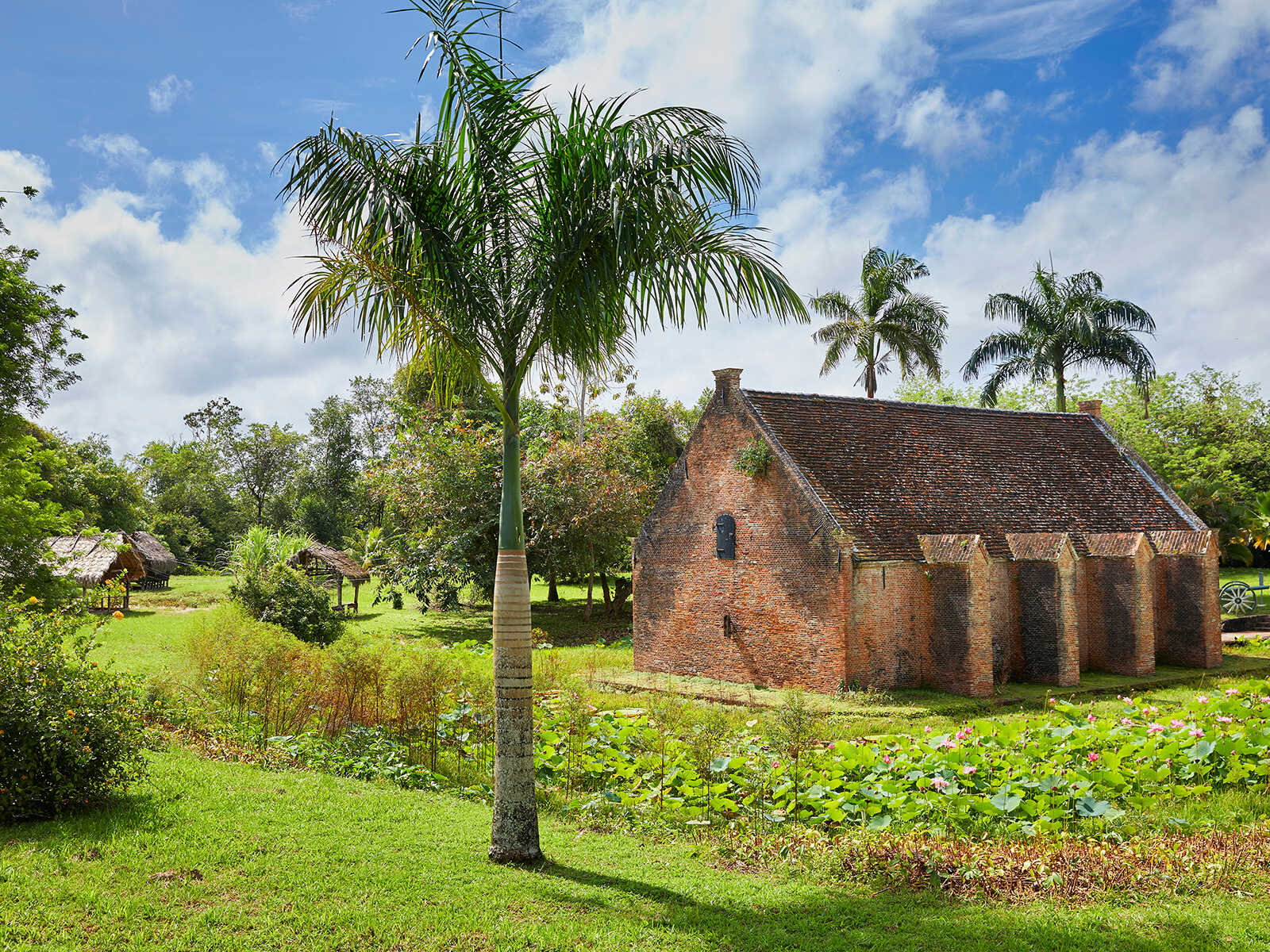
Visitors today can explore the remnants of this era, particularly in the Commewijne district, where many former plantations are still visible, some now repurposed or serving as historical sites. The capital city, Paramaribo, also bears the indelible mark of this period, with its stunning wooden colonial architecture, particularly evident near Fort Zeelandiaweg and the Palmtree Garden.
Abolition of Slavery and Indentured Labor
The abolition of slavery in Suriname came relatively late, on July 1, 1863. However, enslaved people were required to work for ten more years under state supervision as part of a transitional period. This period, known as "staatstoezicht" (state supervision), officially ended in 1873.
To address the labor shortage on plantations after the abolition, the Dutch government introduced indentured laborers. From 1873 onwards, large numbers of contract workers arrived from British India (Hindostanis), followed by Javanese (from Dutch East Indies, now Indonesia), Chinese, and smaller groups from other regions. These diverse groups brought their own languages, religions, and cultural traditions, further enriching Suriname's social fabric.
This influx of different ethnic groups is the primary reason for Suriname's incredible multiculturalism today. It’s a place where mosques and synagogues stand side-by-side, and various festivals are celebrated throughout the year. For instance, the majestic Saint-Peter-and-Paul Basilica of Paramaribo stands as a testament to its Christian heritage, while the prominent S.I.V. Mosque reflects its significant Muslim population.
Towards Independence
After World War II, a growing sense of nationalism emerged in Suriname, leading to increasing demands for self-governance. In 1954, Suriname gained autonomy within the Kingdom of the Netherlands, with control over its internal affairs. The path to full independence, however, was marked by political debates and economic considerations.
On November 25, 1975, Suriname officially became an independent republic. The transition was not without its challenges. A significant portion of the population, fearing instability and economic hardship, emigrated to the Netherlands in the years immediately before and after independence. The new nation faced the task of building its own institutions, developing its economy, and fostering national unity among its diverse communities.
Modern Suriname: A Republic Today
Since independence, Suriname has navigated various political and economic challenges, including periods of military rule in the 1980s. However, it has since returned to a democratic system, striving for stability and sustainable development.
Today, Suriname is celebrated for its remarkable cultural diversity and religious harmony. Its economy relies heavily on mining (bauxite, gold), oil, and agriculture. Ecotourism is also a growing sector, attracting visitors to its vast, pristine rainforests and unique biodiversity. Places like Brownsberg Nature Park offer stunning views and incredible wildlife, while Peperpot Nature Park, a former plantation, showcases both history and nature.
Paramaribo's historic inner city is a UNESCO World Heritage site, recognized for its unique and well-preserved Dutch colonial architecture, predominantly constructed from wood. The city is a living museum, reflecting centuries of history and the fusion of European and local building traditions.
Suriname's journey from a colonial past to a sovereign nation is a testament to its people's enduring spirit. It's a country that proudly embraces its multicultural identity, offering visitors a unique glimpse into a vibrant South American nation with a truly global heritage.