
Top Castles in Slovakia: History, Legends & Visiting Tips
Slovakia, often dubbed the "land of castles," boasts an astonishing concentration of these ancient fortresses, each telling a unique story of kings, knights, and noble families. From dramatic clifftop ruins to fairytale palaces, exploring these historical gems offers a captivating journey through the heart of Central Europe.
Why Slovakia is a Castle Lover's Dream
Strategically located at the crossroads of empires, Slovakia's landscape is dotted with over 100 preserved castles and more than 200 castle ruins. Their existence is a testament to centuries of turbulent history, serving as defensive strongholds, royal residences, and symbols of power. Today, they stand as magnificent monuments, inviting visitors to delve into their rich past, uncover intriguing legends, and marvel at their architectural grandeur.
Iconic Slovak Castles You Must Visit
Bratislava Castle
Perched majestically above the Danube River,Bratislava Castle is the quintessential symbol of Slovakia's capital. Its history spans millennia, from a Celtic oppidum and Great Moravian stronghold to a significant Hungarian royal seat. Transformed into a grand Baroque residence under Maria Theresa, it suffered a devastating fire in 1811 before being meticulously reconstructed in the mid-20th century to its current impressive form.
Today, the castle houses exhibitions of the Slovak National Museum, offering insights into Slovak history and culture. Visitors can explore the grounds, enjoy panoramic views of the city and the surrounding countries (Austria and Hungary are visible on a clear day), and witness parliamentary events in its ceremonial halls.
Visiting Tip:Don't miss the Crown Tower, which once housed the Hungarian coronation jewels. Its interior offers a glimpse into the castle's medieval origins, and the top provides unparalleled city views.
Spiš Castle
A UNESCO World Heritage site and one of the largest castle complexes in Central Europe,Spiš Castle is an awe-inspiring spectacle. Its massive white walls dominate the landscape of eastern Slovakia, showcasing centuries of architectural styles from Romanesque to Gothic. Built in the 12th century, it served as a frontier fortress and the political, economic, and cultural center of the Spiš region for centuries.
Despite being largely a ruin after a fire in 1780, its sheer scale and strategic design are remarkably preserved. Legends whisper of a "White Lady" ghost haunting its halls and secret tunnels beneath its foundations. Exploring the vast courtyards, residential palaces, and defensive towers can take several hours.
Fun Fact:Due to its impressive and authentic appearance,Spiš Castle has been a filming location for several international movies, including "Dragonheart" and "The Last Legion."
Bojnice Castle
Often referred to as Slovakia's "fairytale castle,"Bojnice Castle is a stunning example of Romantic architecture, resembling the castles of the Loire Valley. Originally a wooden fort in the 12th century, it underwent numerous transformations, with its current neo-Gothic appearance largely due to the last private owner, Count Ján Pálffy, who meticulously rebuilt it in the late 19th and early 20th centuries.
The castle is famous for its picturesque turrets, a unique travertine cave beneath the castle, and a rare sarcophagus of Count Pálffy. Legends include the tale of the "Black Lady" and the ancient Linden Tree of King Matthias, said to be over 700 years old. It now functions as a museum, hosting various cultural events, including the popular International Festival of Ghosts and Monsters.
Orava Castle
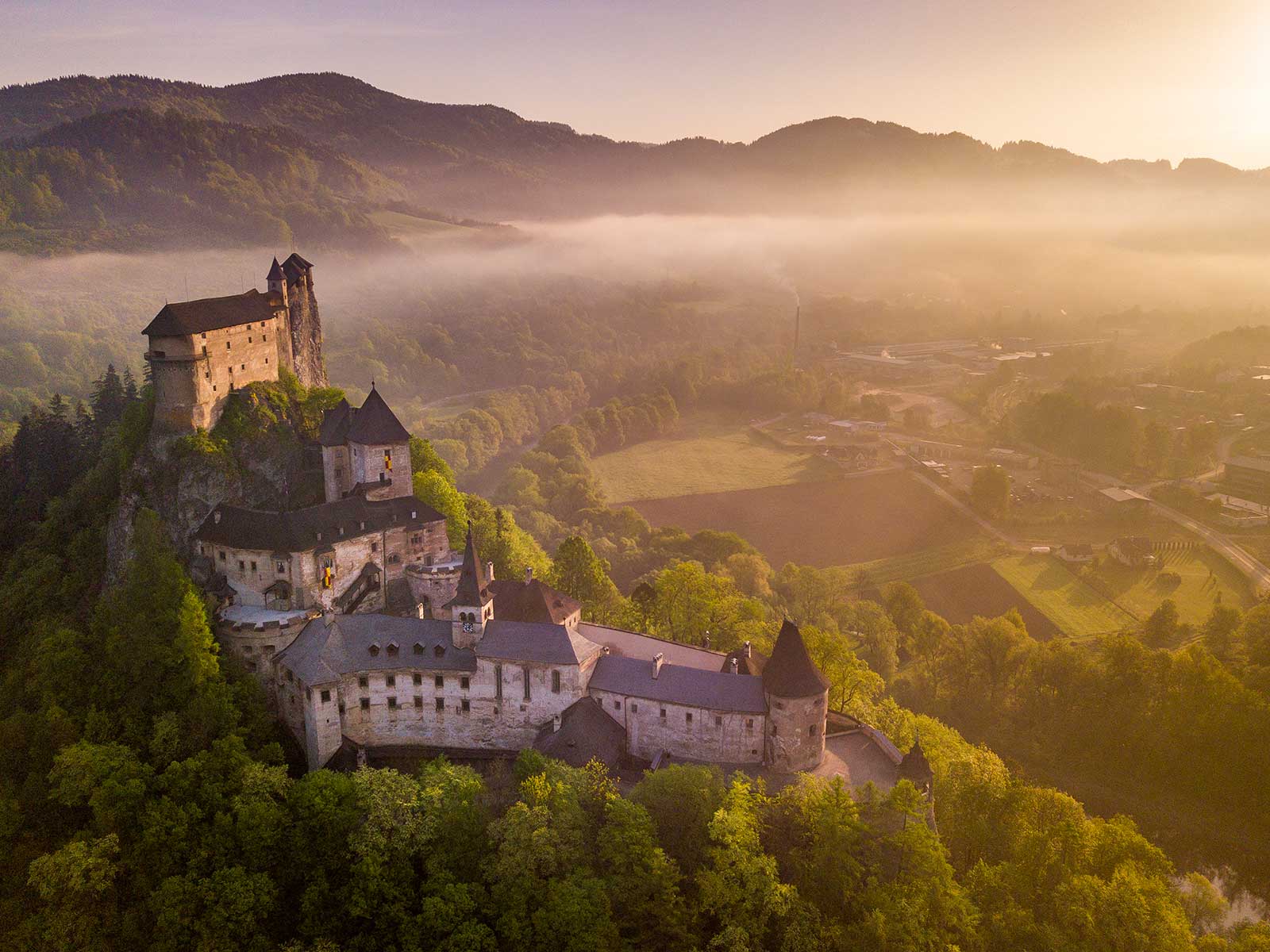
Perched dramatically on a towering rock above the Orava River, Orava Castle is one of Slovakia's most scenic and best-preserved fortresses. Its unique architecture, built into the rock face, consists of a complex of structures ranging from the lowest part to the highest citadel, reflecting various periods from the 13th to the 17th centuries.
The castle's history is intertwined with numerous noble families and conflicts. Today, it serves as a museum, showcasing historical furniture, weaponry, ethnographic exhibitions, and a natural history collection. Its imposing appearance has made it a popular filming location, most notably for the 1922 silent horror film "Nosferatu."
Trenčín Castle
Dominating the town of Trenčín, this impressive castle has a history dating back to Roman times, evidenced by a famous inscription on its rock face from AD 179. It reached its peak under the powerful magnate Matthew Csák in the early 14th century, becoming the center of his vast dominion. The castle complex includes several palaces, fortifications, and the legendary "Well of Love."
The legend of the Well of Love tells of Omar, a Turkish emir, who dug the well for three years to free his beloved Fatima from the castle lord, Stephen Zápolya. Visitors can explore the various palaces, towers, and exhibitions, offering splendid views of the Váh River valley.
Devín Castle
Situated at the dramatic confluence of the Danube and Morava rivers, Devín Castle is a potent symbol of Slovak history. Its strategic location made it an important site from Celtic and Roman times through the Great Moravian Empire. Despite its destruction by Napoleon's troops in 1809, its ruins remain highly evocative.
Exploring Devín offers a journey through different historical layers, with excavated foundations of Roman and Great Moravian structures. The views from the cliffside ruins are breathtaking, overlooking the two rivers and into Austria, making it a significant national monument and a popular spot for history enthusiasts.
Planning Your Castle Adventure: Practical Tips
Best Time to Visit
The ideal time to visit Slovak castles is from late spring to early autumn (May to September). During these months, the weather is generally pleasant, and most castles offer extended opening hours and a full range of guided tours and exhibitions. Some castles, particularly those in higher altitudes or with extensive grounds, may have limited access or be closed during winter months (November to March), though some offer a unique, snow-dusted charm during the festive season.
Getting Around
While major cities like Bratislava and Košice are well-served by public transport, reaching many of Slovakia's most picturesque castles often requires a car. Renting a car provides the flexibility to explore at your own pace and combine castle visits with other regional attractions. For castles accessible by public transport, train and bus services are generally reliable, but check schedules in advance, especially for less frequented routes.
What to Expect
Most castles involve a fair amount of walking, often uphill and with numerous stairs, so comfortable shoes are a must. Many castles offer guided tours, which are highly recommended for deeper historical insights and access to certain areas. Expect to find souvenir shops, and often a café or restaurant on or near the castle grounds.
Combining Castle Visits with Other Attractions
Slovakia's compact size makes it easy to combine castle visits with other incredible experiences:
- Near Spiš Castle, explore the charming Spišská Kapitula (Spiš Chapter) or venture into the stunning Slovak Paradise National Park for hiking adventures, or further north towards the majestic High Tatras.
- After visiting Bojnice Castle, consider a trip to the unique Čičmany Ethno Village with its painted wooden houses.
- From Trenčín Castle, a relaxing stop at the Spa island in Pieštany is a pleasant option.
- In Bratislava, complement your Bratislava Castle visit with a stroll to the Bratislava Primatial Palace or enjoy panoramic views from the UFO Observation Deck.
- If exploring southern Slovakia, consider a visit to the fascinating Domica Cave, another UNESCO site. For those venturing to eastern Slovakia, the magnificent Cathedral of St. Elizabeth in Košice is a must-see.
Preserving the Past: The Future of Slovak Castles
Many Slovak castles, whether grand reconstructions or romantic ruins, are continually undergoing restoration and preservation efforts. These initiatives not only protect invaluable historical sites but also contribute to local tourism and cultural education, ensuring that future generations can continue to marvel at Slovakia's rich medieval heritage.
Slovakia's castles are more than just stone structures; they are guardians of history, woven with fascinating legends and offering breathtaking vistas. A journey through these magnificent fortresses is an unforgettable experience, revealing the soul of a nation steeped in ancient grandeur and enduring charm.