
A Brief History of Singapore: From Fishing Village to Global Hub
From humble beginnings as a sleepy fishing village, Singapore has defied expectations to become one of the world's most dynamic and prosperous global cities. This island nation's remarkable journey is a testament to foresight, resilience, and strategic development, transforming it into a vibrant hub for culture, commerce, and innovation.
Ancient Roots and Early Settlements
While often associated with its modern history, Singapore's past stretches back centuries. Historical records from the 3rd century AD refer to the island asPu-luo-chung, or "island at the end of the peninsula." Later, in the 14th century, it was known asTemasek(Sea Town), a bustling port of call for various maritime empires, including the Srivijayan and Majapahit. Archaeological finds, such as ceramics and jewellery, confirm its role as an important trading post even then.
The name "Singapura" (Lion City) itself has a legendary origin. According to the Malay Annals, a Srivijayan prince named Sang Nila Utama landed on the island in the 13th century. Spotting an unusual creature, which he mistook for a lion, he decided to establish a settlement and named it Singapura. While actual lions are not indigenous to Singapore, the name has endured, embodying strength and majesty.
Did you know?Before the arrival of the British, Singapura was a significant trading port, strategically located along the vital East-West maritime trade routes. It facilitated exchange between Indian, Chinese, and Malay merchants, though its prominence waned somewhat by the 17th century.
The Arrival of Sir Stamford Raffles and British Colonial Rule
The modern history of Singapore truly began in 1819, when Sir Stamford Raffles, an agent of the British East India Company, landed on the island. Recognizing its immense strategic potential – a deep-water harbour, fresh water supply, and a prime location at the southern tip of the Malay Peninsula – Raffles saw an opportunity to establish a new British trading post to rival the Dutch influence in the region.
He swiftly negotiated a treaty with Sultan Hussein Shah of Johor and Temenggong Abdul Rahman, securing permission to establish a trading factory. This pivotal moment marked the birth of modern Singapore. Raffles’ vision was to create a free port, attracting merchants from all corners of the globe by eliminating taxes and duties, a radical concept at the time.
Within a few years, Singapore flourished. Its free port status attracted a diverse population of immigrants from China, India, the Malay Archipelago, and Europe, all seeking economic opportunities. This rapid influx led to the development of distinct ethnic enclaves, which even today form the vibrant cultural tapestry of the city, such as Chinatown,Little India, and Kampong Glam. The iconic Raffles Hotel, established decades later, stands as a testament to this grand colonial era.
From World War to Self-Governance
By the early 20th century, Singapore had become a vital British naval base and a major hub for rubber and tin exports. However, its strategic importance also made it a target during World War II. Despite being touted as an impregnable fortress, Singapore fell to the Japanese in February 1942, a devastating blow to British prestige and a traumatic period for the local population. The Japanese Occupation (1942-1945) profoundly impacted Singaporeans, fostering a sense of nationalism and a desire for self-determination.
After the war, Britain returned, but the seeds of independence had been sown. The path to self-governance was gradual, leading to Singapore joining the Federation of Malaysia in 1963, alongside Malaya, Sabah, and Sarawak. This union, however, was short-lived. Political and economic differences, coupled with racial tensions, led to Singapore's separation from Malaysia on August 9, 1965. This unexpected independence left the nascent nation facing formidable challenges.
Independence and Nation-Building
On its own, Singapore was a small island state with no natural resources, a limited domestic market, and a diverse population. The future looked bleak. Under the visionary leadership of its first Prime Minister, Lee Kuan Yew, and his cabinet, Singapore embarked on an ambitious journey of nation-building. The focus was clear: survival and prosperity through strategic planning and an unwavering commitment to meritocracy.
Key strategies included:
- Economic Diversification:Moving from entrepôt trade to manufacturing (electronics, petrochemicals) and services.
- Attracting Foreign Investment:Creating a stable, corruption-free environment with excellent infrastructure and a skilled workforce.
- Education and Housing:Investing heavily in education to develop human capital and implementing a massive public housing program (HDB) to provide affordable homes for all.
- Developing Infrastructure:Building a world-class port, airport, and transportation network.
- Greening the City:Transforming Singapore into a "Garden City" to enhance liveability and attract talent. The Singapore Botanic Garden, a UNESCO World Heritage Site, exemplifies this long-standing commitment.
Through hard work and pragmatic policies, Singapore transformed itself into an economic miracle, defying all expectations.
Modern Singapore: A Global City-State
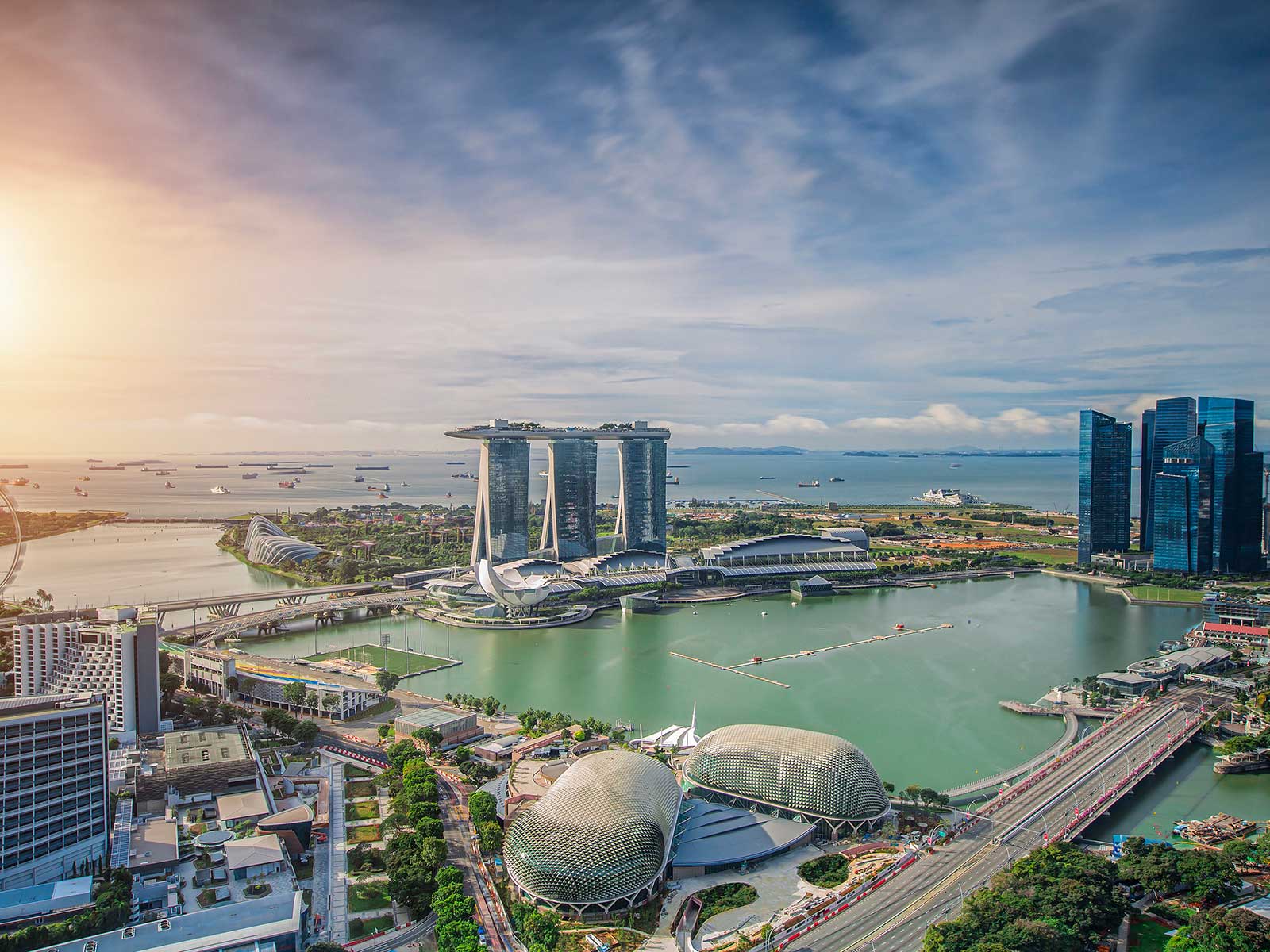
Today, Singapore stands as a shining example of a successful city-state. It has evolved into a global financial hub, a leader in innovation and technology, and a vibrant cultural melting pot. Its stunning skyline is dotted with architectural marvels, reflecting its modern aspirations and economic prowess.
Tourism plays a significant role in its economy, with iconic attractions drawing millions of visitors annually. The integrated resort of Marina Bay Sands, with its distinctive Skypark, and the futuristic Gardens by the Bay are prime examples of Singapore's bold urban planning. Other popular destinations include the vibrant entertainment precinct of Clarke Quay, the thrilling Universal Studios Singapore on Sentosa Island, and the bustling shopping paradise of Orchard Road. Even lesser-known gems like Pulau Ubin offer a glimpse into Singapore's rustic past.
Singapore continues to look to the future, focusing on sustainability, smart city initiatives, and fostering a strong sense of national identity. Its journey from a humble fishing village to a global powerhouse is a remarkable story of vision, resilience, and adaptability, proving that with strategic leadership and a determined populace, anything is possible.
Whether you're exploring its historical enclaves or marveling at its futuristic architecture, Singapore offers a rich tapestry of experiences, all rooted in its unique and inspiring history.