
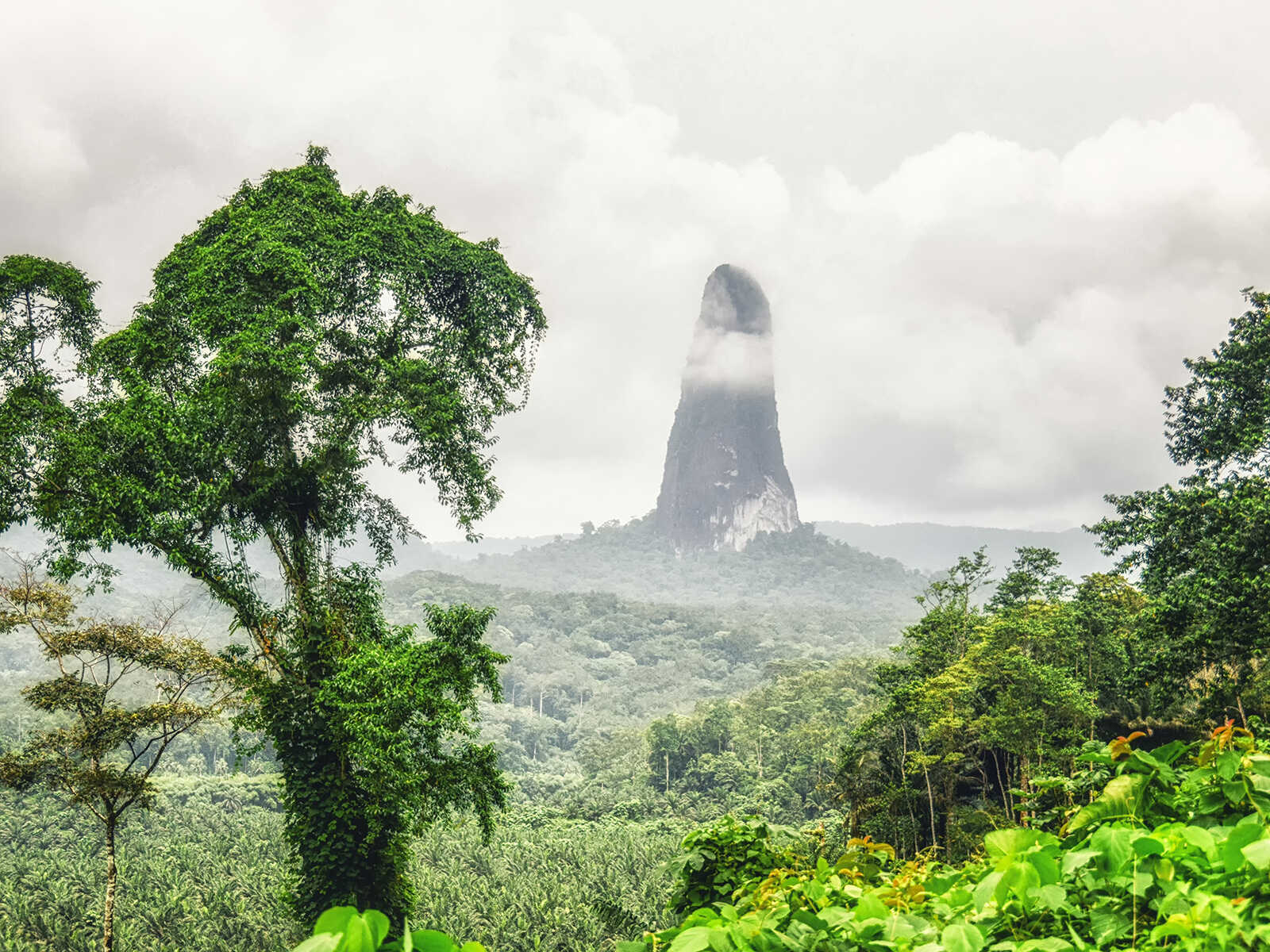
Cão Grande Peak: Sao Tome's Majestic Volcanic Needle
Rising dramatically from the dense equatorial rainforest, Cão Grande Peak is one of Sao Tome and Principe's most iconic and awe-inspiring natural landmarks. This towering volcanic needle stands as a testament to the island's fiery geological past, captivating all who behold its unique, sky-piercing form.
A Natural Wonder: What is Cão Grande Peak?
Cão Grande, meaning "Great Dog" in Portuguese, is a phonolite plug, a solidified remnant of an ancient volcano's conduit. Its distinctive needle-like shape, soaring to a height of approximately 663 meters (2,175 feet) above sea level, is visible from various points across the island's southern landscape. The peak itself is incredibly steep and often shrouded in mist, lending it an almost mystical aura. Surrounded by a tapestry of lush, primary rainforest, it epitomizes the wild and untamed beauty that defines Sao Tome.
This geological marvel is a stark reminder of the intense volcanic activity that created the islands of Sao Tome and Principe, part of the Cameroon Volcanic Line. For many, a glimpse of Cão Grande is an essential part of the Sao Tome experience, symbolizing the raw power of nature that has shaped this equatorial paradise.
The Geology Behind the Grandeur
The formation of Cão Grande is a fascinating story of volcanic resilience and erosion. Millions of years ago, molten rock (magma) pushed its way up through a vent in the Earth's crust. This particular magma was a type of fine-grained, light-colored volcanic rock called phonolite, which is relatively resistant to erosion.
Over millennia, the softer, surrounding volcanic rock and ash eroded away due to the relentless forces of rain, wind, and tropical weather. What remained was the harder, cylindrical plug of phonolite that had solidified within the ancient volcano's pipe. This process, known as differential erosion, slowly sculpted the dramatic, freestanding needle we see today. The sheer, vertical faces of Cão Grande are a direct result of this geological history, offering a rare glimpse into the internal structure of a long-extinct volcano.
Experiencing Cão Grande: Views and Vistas
While climbing the peak is an endeavor for only the most experienced, viewing Cão Grande from a distance is an accessible and unforgettable experience for any visitor. The drive along the main road (EN2) that winds through the island's interior and southern regions offers numerous breathtaking perspectives.
Where to See Cão Grande
As you journey south from the capital, São Tomé city, towards towns like Porto Alegre, Cão Grande will slowly reveal itself, playing hide-and-seek with the dense jungle and rolling hills. There are several informal viewpoints along the road where local vendors often sell fresh fruit and coconut water, providing perfect photo opportunities. One of the most classic views is from the south, looking north towards the peak, where its slender profile is particularly striking against the green backdrop.
The journey itself is part of the experience, passing through historic cocoa plantations (roças), small villages, and dense rainforest. Keep an eye out for other natural wonders like cascading waterfalls along the way.
Photography Tips
Capturing the majesty of Cão Grande requires a bit of patience and timing. The peak is often shrouded in clouds, especially during the wetter months or in the late afternoon. The best times for photography are typically in the early morning or late afternoon when the light is softer, and the chances of a clear view are often higher. A wide-angle lens can help convey the scale of the peak against its lush surroundings, while a telephoto lens can bring out details of its rugged face.
Tip:The weather in Sao Tome can change quickly. Even on a seemingly clear day, clouds can roll in rapidly and obscure the peak. Be prepared for varying conditions and enjoy the journey regardless!
The Challenge of the Ascent (For Climbers Only)
It's crucial to understand that Cão Grande isnota hiking destination for the average tourist. Its sheer, near-vertical faces, loose rock, and dense jungle approach make it one of the world's most challenging rock climbs, requiring extreme technical skill, specialized equipment, and extensive experience.
Only a handful of professional mountaineering teams have successfully ascended Cão Grande. The first recorded ascent was in 1991, and subsequent attempts have highlighted the immense difficulties involved, including navigating the treacherous jungle approach, dealing with tropical conditions, and establishing multi-pitch climbs on unstable rock. For the vast majority of visitors, admiring Cão Grande from a safe distance is the only practical and recommended way to appreciate its grandeur.
Beyond the Peak: Exploring the Surrounding Region
The area around Cão Grande is rich in natural beauty and cultural experiences. The drive through the central and southern parts of the island allows you to immerse yourself in Sao Tome's unique blend of nature and history.
- Roças:Explore the numerous historic cocoa and coffee plantations (roças) that dot the landscape. Many still operate, offering a glimpse into the island's colonial past and agricultural heritage.
- Waterfalls:Discover picturesque waterfalls like Cascata de São Nicolau, a refreshing stop amidst the tropical greenery.
- Southern Beaches:Continue your journey south to pristine beaches like Praia Jale, famous for its turtle nesting sites, or explore the unique geological formations at Hellmouth(Boca do Inferno).
- Ilhéu das Rolas:From the southernmost tip of Sao Tome, you can take a boat trip to Rolas Island, where you can stand on the Equator line.
Planning Your Visit to Cão Grande
Getting There
Cão Grande Peak is located in the south-central part of Sao Tome island. The best ways to experience it include:
- Rental Car:A 4x4 vehicle is highly recommended for navigating Sao Tome's roads, especially if you plan to explore off the main routes. This offers the most flexibility to stop at various viewpoints.
- Hiring a Driver/Guide:Many local guides offer tours that include the drive through the interior and south, stopping at Cão Grande. This is a stress-free option and provides valuable local insights.
- Organized Tours:Several tour operators on the island offer full-day excursions that cover Cão Grande and other southern attractions.
Best Time to Visit
The dry seasons (June to September and December to February) generally offer clearer skies and less rain, increasing your chances of a spectacular view of Cão Grande. However, even during the wet season, the peak can be visible, and the landscape is even lusher and more vibrant.
What to Bring
- Camera:Essential for capturing the incredible views.
- Binoculars:To get a closer look at the peak and surrounding wildlife.
- Rain Gear:A light rain jacket is always a good idea, regardless of the season.
- Insect Repellent:Especially if you plan to stop and explore any jungle trails.
- Water and Snacks:While there are local vendors, it's good to have your own supplies.
- Good Walking Shoes:If you plan to take short walks to viewpoints or nearby attractions.
Why Cão Grande Captivates
Cão Grande Peak is more than just a mountain; it's a geological masterpiece, a symbol of Sao Tome's raw, untamed beauty, and an enduring mystery. Its sheer scale and unique form make it a photographer's dream and a memorable highlight for any visitor to this enchanting African island nation. Whether seen from a distant viewpoint or through the lens of a camera, Cão Grande leaves an indelible impression, embodying the wild heart of Sao Tome.
A visit to Sao Tome would be incomplete without witnessing the majestic volcanic needle that is Cão Grande, a true testament to the island's dramatic natural heritage and a powerful reminder of Earth's incredible geological forces.