
A History of Poland: Key Events and Figures You Should Know
Poland boasts a rich and complex history, marked by periods of immense power, cultural flourishing, devastating wars, and remarkable resilience. Understanding its past is key to appreciating its vibrant present and the spirit of its people. Join us on a journey through the pivotal moments that shaped this fascinating Central European nation.
The Dawn of a Nation: Piast Dynasty (10th-14th Century)
The story of Poland officially begins around the 10th century with the emergence of the Piast dynasty.Mieszko I, the first historical ruler, is credited with unifying several Slavic tribes and, most importantly, adopting Christianity in 966 CE. This act brought Poland into the sphere of Western European culture and politics, solidifying its place on the map.
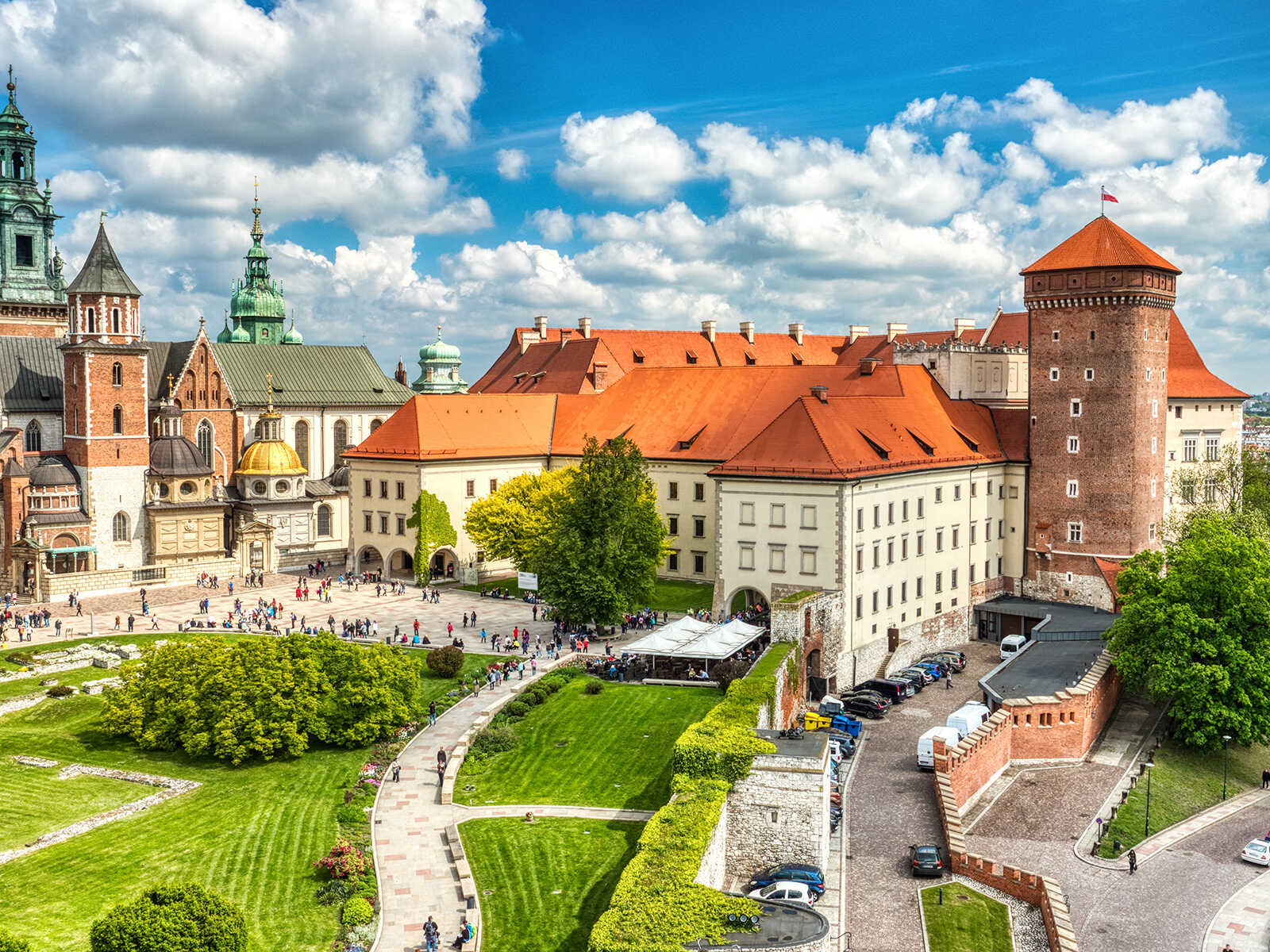
His successor,Bolesław I the Brave, expanded Polish territories significantly and was crowned the first King of Poland in 1025. Over the next centuries, Poland experienced periods of fragmentation and reunification. A notable figure during this era wasKazimierz III the Great(reigned 1333-1370), often hailed as one of Poland's greatest monarchs. He strengthened the state, reformed laws, founded the Jagiellonian University in Kraków, and initiated extensive building projects, including many castles and fortifications. Visitors to Wawel Royal Castle in Kraków can still witness the grandeur of this royal legacy.
Fun Fact:Kazimierz the Great was the only Polish king to be given the epithet "the Great." He famously inherited a "Poland of wood" and left behind a "Poland of brick."
The Golden Age: Jagiellonian Dynasty & Polish-Lithuanian Commonwealth (14th-18th Century)
The marriage of Poland's Queen Jadwiga to Grand Duke Jogaila of Lithuania in 1386 marked the beginning of the powerful Jagiellonian dynasty and a golden age for the country. This union eventually led to the creation of thePolish-Lithuanian Commonwealth, one of the largest and most influential states in Europe, stretching from the Baltic to the Black Sea. This period saw immense cultural and scientific flourishing, often referred to as the Polish Renaissance.
Figures like astronomerNicolaus Copernicus, who revolutionized our understanding of the solar system, emerged from this era. The Commonwealth developed a unique political system, a "Nobles' Democracy," where the king was elected and noblemen held significant power through the Sejm (parliament). While progressive in some aspects, this system eventually weakened the central government.
In 1596, the capital officially moved from Kraków to Warsaw, a city that would later become a symbol of Polish resilience and rebirth. Today, visitors can explore the reconstructed Warsaw Old Town and the beautiful Łazienki Park, remnants of royal splendor.
Decline, Partitions, and the Fight for Independence (18th-20th Century)
By the 18th century, the Commonwealth's unique political system, coupled with the rising power of neighboring empires, led to its decline. Between 1772 and 1795, Poland was tragically partitioned three times by Russia, Prussia, and Austria, disappearing from the map of Europe for 123 years. This period was marked by numerous uprisings and attempts to regain independence, most notably the Kościuszko Uprising in 1794, led by national heroTadeusz Kościuszko.
Despite foreign occupation, Polish culture and national identity persevered, nurtured through literature, music, and secret societies. The desire for a free Poland remained strong, culminating in renewed efforts during and after World War I. Finally, in 1918, Poland regained its independence, largely thanks to the efforts of figures likeJózef Piłsudski, who became the nation's Chief of State and later its strongman leader.
World War II and the Communist Era (20th Century)
Poland's newly reclaimed sovereignty was tragically short-lived. On September 1, 1939, Nazi Germany invaded Poland, marking the beginning of World War II. The country suffered immense devastation, with millions of its citizens, including the vast majority of its Jewish population, systematically murdered during the Holocaust. Sites like the Memorial and Museum Auschwitz and Oskar Schindler's Enamel Factory in Kraków stand as solemn reminders of this dark chapter.
The heroic but ultimately doomed Warsaw Uprising in 1944 saw the city's inhabitants rise against the German occupation, leading to the near-total destruction of Warsaw. After the war, Poland fell under Soviet influence, becoming a communist state within the Eastern Bloc. This era was characterized by political repression and economic hardship.
However, the spirit of resistance never truly died. In the late 1970s and early 1980s, theSolidarity (Solidarność)trade union movement emerged in Gdansk Old Town, led by shipyard electricianLech Wałęsa. Solidarity became a powerful force for change, advocating for workers' rights and democratic reforms, ultimately playing a pivotal role in the collapse of communism in Central and Eastern Europe.
Modern Poland: A Resilient Nation Reborn
In 1989, Poland successfully transitioned from communism to a democratic, market-oriented economy, a peaceful revolution that inspired nations across the region. The subsequent decades have seen significant growth and development. In 2004, Poland joined the European Union, further integrating itself into the European community.
Today, Poland stands as a proud, modern European nation, cherishing its rich heritage while looking towards the future. Its history, marked by both triumph and tragedy, has forged a resilient and culturally vibrant society. From the medieval charm of Rynek Główny in Kraków to the historic shipyards of Gdansk, every corner of Poland tells a story, inviting visitors to explore its past and experience its dynamic present.