
A Brief History of Peru: From Ancient Civilizations to Modern Day
Peru, a land of breathtaking landscapes and profound cultural heritage, boasts a history as rich and diverse as its geography. From the dawn of ancient civilizations to its vibrant modern identity, Peru's story is a captivating tapestry woven with innovation, conquest, and enduring resilience. Embark on a journey through time to uncover the layers of this fascinating nation.
The Cradle of Civilization: Pre-Inca Cultures
Long before the rise of the mighty Inca, Peru was home to a succession of sophisticated cultures that laid the groundwork for future empires. The Norte Chico civilization, centered around sites like Caral-Supe, emerged as one of the oldest known civilizations in the Americas, flourishing over 5,000 years ago. These early societies demonstrated advanced urban planning, monumental architecture, and complex social structures.
As millennia passed, distinct regional cultures left their indelible marks. The Chavín culture (c. 900-200 BCE), known for its intricate religious iconography and ceremonial centers, influenced much of the central Andes. Later, the Moche (c. 100-800 CE) dominated the northern coast, renowned for their masterful pottery, elaborate irrigation systems, and impressive adobe pyramids like the Huaca del Sol and Huaca de la Luna near modern-day Trujillo. Further south, the Nazca culture (c. 100-800 CE) etched the mysterious Nazca Lines into the desert floor and crafted exquisite textiles and ceramics.
The Wari (c. 600-1000 CE) and Tiwanaku (c. 300-1000 CE) empires introduced large-scale political organization and urbanism, connecting vast territories and influencing the development of later states. On the northern coast, the Chimú kingdom (c. 900-1470 CE), with its capital Chan Chan – the largest adobe city in the Americas – showcased remarkable engineering and artistry, eventually being conquered by the Inca.
The Mighty Inca Empire
The Inca, or Tawantinsuyu, emerged from the Cusco region in the 13th century, rapidly expanding to become the largest empire in pre-Columbian America by the 15th century. Their sophisticated administrative system, extensive road network, and advanced agricultural techniques – including terracing and irrigation – allowed them to control a vast territory stretching from modern-day Ecuador to Chile and Argentina.Cusco served as the empire's spiritual and political heart, a city meticulously planned and constructed with impressive stone masonry.
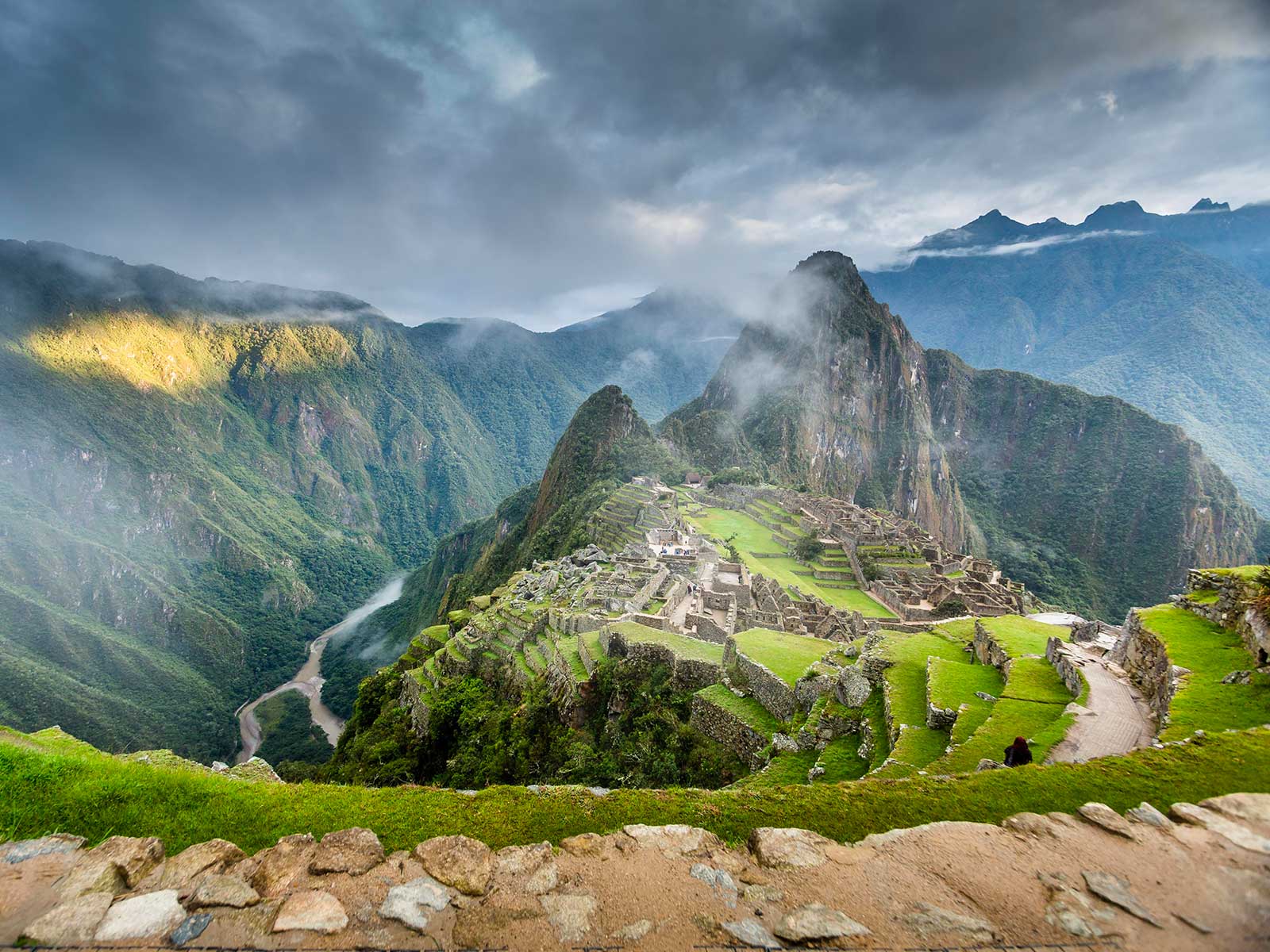
The Inca were master builders, leaving behind awe-inspiring architectural marvels such as Machu Picchu, a UNESCO World Heritage site nestled high in the Andes, and the fortresses and temples scattered throughout The Sacred Valley, including the Pisac Archaeological Park. Their spiritual beliefs were deeply intertwined with nature, revering deities like Inti (the sun god) and Pachamama (Mother Earth). They also developed a complex system of knotted cords calledquipufor record-keeping and communication.
Fun Fact:The Inca did not use the wheel for transportation, nor did they have a written language in the traditional sense. Despite this, their engineering feats, particularly their road system (Qhapaq Ñan), rivaled those of ancient Rome, connecting distant corners of their vast empire.
The empire’s reach extended to significant cultural and spiritual sites like Lake Titicaca, considered the birthplace of the sun and the moon in Inca mythology, reflecting the profound connection between their cosmology and geography.
The Spanish Conquest and Colonial Era
The arrival of Spanish conquistadors led by Francisco Pizarro in 1532 marked a dramatic turning point. Exploiting internal divisions within the Inca Empire and wielding superior weaponry, the Spanish swiftly conquered the weakened Inca state, culminating in the execution of Emperor Atahualpa. The fall of Cusco and the establishment of the Viceroyalty of Peru in 1542 ushered in a new era of Spanish rule.
For nearly 300 years, Peru became the richest and most important Spanish viceroyalty in South America, largely due to its vast silver mines, particularly Potosí (now in Bolivia).Lima, founded by Pizarro in 1535, grew into a magnificent colonial capital, a hub of commerce, culture, and power. Spanish influence profoundly reshaped Peruvian society, introducing Christianity, European languages, new agricultural practices, and a hierarchical social structure that placed Peninsulares (Spaniards born in Spain) at the top.
The colonial period was characterized by both exploitation and the fusion of cultures. Indigenous traditions persisted, often subtly integrated into Catholic practices, creating the unique syncretic culture still visible today. Grand cathedrals, ornate colonial mansions, and intricate artwork from this era can still be admired in cities like Lima and Cusco.
Independence and Early Republic
Inspired by Enlightenment ideals and the successes of other independence movements, cries for freedom from Spanish rule grew louder in the early 19th century. José de San Martín declared Peru's independence on July 28, 1821, in Lima, though the final decisive battles were fought by Simón Bolívar's forces in 1824. The early years of the Peruvian Republic were marked by political instability, territorial disputes, and economic challenges, as the nascent nation struggled to define its identity and governmental structure.
Modern Peru: Resilience and Revival
The 20th century brought further challenges, including periods of political unrest, military rule, and internal conflict. However, Peru has emerged as a vibrant democracy, demonstrating remarkable resilience. The late 20th and early 21st centuries have seen significant economic growth, a strengthening of democratic institutions, and a global recognition of its rich cultural heritage and spectacular natural beauty.
Today, Peru is a dynamic nation, celebrated for its world-class gastronomy, diverse ecosystems, and welcoming people. Tourism plays a crucial role, drawing visitors to ancient wonders and modern marvels alike. Travelers flock to coastal destinations like the Paracas National Reserve for wildlife and desert oases like Huacachina. The majestic Andes continue to captivate with sites like Colca Canyon and Rainbow Mountain, while the Amazon rainforest, home to areas like Pacaya Samiria National Reserve and Manu National Park, offers unparalleled biodiversity. The northern regions, with their ancient cloud forests and sites like those near Chachapoyas, are increasingly popular, as are the surf spots of Mancora.
Planning Your Historical Journey to Peru
Exploring Peru's history is an immersive experience. To truly appreciate its depth, consider visiting various regions: the ancient sites of Cusco and The Sacred Valley for the Inca legacy,Lima for its colonial grandeur, and the northern coast for evidence of pre-Inca ingenuity. Each region tells a unique part of Peru's incredible story.
From the enigmatic carvings of the Nazca to the engineering marvels of the Inca and the enduring spirit of its people, Peru's history is an ongoing narrative of adaptation and transformation. It's a land where ancient echoes resonate alongside a modern pulse, inviting travelers to explore, learn, and be inspired by its profound past and promising future.