
A Brief History of Paraguay: From Guarani Origins to Modern Day
Paraguay, often called the "Heart of South America," possesses a history as distinctive and resilient as its vibrant culture. From its deep Guarani roots and unique colonial experiments to its remarkable recovery from devastating wars, the nation's past offers a captivating narrative of survival, identity, and an unwavering spirit.
Guarani Roots and Pre-Colonial Era
Long before the arrival of Europeans, the land now known as Paraguay was home to various indigenous groups, primarily the Guarani people. Renowned for their semi-nomadic lifestyle, sophisticated agricultural practices (especially cassava and maize), and rich oral traditions, the Guarani formed complex social structures. They were also known for their fierce warrior culture and their deep spiritual connection to the land and nature.
The Guarani language and culture proved remarkably resilient, even after European contact. Unlike many other indigenous languages in South America, Guarani not only survived but thrived, becoming an official language of Paraguay alongside Spanish and a cornerstone of its national identity.
The Arrival of Europeans and Early Colonial Period
The first Europeans to arrive in the region were Spanish explorers in the early 16th century, seeking a route to the riches of Peru. Juan de Salazar de Espinosa founded Nuestra Señora Santa María de la Asunción on August 15, 1537, which quickly became a vital hub for Spanish colonization in the interior of South America. Its strategic location on the Paraguay River made it a gateway to the Andes and a crucial port.
Early Spanish colonists often intermarried with the Guarani, leading to a significant mestizo population and the widespread adoption of the Guarani language, even among Spanish descendants. This cultural blending set Paraguay apart from other colonies.
The Jesuit Reductions: A Unique Experiment
Perhaps one of the most fascinating chapters in Paraguay's history is the era of the Jesuit Reductions. Beginning in the early 17th century, Jesuit missionaries established self-governing communities, or "reducciones," to protect and evangelize the Guarani. These missions were highly organized, providing education, healthcare, and advanced agricultural and artisanal training, all while preserving many aspects of Guarani culture and language.
The Jesuits created a thriving, almost utopian society that shielded the Guarani from Spanish encomenderos (settlers who exploited indigenous labor) and Portuguese slave traders. The communities became economically powerful and militarily capable, often clashing with colonial authorities who viewed their autonomy and success with suspicion. Visitors can still explore the remnants of these extraordinary settlements today, such as the impressive Ruinas de Jesús and San Cosme y Damián.
Fun Fact:The Jesuit Reductions were so successful that they developed their own unique architectural style, distinct from other colonial buildings, and even printed books in Guarani using their own presses.
However, the Jesuits' power and influence ultimately led to their downfall. In 1767, King Charles III of Spain, under pressure from other European powers and colonial interests, ordered the expulsion of the Jesuits from all Spanish territories. This abrupt removal led to the decline and eventual abandonment of many reductions, leaving the Guarani vulnerable once more.
Independence and Early Republic
Paraguay achieved independence from Spain on May 14, 1811, with a relatively bloodless revolution. Unlike its neighbors, Paraguay opted for a path of extreme isolation under the rule of Dr. José Gaspar Rodríguez de Francia, known asEl Supremo. From 1814 until his death in 1840, Francia sealed Paraguay's borders, banned foreign trade, and established a self-sufficient, highly centralized state. His rule, though authoritarian, fostered a strong national identity and prevented foreign intervention, albeit at the cost of personal liberties and economic development.
Following Francia, the López family dynasty took power. Carlos Antonio López (1844-1862) opened Paraguay to the world, modernizing the country, building railways, and developing a strong army. His son, Francisco Solano López (1862-1870), inherited a prosperous and powerful nation, but his ambitions would soon lead Paraguay into its darkest chapter.
The Paraguayan War (War of the Triple Alliance): A Devastating Conflict
The most catastrophic event in Paraguay's history was the War of the Triple Alliance (1864-1870), pitting Paraguay against the combined forces of Argentina, Brazil, and Uruguay. The causes are complex, involving territorial disputes, political ambitions, and regional power struggles. President Francisco Solano López, believing Paraguay's sovereignty was threatened, launched preemptive strikes.
The war was an unmitigated disaster for Paraguay. It is considered one of the deadliest wars in South American history. By its end, Paraguay's male population was decimated, with estimates suggesting that 50% to 90% of adult males perished. The country's territory was reduced, its economy in ruins, and its national pride deeply wounded. The capital, Asunción, including structures like the Palacio de López, suffered significant damage.
Reconstruction and the Chaco War
The post-war period was one of slow and painful reconstruction. Paraguay struggled to rebuild its population and economy. Political instability was common, with frequent changes in government.
Another major conflict, the Chaco War (1932-1935), erupted between Paraguay and Bolivia over disputed territory in the Gran Chaco region, believed to hold oil reserves. Despite being severely outnumbered and outgunned, Paraguay emerged victorious, largely due to superior strategy, knowledge of the harsh Chaco terrain, and the unwavering spirit of its soldiers. The Defensores del Chaco National Park now preserves a significant portion of this historic battleground. The war, though costly in human lives, solidified Paraguay's national identity and secured its territorial claims.
Dictatorship and Transition to Democracy
Following the Chaco War, Paraguay experienced periods of political unrest and a succession of military governments. In 1954, General Alfredo Stroessner seized power, initiating one of South America's longest dictatorships. His rule, which lasted for 35 years, brought a semblance of stability and some economic development, particularly through large infrastructure projects like the Presa de Itaipu(Itaipu Dam), but it was also marked by severe human rights abuses, political repression, and widespread corruption.
Stroessner's regime ended abruptly in 1989 with a military coup, paving the way for a transition to democracy. Paraguay has since made significant strides in strengthening its democratic institutions, though challenges like corruption and inequality persist.
Modern Paraguay: Culture and Economy
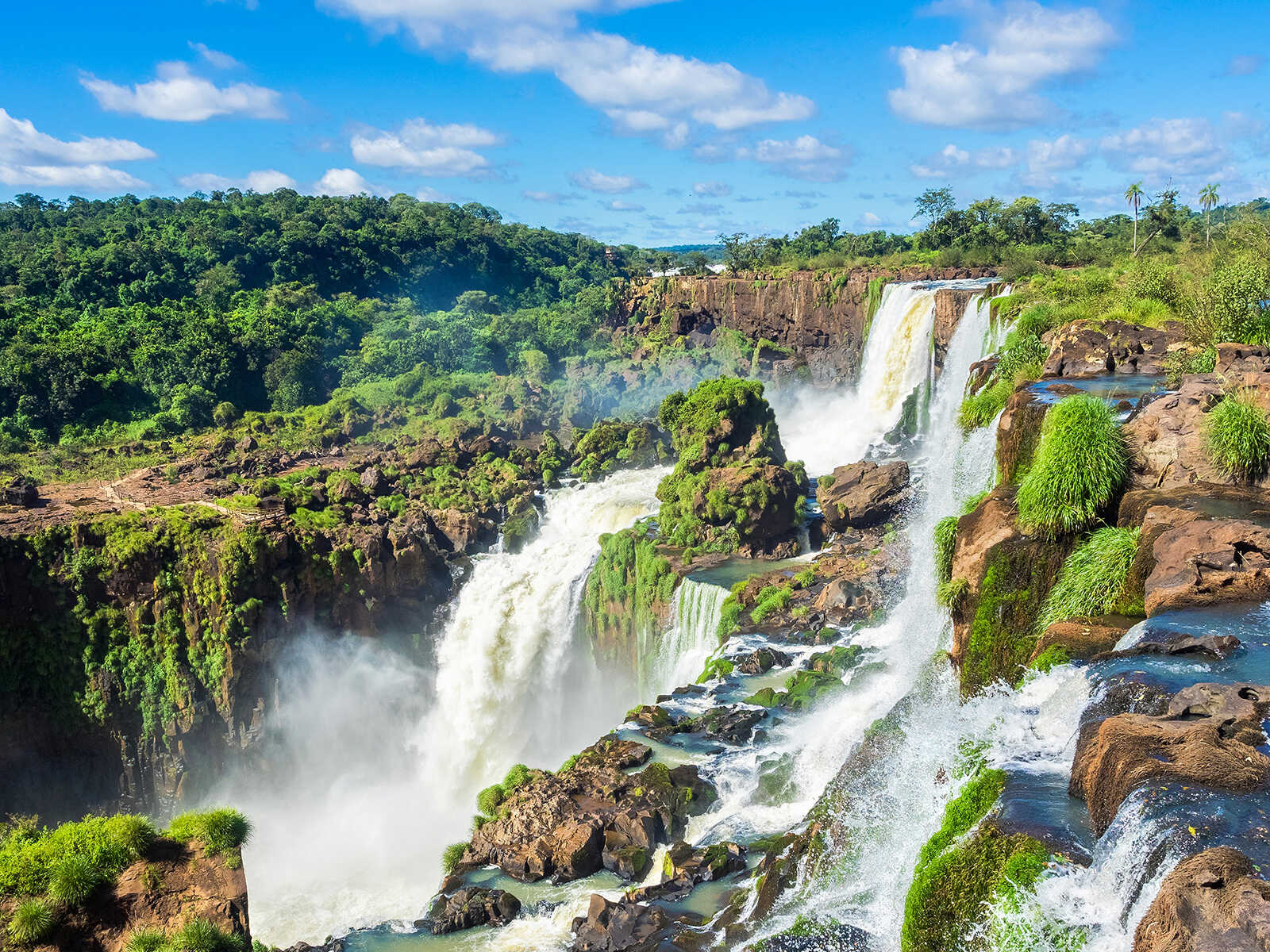
Today, Paraguay is a vibrant, developing nation that proudly embraces its unique heritage. The Guarani language is still widely spoken and deeply ingrained in daily life, culture, and cuisine. The country continues to leverage its natural resources, with agriculture and hydroelectric power (from the Itaipu Dam, a marvel of modern engineering near the Triple Frontier) being key economic drivers. Tourism is also growing, with attractions ranging from the natural beauty of Monday's Falls and Salto Suizo Parque Ecologico to charming towns like San Bernardino and the artisan hub of Areguá.
Paraguay's history is a testament to its people's resilience. From the innovative self-governance of the Jesuit Reductions to its survival of devastating wars and its journey towards democracy, Paraguay has carved out a distinct identity in South America. It remains a country with a rich cultural tapestry, a strong sense of community, and a promising future.