
Ancient Wonders: A Brief History of North Macedonia for Travelers
Embark on a journey through time in North Macedonia, a land where ancient civilizations left an indelible mark, and history unfolds with every step. From the grandeur of classical empires to the resilience of medieval kingdoms and the rich tapestry of Ottoman heritage, this Balkan gem offers a captivating narrative for curious travelers.
North Macedonia's strategic location at the crossroads of continents has shaped its identity, making it a vibrant mosaic of cultures, traditions, and historical epochs. Understanding its past is key to appreciating its present, revealing layers of human endeavor, architectural marvels, and spiritual legacies that continue to thrive.
From Ancient Kingdoms to Roman Dominance
The earliest human settlements in North Macedonia date back millennia, with archaeological finds pointing to Neolithic cultures. However, its most renowned ancient chapter begins with the formidable Kingdom of Macedon, famously home to Philip II and his son, Alexander the Great. While the heartland of Alexander's empire lay slightly to the south, this region was intrinsically linked, contributing soldiers, culture, and influence to one of history's greatest empires.
Following the decline of the Hellenistic kingdoms, the Roman Empire asserted its control, integrating the area into provinces like Macedonia Salutaris. The Romans established flourishing cities, built extensive road networks, and introduced their sophisticated administration and culture. One of the most significant Roman archaeological sites in the country is Stobi, a once-thriving provincial capital located at the confluence of the Crna and Vardar rivers. Here, visitors can explore well-preserved theaters, basilicas, mosaics, and Roman baths, offering a vivid glimpse into daily life two millennia ago.
The Roman legacy also subtly influenced the region's agricultural practices, including viticulture. The fertile lands around the Vardar River valley have been producing wine for centuries, a tradition proudly continued by modern establishments like the Tikveš winery, a testament to the enduring agricultural heritage.
The Byzantine Era and Slavic Arrival
As the Roman Empire split, North Macedonia fell under the eastern Byzantine Empire's sway. This period saw the gradual Christianization of the region and the construction of numerous churches and monasteries, many of which still stand today. The 6th and 7th centuries marked a significant demographic shift with the arrival of various Slavic tribes, who eventually settled and integrated with the existing populations.
The medieval period was characterized by a dynamic interplay between Byzantine rule, emerging Bulgarian empires, and eventually Serbian kingdoms. It was during this time that Ohrid rose to prominence, becoming a major religious and cultural center. Often referred to as the "Jerusalem of the Balkans," Ohrid was home to the Ohrid Literary School, established by Saints Clement and Naum, disciples of Saints Cyril and Methodius. This school played a crucial role in the development of the Cyrillic alphabet and Slavic literacy, spreading across the wider Slavic world.
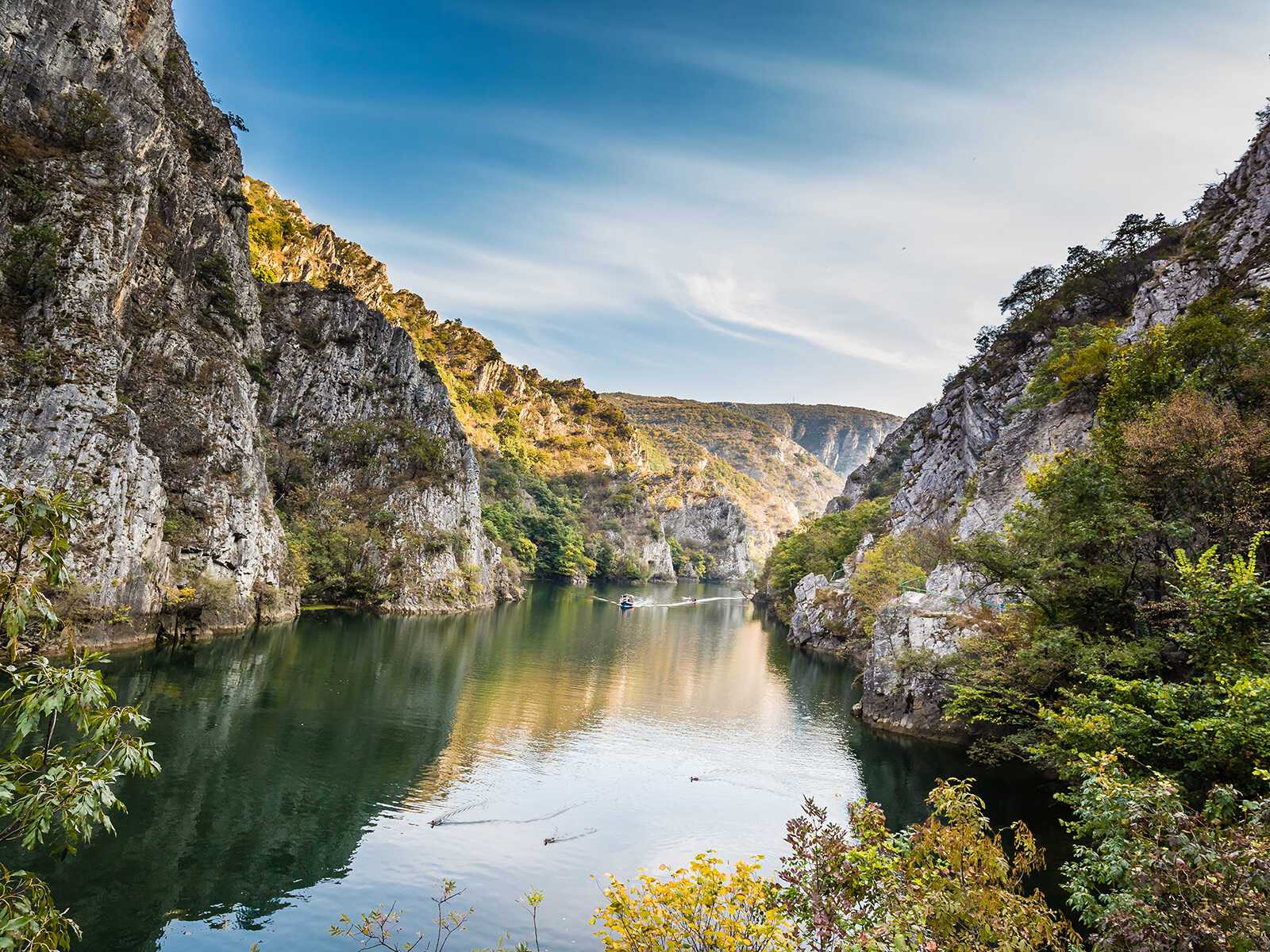
Today, the historic core of Varosh Old Town Ohrid is a UNESCO World Heritage site, boasting ancient churches, fortresses, and a charming labyrinth of cobbled streets. Beyond Ohrid, medieval monasteries dot the landscape, offering spiritual retreats and architectural wonders. Many can be found nestled within natural beauty spots, such as those near Canyon Matka,National park Mavrovo, and on the shores of Lake Prespa, providing a serene backdrop for reflection.
Travel Tip:When exploring Ohrid, make sure to visit Samuil's Fortress for panoramic views of Lake Ohrid and the surrounding mountains – a truly breathtaking sight that connects you directly to the region's medieval defenses.
The Ottoman Empire: Five Centuries of Influence
The 14th century brought the arrival of the Ottoman Turks, who gradually conquered the region, integrating it into their vast empire for over five centuries. This long period left an indelible mark on North Macedonia's culture, architecture, and demographics. Cities like Skopje, Bitola, and Tetovo flourished as important Ottoman administrative and trade centers.
Ottoman architecture is evident in numerous mosques, hammams (public baths), and the bustling old bazaars that still thrive today. The Skopje Old Bazaar, for example, is one of the largest and oldest marketplaces in the Balkans, a vibrant testament to Ottoman commercial and cultural influence. In Tetovo, the beautifully adorned Pasha's Mosque(also known as the Painted Mosque) stands as a stunning example of unique Ottoman-era Islamic art and architecture.
The legacy of this era is also visible in the fortress and monastery ruins around Prilep, particularly King Marko's Towers, which bear witness to the struggles and transitions of the medieval period into Ottoman rule.
National Revival and Modern Statehood
As the Ottoman Empire waned in the late 19th and early 20th centuries, a strong sense of national identity began to emerge among the Slavic population. The Macedonian National Revival saw a renewed interest in language, culture, and the pursuit of self-determination. A pivotal moment was the Ilinden Uprising in 1903, a revolt against Ottoman rule, which saw the short-lived establishment of the Kruševo Republic.
Kruševo, a picturesque mountain town, remains a powerful symbol of this struggle for independence and national identity. Visitors can explore the Ilinden Monument (Makedonium), a striking memorial commemorating the uprising and the heroes of the Macedonian struggle.
The Balkan Wars (1912-1913) and World War I led to the collapse of Ottoman rule and the subsequent division of the region among neighboring states. After World War II, the area became the Socialist Republic of Macedonia within the Socialist Federal Republic of Yugoslavia. This period saw significant industrialization and modernization, along with the development of a distinct Macedonian national identity within the Yugoslav federation.
Finally, in 1991, North Macedonia declared its independence from Yugoslavia, embarking on its journey as a sovereign nation. This recent history has involved navigating complex regional politics and establishing its place on the international stage.
Experiencing History Today
For the traveler, North Macedonia offers an unparalleled opportunity to walk through the annals of time. You can trace the footsteps of Romans at Stobi, immerse yourself in medieval spirituality in Varosh Old Town Ohrid, haggle in an Ottoman-era bazaar, or reflect on national struggles in Kruševo.
Beyond the major sites, every town and village holds a piece of this rich tapestry. From ancient fortifications perched on hilltops to remote monasteries tucked into mountain valleys, the country's history is alive and accessible. Engage with local guides who can bring these stories to life, and savor the local cuisine, which itself is a delicious blend of influences from throughout North Macedonia's past.
North Macedonia is more than just a destination; it's an immersive historical experience. Its ancient wonders are not merely ruins but living testaments to the resilience, creativity, and enduring spirit of its people. Come and uncover its captivating story for yourself.