
Dutch Culture: Customs, Traditions & Social Norms
Venturing into the Netherlands offers more than just picturesque canals and vibrant tulip fields; it's an immersion into a unique culture shaped by centuries of history, resilience, and a distinctive worldview. Understanding Dutch customs, traditions, and social norms will not only enrich your travel experience but also help you connect more deeply with the local way of life.
From their famed directness to their love for cycling, Dutch culture is a fascinating blend of pragmatism, tolerance, and a strong sense of community. This guide will help you navigate the social landscape and appreciate the nuances that make the Netherlands so special.
Core Dutch Values and Mindset
The Dutch national character is often described as a tapestry woven with several key threads:
- Directness and Honesty:The Dutch are renowned for their straightforward communication. They value honesty and clarity, often preferring to get straight to the point rather than engaging in extensive small talk or indirect language. While this might seem blunt to some, it's generally intended with good intentions and a desire for efficiency.
- Punctuality:Time is highly valued in the Netherlands. Whether it's a social gathering or a business meeting, being on time is considered a sign of respect. Arriving late without prior notification is generally frowned upon.
- "Doe Normaal" (Act Normal):This ubiquitous phrase encapsulates a core Dutch value: humility and down-to-earth behavior. Ostentatious displays of wealth or excessive individualism are generally not appreciated. It encourages modesty, equality, and fitting in rather than standing out.
- Practicality and Efficiency:From urban planning to everyday routines, practicality is a hallmark of Dutch life. Solutions are often sought that are logical, efficient, and benefit the collective.
- Tolerance and Openness (Gedogen):The Netherlands has a long history of tolerance, particularly in areas like diverse lifestyles and opinions. While this doesn't mean anything goes, there's a general willingness to coexist and respect different perspectives.
Social Etiquette and Interactions
Greetings and Social Calls
When meeting new people or arriving at a social gathering:
- Handshakes:A firm handshake is the standard greeting for both men and women, even with children.
- Three Kisses:Among friends and family, especially in the south, it's common to give three air kisses on alternating cheeks. This is typically reserved for people you know well.
- Introductions:Always introduce yourself and others clearly. It's polite to greet everyone present individually when entering a room.
Conversations and Personal Space
Dutch conversations are often direct and open. While they appreciate honesty, avoid overly personal questions upon first meeting. Personal space is generally respected, so maintain a comfortable distance during conversations. Don't be surprised if discussions become lively; it's often a sign of engagement rather than conflict.
Invitations and Visiting Etiquette
If invited to a Dutch home, remember these tips:
- Be Punctual:Arrive on time, not early or late.
- Small Gift:It's customary to bring a small gift for the host, such as flowers, a bottle of wine, or chocolates.
- Remove Shoes:Sometimes, especially in colder months, hosts may ask you to remove your shoes upon entering. Observe what others do.
- "Going Dutch":When dining out with friends, it's very common for everyone to pay for their own share of the meal. Don't be surprised if the bill is split evenly.
Key Traditions and Celebrations
The Dutch calendar is dotted with unique and vibrant traditions:
King's Day (Koningsdag)
Celebrated on April 27th,King's Day is a national holiday marking the monarch's birthday. The entire country erupts in a sea of orange, with street parties, flea markets (vrijmarkt), and boat parades on the canals. It's a truly unique experience showcasing Dutch conviviality.
Sinterklaas
This beloved children's holiday takes place on December 5th, preceding Christmas. Sinterklaas, a benevolent bishop, arrives by steamboat from Spain, accompanied by his helpers (Pieten), bringing gifts and treats. Families gather for "pakjesavond" (present evening), where gifts are often accompanied by humorous poems.
New Year's Eve (Oud en Nieuw)
New Year's Eve is a boisterous affair marked by fireworks, which locals often set off themselves. Traditional treats include "oliebollen" (fried dough balls) and "appelbeignets" (apple fritters). Many celebrate with friends and family, often watching the national fireworks displays on television.
Tulip Season
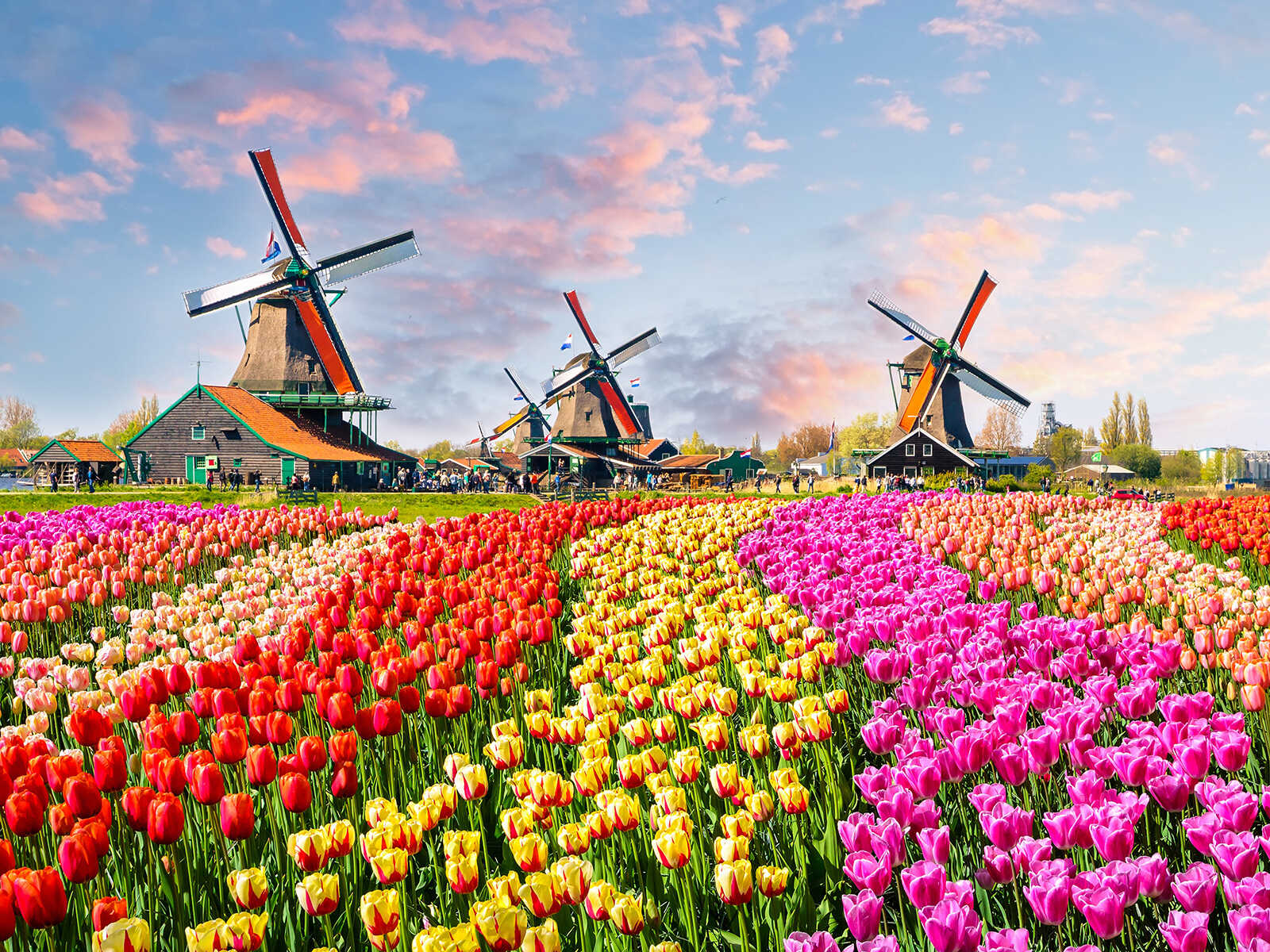
While not a holiday, the annual tulip bloom in spring is a spectacular tradition. Millions of tulips transform the landscape into a colorful patchwork, drawing visitors from around the world to places like Keukenhof, one of the world's largest flower gardens.
Fun Fact:The Dutch are world champions in cycling! There are more bicycles than people in the Netherlands, and cycling is deeply ingrained in daily life. Always be aware of dedicated cycle paths and give way to cyclists.
Art, History & Heritage
The Netherlands boasts an incredibly rich cultural heritage, particularly in the arts:
- Golden Age Masters:Explore the masterpieces of Dutch Golden Age painters like Rembrandt and Vermeer at the Rijksmuseum in Amsterdam or the Mauritshuis in The Hague.
- Modern Art:Immerse yourself in the vibrant works of Vincent van Gogh at the Van Gogh Museum.
- Traditional Villages:Discover the charm of traditional Dutch life in picturesque villages like Marken with its distinctive wooden houses, or the iconic windmills of Werelderfgoed Kinderdijk.
- Delftware:Admire the famous blue and white pottery originating from the city of Delft.
Dutch Cuisine and Dining Habits
Dutch food is often hearty and comforting, reflecting the nation's practical approach. While not as globally famous as some cuisines, it offers delicious unique experiences:
- Snacks:Try "bitterballen" (fried meatballs), "haring" (raw herring with onions), and the beloved "stroopwafels" (thin waffles with caramel syrup).
- Coffee Culture:Coffee is a central part of Dutch social life. "Koffietijd" (coffee time) often involves a single cookie with your coffee, a tradition known as "zuinigheid met vlijt" (frugality with diligence).
- Borrel:This refers to a casual get-together for drinks and snacks, usually in the late afternoon or early evening. It's a popular way to unwind and socialize.
Practical Tips for Visitors
To make your visit as smooth and enjoyable as possible, keep these cultural insights in mind:
- Learn Basic Phrases:While most Dutch people speak excellent English, learning a few basic Dutch phrases like "Hallo," "Dank u wel" (thank you very much), and "Alstublieft" (please/you're welcome) will be appreciated.
- Respect Cycle Paths:Always be mindful of cyclists and their dedicated lanes. Do not walk or stand on cycle paths.
- Dress Code:Dutch dress is generally practical, comfortable, and casual. There's no strict dress code for most occasions, though smart casual is appropriate for nicer restaurants or events.
- Public Transport:Public transport is efficient and widely used. Be mindful of others and offer seats to the elderly or pregnant individuals.
- Cash vs. Card:While cards are widely accepted, it's always good to carry a small amount of cash for smaller purchases or markets.
Embracing Dutch culture means appreciating their directness, punctuality, and the simple joy found in everyday life. By being mindful of these customs, you'll not only navigate the Netherlands with ease but also gain a deeper appreciation for this remarkable country and its people.