
Swayambhunath Stupa (Monkey Temple): History, Views & Spiritual Significance
Perched atop a hill overlooking the vibrant Kathmandu Valley, Swayambhunath Stupa stands as one of Nepal's most iconic and revered spiritual sites. Known affectionately as the "Monkey Temple," this ancient complex offers a profound journey into history, breathtaking panoramic views, and a unique blend of Buddhist and Hindu spiritualism.
An Enduring Symbol of Faith and Harmony
Swayambhunath, a UNESCO World Heritage site, is not just a monument but a living, breathing testament to Nepal's rich cultural and religious tapestry. Its distinctive white dome, gleaming golden spire, and the watchful eyes of the Buddha painted on its harmika make it instantly recognizable. The complex pulsates with the energy of pilgrims, the scent of incense, and the gentle flutter of prayer flags, all set against a backdrop of ancient trees and playful monkeys.
A Glimpse into History
The origins of Swayambhunath are shrouded in myth and antiquity, making it one of the oldest and most sacred sites in the Kathmandu Valley.
Legendary Origins
According to the Swayambhu Purana, the entire Kathmandu Valley was once a primordial lake. Legend states that a miraculous lotus flower, radiating brilliant light, grew in the center of this lake. Manjushri, a Buddhist bodhisattva of wisdom, traveled from Tibet to worship this lotus. To make the site more accessible for pilgrims, he cut a gorge at Chobar with his mighty sword, allowing the lake's waters to drain away. The lotus then settled on the hilltop, transforming into the magnificent stupa we see today.
Did you know?The name "Swayambhunath" itself means "Self-Existent One," referring to the divine, self-originated light that appeared on the primeval lotus.
Historical Development
While its mythical origins are captivating, historical records suggest the stupa dates back to at least the 5th century CE, with inscriptions indicating King Manadeva ordered work on the site in 460 CE. Further additions and renovations were made by various Malla kings and Buddhist and Hindu patrons over the centuries. This long history of patronage by both faiths underscores Swayambhunath's role as a unique example of religious coexistence.
The Architecture and Symbolism
Every element of Swayambhunath is steeped in profound symbolism, offering insights into Buddhist philosophy.
The Great Stupa
- The White Dome:Represents the entire world, or the primordial universe, symbolizing the purification of the mind.
- The Harmika:Above the dome, a cubical structure with the all-seeing 'Buddha eyes' painted on all four sides. These eyes symbolize the omniscience of the Buddha. The nose-like squiggle between the eyes is the Nepali number 'one,' symbolizing unity and the path to enlightenment.
- The Thirteen Tiers:Rising above the harmika, these gilded rings represent the thirteen stages a human being must pass through to achieve nirvana.
- The Golden Spire:Crowned by a magnificent parasol, symbolizing royalty and protection.
- Prayer Flags:Strings of colorful flags flutter from the spire, carrying mantras and prayers on the wind, spreading good karma throughout the world. Each color represents an element: blue (sky), white (air), red (fire), green (water), and yellow (earth).
Surrounding Shrines and Monasteries
The main stupa is surrounded by a multitude of smaller chaityas, temples, monasteries, and shrines dedicated to various deities. The Harati Devi Temple, dedicated to the goddess of smallpox and other epidemics (and protector of children), is a significant Hindu shrine within the complex, revered by both Buddhists and Hindus.
The Monkeys
The stupa's popular nickname, "Monkey Temple," comes from the hundreds of rhesus macaques that inhabit the complex. These playful (and sometimes mischievous) creatures are considered sacred. Legend has it that they are holy monkeys who grew from the head-lice of Manjushri when he was creating the Kathmandu Valley. While generally harmless, visitors are advised not to feed them and to keep a watchful eye on their belongings.
Panoramic Views of the Kathmandu Valley
Reaching Swayambhunath typically involves climbing a long, steep flight of 365 stone steps on the eastern side, or a shorter, less steep climb from the western side with vehicle access. The effort is immensely rewarded. From the summit, visitors are treated to unparalleled 360-degree views of the sprawling Kathmandu Valley.
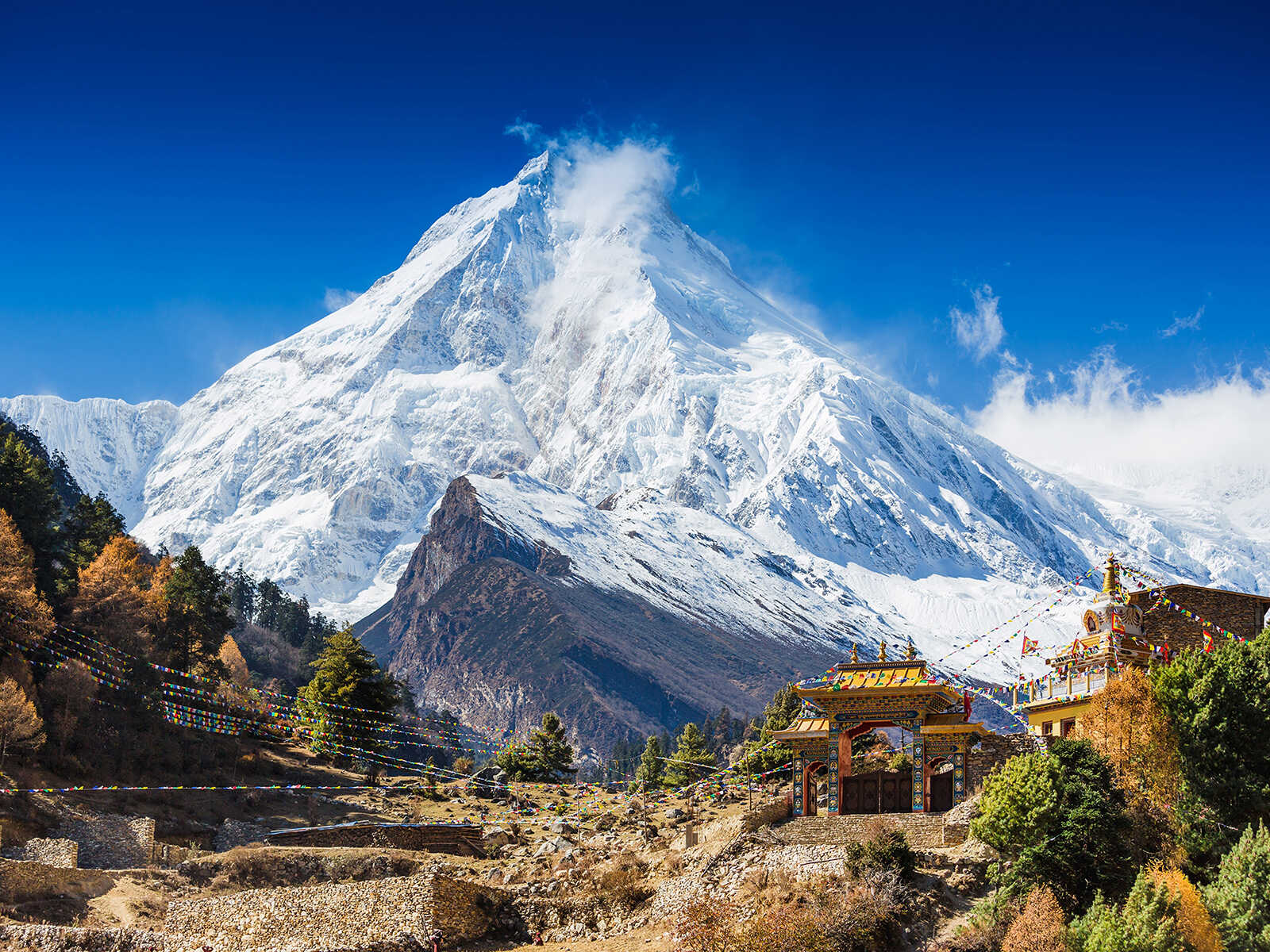
On clear days, the city's urban sprawl stretches out below, dotted with ancient temples and modern buildings. Beyond the immediate valley, the verdant hills rise, and in the distance, especially during the post-monsoon and winter months, the majestic snow-capped peaks of the Himalayas can be seen, offering a truly spectacular vista. Sunrise and sunset are particularly magical times to visit, as the changing light bathes the valley in golden hues.
Spiritual Significance and Pilgrim Experience
Swayambhunath is more than just a tourist attraction; it is a profound spiritual destination that profoundly impacts all who visit.
Buddhist Pilgrimage
For Tibetan Buddhists, Swayambhunath holds immense importance, second only to Boudha Stupa in Nepal. Pilgrims perform kora (circumambulation) around the stupa, walking clockwise while spinning prayer wheels, each turn releasing prayers and good karma into the universe. The air resonates with the rhythmic chanting of mantras and the gentle clinking of bells, creating an atmosphere of deep devotion.
Hindu Devotion
The presence of Hindu shrines, particularly the Harati Devi Temple, highlights the harmonious blend of Hinduism and Buddhism that is characteristic of Nepalese culture. Hindus also visit the site to offer prayers and perform rituals, demonstrating the syncretic nature of faith in Nepal.
An Immersive Atmosphere
Walking around the stupa, you'll encounter monks in maroon robes, devotees prostrating themselves, street vendors selling religious artifacts, and the constant hum of spiritual activity. The vibrant colors of the prayer flags, the intricate details of the statues, and the serene expressions on the faces of worshippers create a deeply moving and immersive experience.
Practical Tips for Visitors
- Getting There:Swayambhunath is easily accessible by taxi from any part of Kathmandu. Local buses also stop nearby. For the adventurous, it's possible to walk from Thamel, though it involves a significant uphill climb.
- Entry Gates:The main eastern staircase is the most traditional and challenging ascent. A paved road leads to a parking area on the western side, offering a shorter, less strenuous climb with fewer steps.
- Best Time to Visit:Early morning offers a peaceful atmosphere and excellent light for photography, especially if you want to avoid crowds. Sunset provides spectacular views of the valley. Avoid visiting in the middle of a hot day.
- What to Wear:Dress modestly, covering shoulders and knees, as it is a religious site. Comfortable walking shoes are essential, especially if you plan to ascend the eastern stairs.
- Respectful Conduct:When circumambulating the stupa or prayer wheels, always move in a clockwise direction. Avoid pointing your feet directly at religious figures or people. Ask for permission before taking photos of people.
- The Monkeys:While fascinating, these wild animals can be quick to snatch food or shiny objects. Keep your distance and secure your belongings.
Conclusion
Swayambhunath Stupa is an unmissable destination for anyone visiting Nepal. It offers a captivating blend of ancient history, profound spiritual significance, intricate artistry, and truly breathtaking views. Whether you're drawn by its legends, its architectural marvels, its playful primate residents, or simply the desire to witness the spiritual heartbeat of Nepal, the Monkey Temple promises an unforgettable experience that will leave a lasting impression on your journey through the Kathmandu Valley.