
The Ancient History of Bagan: Temples, Kings, and Dynasties
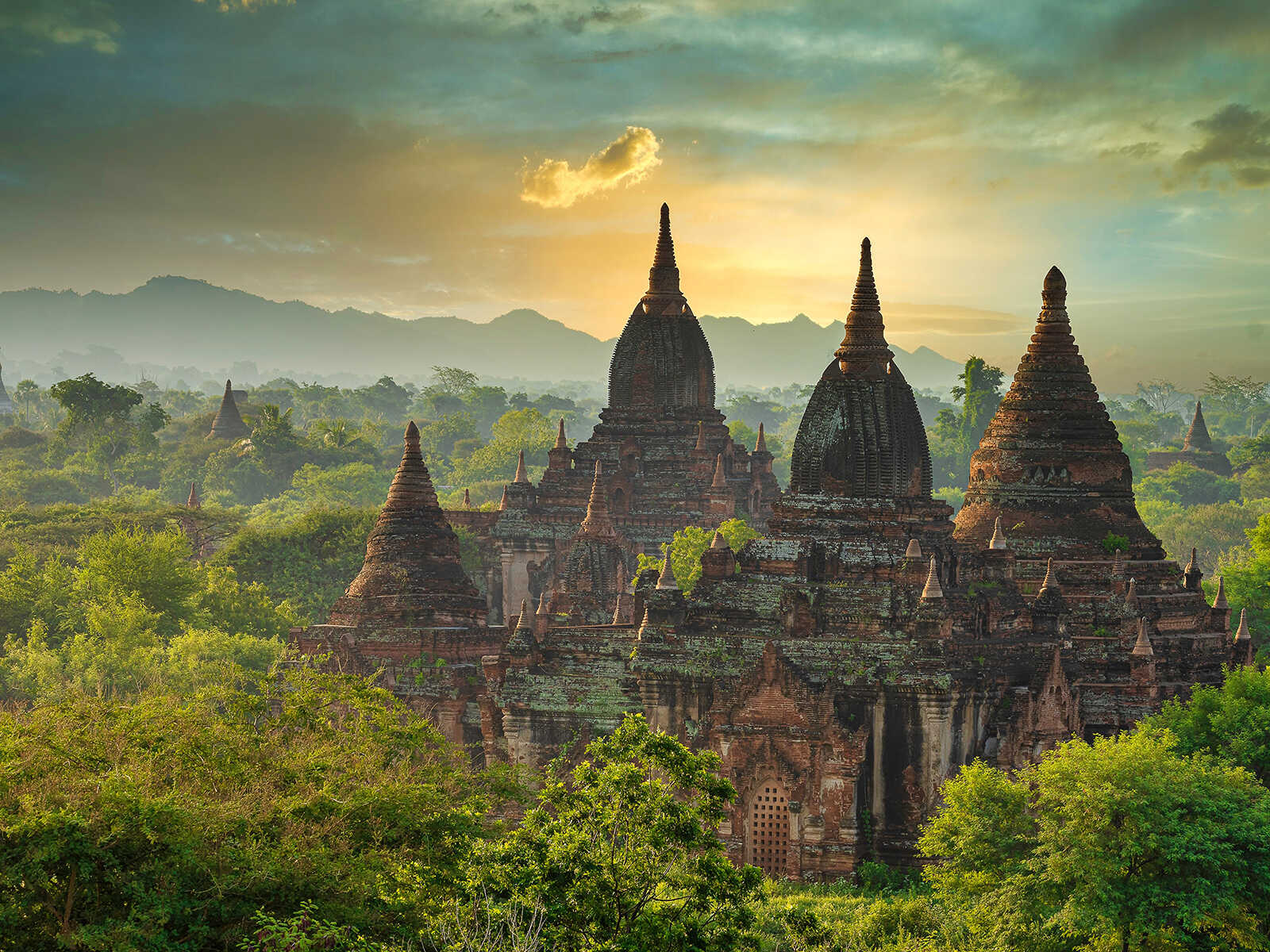
Nestled on the plains of central Myanmar, Bagan stands as a breathtaking testament to a glorious past, an archaeological wonder where thousands of ancient stupas and temples dot the landscape. This UNESCO World Heritage site was once the powerful capital of the Pagan Kingdom, a cradle of Burmese civilization and a vibrant center of Theravada Buddhism.
The Dawn of a Kingdom: Founding the Pagan Empire
The story of Bagan begins long before its golden age, with evidence of early settlements dating back to the 2nd century AD. However, it was around the 9th century that the city began to consolidate power, becoming a significant regional center. The true unification of the region and the establishment of the First Burmese Empire is largely credited toKing Anawrahta, who ascended the throne in 1044 AD.
Anawrahta's reign marked a pivotal moment. He unified the disparate regions of what is now Myanmar, primarily through military conquest. Crucially, he embraced and propagated Theravada Buddhism, which had been flourishing in the Mon kingdom of Thaton. Legend has it that Anawrahta, seeking a complete set of the Tripitaka (Buddhist scriptures), conquered Thaton and brought back not only the texts but also Mon monks, artisans, and the revered Mahamuni Buddha image (though the image itself is now housed in the Mahamuni Buddha Temple in Mandalay, a later site of great reverence).
Did you know?King Anawrahta is often considered the father of the Burmese nation, not just for his military prowess but for establishing a unified cultural and religious identity that profoundly shaped the future of Myanmar.
The adoption of Theravada Buddhism provided a unifying force, inspiring a fervent period of religious devotion and architectural innovation that would transform Bagan into one of the world's most impressive religious landscapes.
The Golden Age of Temple Building: A City of 10,000 Pagodas
Following Anawrahta's foundational work, successive kings and their devout subjects embarked on an unprecedented construction spree that lasted for over two centuries (11th to 13th centuries). This era saw the plains of Bagan transformed into a sprawling city of temples, stupas, and monasteries, each built as an act of merit-making to accumulate good karma.
At its peak, it is believed that over 10,000 religious structures once stood across the Bagan plains. While many have succumbed to time, earthquakes, and human intervention, over 2,000 remain today, creating an awe-inspiring vista unmatched anywhere else in Southeast Asia. These structures showcase diverse architectural styles, from the solid, bell-shaped stupas (like the Shwesandaw Pagoda) to hollow, cave-like temples (known asgu) designed for meditation and housing Buddha images.
The temples were primarily constructed from brick, often covered with stucco, and adorned with intricate carvings, glazed tiles, and murals depicting Jataka tales (stories of the Buddha's previous lives). One of the most magnificent examples of this era is the Ananda Temple, built by King Kyansittha around 1105 AD. It is a masterpiece of Mon architecture, known for its perfect symmetry, towering spire, and four standing Buddha images facing the cardinal directions.
Other notable structures from this period include:
- Thatbyinnyu Temple:Bagan's tallest temple, known for its elegant proportions.
- Gawdawpalin Temple:A large, two-story temple with a grand, tiered spire.
- Sulamani Temple:Famous for its intricate brickwork and well-preserved frescoes.
The sheer scale and artistic ambition of these constructions reflect a prosperous kingdom driven by deep spiritual conviction. The religious fervor extended beyond the capital; even in later periods, grand Buddhist structures like the Shwedagon Pagoda in Yangon and the Mingun Pahtodawgyi near Mandalay would continue this tradition of monumental temple building in Myanmar.
Kings, Dynasties, and Their Legacies
The Pagan Dynasty saw a succession of powerful monarchs who each contributed to the kingdom's growth and its architectural legacy.
King Anawrahta (1044-1077 AD)
As mentioned, Anawrahta was the architect of the Pagan Empire, unifying much of modern Myanmar and establishing Theravada Buddhism as the state religion. His reforms laid the groundwork for a stable and prosperous kingdom.
King Kyansittha (1084-1113 AD)
Anawrahta's son, Kyansittha, continued his father's legacy, consolidating the empire and fostering a golden age of Burmese literature and art. He was a great patron of Buddhism, overseeing the construction of the magnificent Ananda Temple and maintaining strong diplomatic ties with neighboring kingdoms, including India and Sri Lanka.
King Alaungsithu (1113-1167 AD)
Alaungsithu's long reign marked a period of extensive internal development and maritime trade. He traveled widely, promoting Buddhism and overseeing the construction of numerous temples, including the Shwegugyi Temple. His era saw the kingdom's influence extend, facilitating trade routes across the Bay of Bengal.
Over two centuries, these kings and their successors created a stable political and religious environment, allowing Bagan to flourish as a center of learning, art, and spirituality.
The Decline and Fall of the Pagan Kingdom
Despite its initial grandeur, the Pagan Kingdom eventually faced a period of decline. Several factors contributed to its weakening:
- Economic Strain:The continuous construction of temples, while religiously meritorious, placed a significant economic burden on the kingdom. Vast tracts of arable land and a large portion of the population's labor were dedicated to monastic institutions, leading to a shrinking tax base and agricultural output for the crown.
- Internal Strife:Succession disputes and internal rebellions weakened central authority over time.
- Overpopulation:The density of the population within the confined area of Bagan itself may have contributed to resource strain.
The fatal blow, however, came from external forces. In the late 13th century, the burgeoning Mongol Empire, under the leadership of Kublai Khan, began its southward expansion. After repeated demands for tribute were rejected, Mongol forces launched invasions into Bagan territory.
The decisive confrontation is often cited as the Battle of Ngasaunggyan in 1287, where the Pagan army suffered a crushing defeat. Although the Mongols did not occupy Bagan permanently, the invasion shattered the kingdom's authority and left the capital vulnerable. The last king of the Pagan Dynasty, Narathihapate, fled the capital, earning him the moniker "Taruk-pliye Min" (the King who Fled from the Chinese).
By 1297, the Pagan Kingdom had disintegrated into smaller, competing states, and Bagan was abandoned as the imperial capital, never to regain its former political prominence. The focus of Burmese power would later shift to other sites like Mandalay Hill and Inwa.
Bagan's Enduring Legacy: A UNESCO World Heritage Site
Though its political power waned, Bagan's spiritual and cultural legacy endured. The thousands of temples left behind became a testament to a magnificent civilization. For centuries, pilgrims and locals continued to visit and maintain the most revered structures, even as the jungle slowly reclaimed others.
Today,Old Bagan and its surrounding plains are recognized globally for their outstanding universal value. In 2019, UNESCO officially inscribed Bagan as a World Heritage Site, acknowledging its unique concentration of ancient Buddhist architecture and its profound influence on Burmese history and culture.
Exploring Bagan today is like stepping back in time. Visitors can wander through the ancient city, climb certain accessible temples for panoramic views, and witness breathtaking sunrises and sunsets over the vast plains dotted with countless pagodas. It remains a powerful symbol of Myanmar's rich heritage and the enduring spirit of its people.