
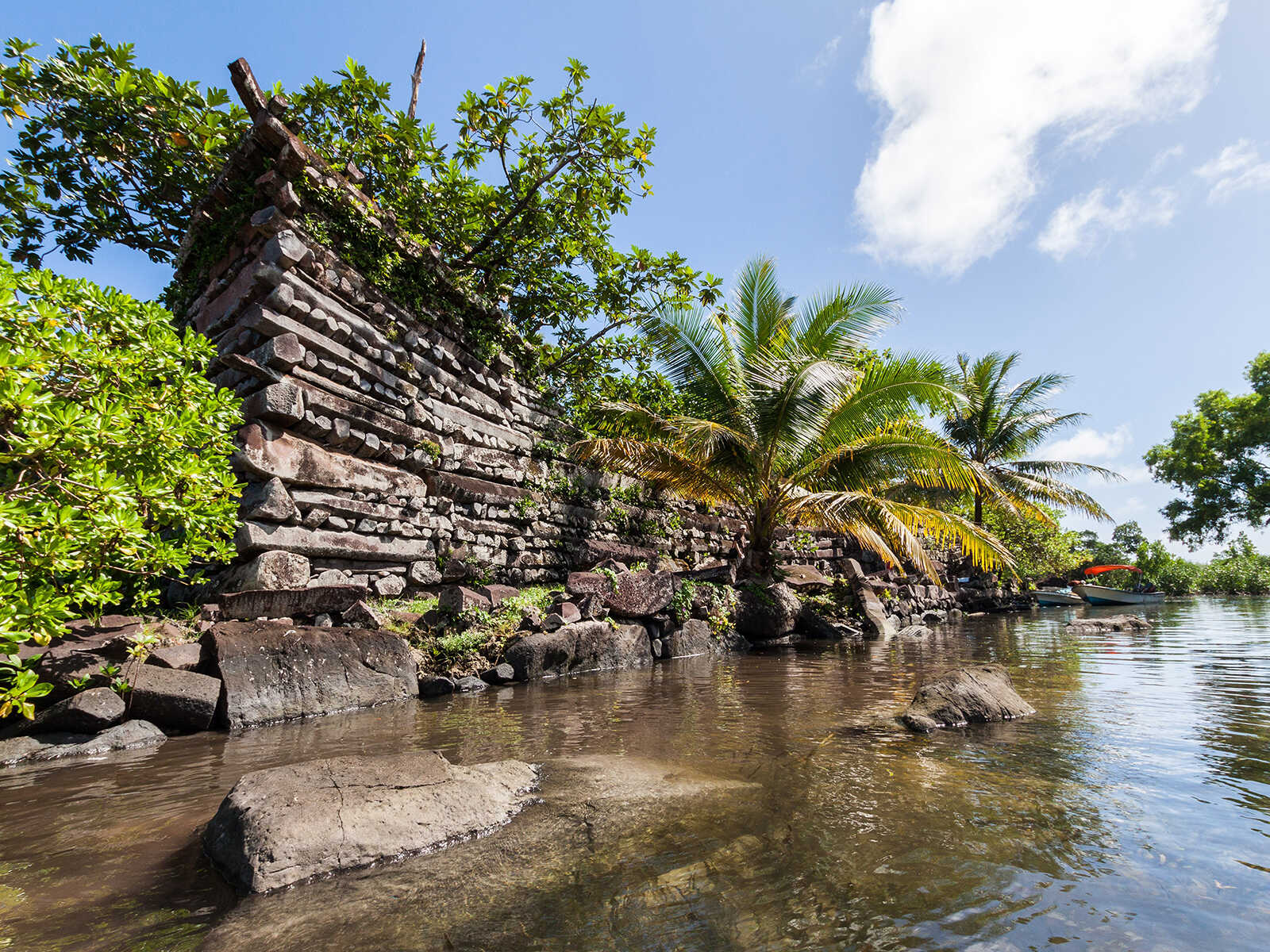
The Story of Nan Madol: Micronesia's Mysterious Basalt City
Nestled amidst the lush mangroves and serene waters of Pohnpei,Nan Madol stands as an enigmatic marvel of ancient engineering. This sprawling basalt city, often called the "Venice of the Pacific," whispers tales of a powerful dynasty and a sophisticated civilization that once thrived in the heart of Micronesia.
Unveiling the "Place in Between Spaces"
Nan Madol, meaning "place in between spaces" in the local Pohnpeian language, is an archaeological wonder unlike any other. Comprising nearly 100 artificial islets constructed from colossal basalt logs and coral boulders, it served as the capital of the Saudeleur Dynasty, which ruled Pohnpei for centuries until its fall around 1628 AD. Located off the eastern shore of Temwen Island, adjacent to the main island of Pohnpei, this UNESCO World Heritage site offers a breathtaking glimpse into a complex past.
Imagine a city built directly on the water, with intricate canals serving as streets and towering walls crafted from dark, volcanic rock. The scale of Nan Madol is truly astounding, covering an area of approximately 18 square kilometers and featuring structures that weigh many tons. It's a testament to the ingenuity and sheer effort of its ancient builders, inspiring awe and fueling countless legends.
The Rise of the Saudeleur Dynasty
The Saudeleur Dynasty emerged around 1180 AD, consolidating power across Pohnpei and establishing Nan Madol as its political and religious center. This centralized authority allowed for the mobilization of vast resources and labor required to construct such an ambitious urban complex. The city was meticulously planned, with distinct areas for ritual, royalty, administration, and even residential quarters for the elite.
Myth and Legend: How Was it Built?
Local legends beautifully explain the construction of Nan Madol. The most popular tale speaks of twin sorcerers, Olisihpa and Olosohpa, who arrived on Pohnpei from mythical Katau. With their magical powers, they are said to have levitated the enormous basalt columns from distant quarries and placed them into position, creating the city overnight. These stories reflect the sheer disbelief and wonder the Pohnpeian people must have felt witnessing such monumental construction without modern tools.
Fun Fact:The basalt columns used in Nan Madol's construction are prismatic, meaning they naturally form in hexagonal or pentagonal shapes when volcanic lava cools slowly. This natural geometry made them ideal building blocks, despite their immense weight.
Engineering Marvels: The Practicalities
While magic makes for a captivating story, archaeologists offer a more grounded, though no less impressive, explanation. The basalt logs, some weighing up to 50 tons, were likely quarried from various sites around Pohnpei, including Sokehs Rock. They were then transported by rafts and canoes across the water to the construction site. Once at the islets, a combination of levers, ropes, and sheer manpower would have been employed to lift and position these massive stones. The coral fill used to create the artificial platforms further demonstrates an advanced understanding of maritime construction and engineering.
Life in the Basalt City
Nan Madol was more than just a collection of buildings; it was a vibrant, living city. Its intricate layout reflected a highly stratified society, with the Saudeleur rulers at the apex, surrounded by priests, nobles, and skilled craftsmen. The city's design facilitated control and displayed the dynasty's immense power, with its fortified walls and strategic waterways.
Social Structure and Rituals
Daily life revolved around the demands of the rulers and elaborate religious rituals. The city contained specific enclosures for various purposes: royal tombs, ceremonial baths, administrative centers, and even residences for the Saudeleur's wives and servants. Food, primarily fish, taro, and breadfruit, was brought in from the surrounding islands to sustain the elite population. Rituals often involved human sacrifice, particularly at the royal mortuary complex of Nandauwas, emphasizing the spiritual authority of the Saudeleur.
Architectural Features
Key structures within Nan Madol include:
- Nandauwas:The royal mortuary enclosure, featuring massive walls up to 7.5 meters high, where the Saudeleur rulers were interred.
- Pahn Kadira:An administrative and residential compound for the Saudeleur.
- Peinering:A residential area for high-ranking chiefs.
- Dau-pwai:A food preparation area, indicating a sophisticated system for feeding the elite.
- Ritual Baths:Stone-lined pools believed to have been used for ceremonial purification.
The construction technique, known as "header-and-stretcher" (similar to log cabin construction), allowed for stable and imposing walls without the use of mortar, relying on the sheer weight and interlocked nature of the basalt columns.
The Decline and Abandonment
The Saudeleur Dynasty, after flourishing for over four centuries, began to decline. Its autocratic rule, which demanded tribute and labor from the outer districts of Pohnpei, eventually led to resentment. This internal dissatisfaction, combined with external pressures, sealed its fate.
The Fall of the Saudeleur Dynasty
Around 1628 AD, the Saudeleur rule was overthrown by Isokelekel, a warrior from Kosrae (or possibly a Pohnpeian chief returning from Kosrae). Isokelekel's forces successfully invaded Nan Madol, marking the end of the Saudeleur era. While the city itself was not completely destroyed, its significance as a political and religious capital waned. Subsequent ruling dynasties on Pohnpei chose other locations for their centers of power, and Nan Madol was gradually abandoned, left to be reclaimed by the encroaching mangroves and the relentless forces of nature.
Visiting Nan Madol Today: A Journey Through Time
For adventurous travelers, a visit to Nan Madol is an unforgettable experience, offering a rare opportunity to connect with an ancient civilization. It's a place where history, mystery, and natural beauty intertwine.
Getting There
Nan Madol is located on the island of Pohnpei, one of the four states of the Federated States of Micronesia. To reach it, you'll first fly into Pohnpei International Airport (PNI). From the capital, Kolonia, you'll need to arrange transportation to the site. The journey often involves a drive to Temwen Island, followed by a short boat ride through the mangroves to access the main ruins, or a hike through the surrounding area. Engaging a local guide is highly recommended not only for navigation but also for invaluable insights into the site's history and cultural significance.
What to Expect
Upon arrival, you'll be greeted by an ethereal landscape of crumbling basalt walls, winding canals, and dense mangrove forests. The main structures, particularly Nandauwas, are imposing and offer a sense of the city's former grandeur. Expect to walk a fair amount, often over uneven terrain. The atmosphere is one of profound tranquility, broken only by the sounds of birds and the gentle lapping of water. Preservation efforts are ongoing, but the site remains largely untouched, allowing for an authentic exploration.
Tips for Your Visit
- Hire a Local Guide:Absolutely essential for navigating the complex site and understanding its rich history and legends.
- Wear Appropriate Footwear:Sturdy, comfortable shoes are a must, as paths can be muddy, rocky, or slippery. Water shoes might be useful for boat access.
- Bring Insect Repellent:Mosquitoes are common, especially in the mangrove areas.
- Stay Hydrated:Pohnpei's tropical climate is hot and humid.
- Respect the Site:Nan Madol is a sacred ancestral site. Be mindful of your surroundings and avoid touching or climbing on structures.
- Check Tide Times:Access by boat can be affected by low tide, making some canals impassable. Your guide will know the best times.
Beyond Nan Madol: Exploring Pohnpei and Micronesia
While Nan Madol is undoubtedly the crown jewel of Pohnpei, the island and the wider Micronesian region offer a wealth of other attractions. On Pohnpei itself, you can marvel at the majestic Kepirohi Waterfall, a stunning tiered cascade ideal for a refreshing swim, or explore the iconic Sokehs Rock, offering panoramic views. For marine enthusiasts, a trip to Ant Atoll provides pristine coral reefs and vibrant marine life, perfect for snorkeling or diving.
Further afield, the Federated States of Micronesia beckon with diverse experiences. Dive into history at Truk Lagoon(Chuuk), renowned as the world's best wreck diving destination, or discover the unique culture and traditional stone money of Yap. Each island offers a distinct flavor of Micronesian charm, making it a truly captivating region to explore.
The Enduring Legacy of Nan Madol
Nan Madol stands as a powerful reminder of a sophisticated civilization that flourished in the remote Pacific. Its colossal basalt structures, intricate waterways, and compelling legends continue to inspire and mystify. As you navigate its ancient canals and explore its weathered walls, you're not just witnessing ruins; you're stepping into a living story, a testament to human ingenuity and the enduring spirit of Micronesia's past.
This mysterious city is more than just an archaeological site; it's a gateway to understanding the rich cultural heritage and incredible achievements of the people of Pohnpei. Plan your journey to Nan Madol and uncover the secrets of Micronesia's basalt city for yourself.