
History of Micronesia: From Ancient Empires to WWII Legacy
Micronesia, a vast expanse of islands scattered across the western Pacific, holds a history as deep and complex as its surrounding ocean. From the arrival of its first intrepid voyagers to the devastating conflicts of the 20th century, these islands have witnessed millennia of human ingenuity, cultural evolution, and geopolitical struggle, leaving behind a rich tapestry for modern visitors to explore.
The Dawn of Civilization: Early Migrations and Settlements
The story of Micronesia begins thousands of years ago with the remarkable navigational feats of Austronesian seafarers. Around 3,000 to 4,000 years ago, these skilled mariners embarked on epic voyages, settling the previously uninhabited islands. They brought with them not only their knowledge of seafaring, agriculture, and social organization but also their unique languages and cultural practices, laying the foundation for the diverse societies that would later flourish across the region.
These early settlers adapted to the unique challenges and resources of their island homes, developing sophisticated subsistence strategies, intricate social hierarchies, and distinct artistic traditions. Over centuries, various island groups, isolated yet interconnected by occasional voyaging, evolved into unique cultural entities.
Ancient Empires and Megalithic Marvels
Before European contact, several Micronesian societies developed complex political structures and left behind awe-inspiring archaeological remnants that speak to their advanced capabilities.
The Enigmatic City of Nan Madol
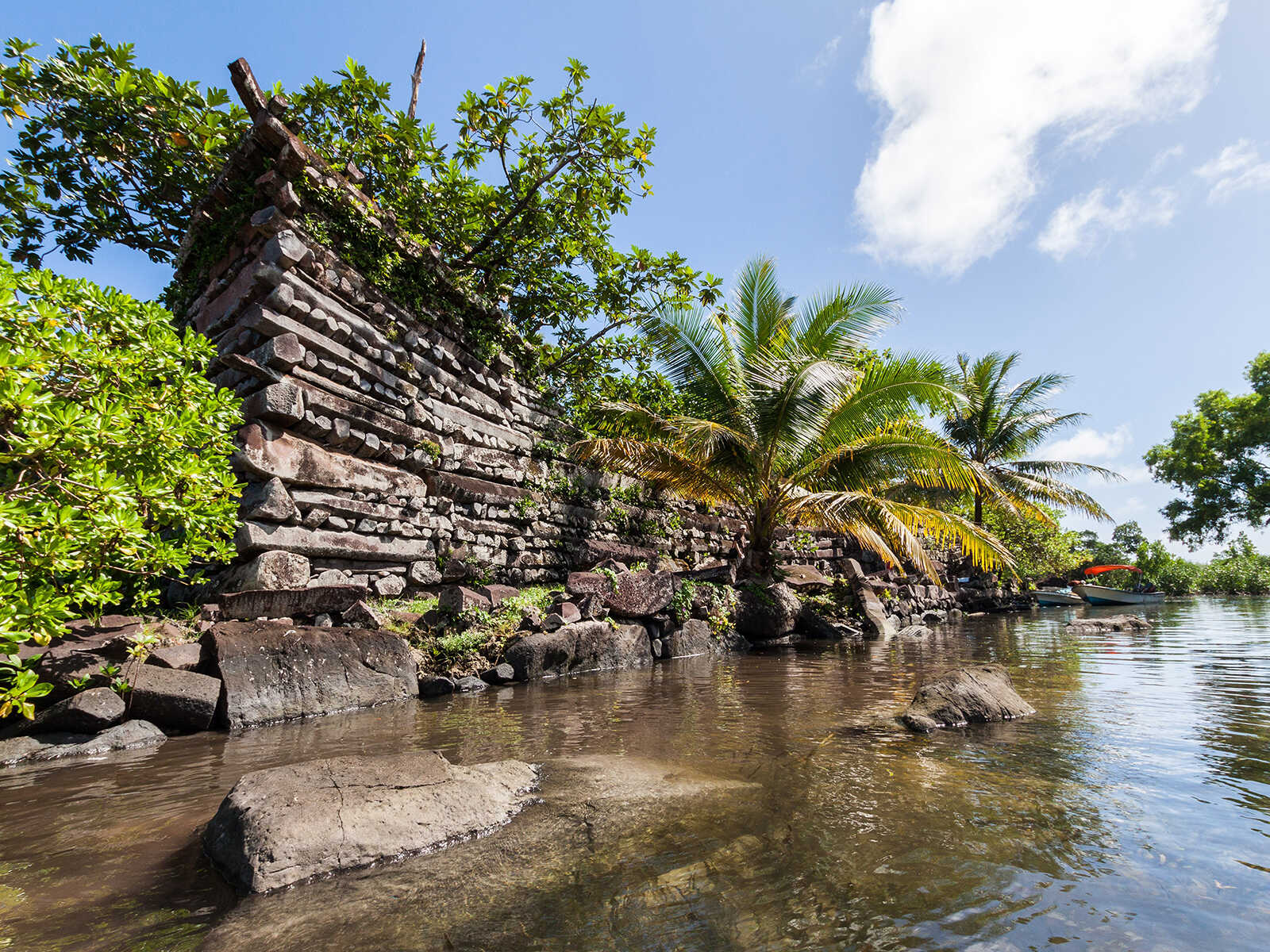
Perhaps the most compelling testament to ancient Micronesian ingenuity is Nan Madol, located off the eastern shore of Pohnpei. Often referred to as the "Venice of the Pacific," this extraordinary archaeological site comprises nearly 100 artificial islets built on coral reefs and connected by a network of canals. Constructed from massive basalt logs, some weighing many tons,Nan Madol served as the ceremonial and political seat of the Saudeleur Dynasty, which ruled Pohnpei for centuries until its decline around the early 17th century.
Fun Fact:The construction of Nan Madol remains a marvel of engineering. The precise methods used to transport and lift the colossal basalt columns without modern machinery are still debated by archaeologists today, adding to its mystique.
Yap's Stone Money and Societal Structure
Further west, the island of Yap developed an equally unique and complex society, renowned for its intriguing currency: Rai stones. These massive, disc-shaped stones, carved from aragonite in distant Palau and transported hundreds of miles by canoe, served as a form of currency. Their value was not determined by their size alone, but by their history, the perils faced during their transport, and the prestige of their owners. The highly stratified society of Yap, with its elaborate land tenure systems and intricate alliances, showcases another facet of Micronesian political and economic sophistication.
European Encounters and Colonial Eras
The arrival of European explorers marked a pivotal turning point in Micronesian history, ushering in centuries of foreign influence and control.
Spanish Influence (16th-19th Century)
Ferdinand Magellan was the first European to sight some of Micronesia's islands in 1521. Spain formally claimed the Mariana Islands (including Guam) in the 17th century, establishing a colonial presence there. While Spanish galleons regularly traversed Micronesian waters on their way to the Philippines, their direct influence on most of the Caroline Islands (which include modern-day FSM, Palau, and the Marshall Islands) remained limited for centuries, primarily consisting of sporadic trade and missionary efforts.
German Protectorate (Late 19th - Early 20th Century)
By the late 19th century, European powers began to formalize their claims. Germany purchased the Caroline and Mariana Islands (excluding Guam) from Spain in 1899, establishing a protectorate. The Germans focused on economic exploitation, particularly copra (dried coconut meat) and phosphate mining. They introduced administrative structures and rudimentary infrastructure, leaving a lasting, albeit brief, impact on the local economies and societies before the outbreak of World War I.
The Japanese Mandate: A Period of Transformation (1914-1945)
With the onset of World War I, Japan, an ally of the Entente Powers, seized the German Micronesian territories in 1914. After the war, the League of Nations formally granted Japan a mandate over these islands, known as the South Seas Mandate.
Under Japanese rule, Micronesia underwent significant transformation. Japan invested heavily in infrastructure, building roads, ports, and schools. They developed commercial agriculture, fishing, and mining, integrating the islands into the Japanese economic sphere. Japanese settlers migrated to the islands in large numbers, often outnumbering the indigenous populations in major administrative centers like Kolonia on Pohnpei. While bringing economic development, Japanese rule also involved efforts at cultural assimilation and strict control, setting the stage for the dramatic events of World War II.
World War II: The Pacific Theater's Fierce Battles
Micronesia's strategic location made it a crucial battleground during World War II. The Japanese fortified many of their mandated islands, transforming them into formidable naval and air bases, essential for their expansion across the Pacific. The Allied counter-offensive, a brutal island-hopping campaign, brought unprecedented destruction and suffering to the region.
Truk Lagoon: The Ghost Fleet of the Pacific
One of the most significant episodes unfolded at Truk Lagoon(now Chuuk State). This natural harbor was Japan's main forward naval base in the Pacific, a vital staging point for its fleet. In February 1944, the U.S. launched "Operation Hailstone," a massive air and sea attack that crippled the Japanese stronghold. Hundreds of thousands of tons of shipping, including warships, cargo vessels, and aircraft, were sunk within the lagoon. Today,Truk Lagoon is an unparalleled dive site, a haunting underwater museum where divers can explore a "ghost fleet" teeming with marine life.
Other islands across Micronesia, such as Peleliu, Saipan, and the Marshall Islands, also witnessed fierce battles, leaving behind a legacy of heroism, tragedy, and countless war relics scattered across land and sea. The war profoundly impacted the indigenous populations, displacing communities and altering traditional ways of life.
Post-War Era and Self-Determination
Following Japan's defeat in 1945, Micronesia came under U.S. administration as the Trust Territory of the Pacific Islands (TTPI), mandated by the United Nations. The U.S. focused on economic development, education, and guiding the islands toward self-determination.
Over several decades, the TTPI gradually dissolved as its constituent parts chose their political futures. The Federated States of Micronesia (FSM), comprising Chuuk, Kosrae, Pohnpei, and Yap, became a sovereign nation in free association with the United States in 1986. Similarly, the Republic of the Marshall Islands and the Republic of Palau gained independence under compacts of free association. The Northern Mariana Islands chose to become a U.S. Commonwealth, and Guam remains a U.S. territory.
Experiencing Micronesia's History Today
Today, the history of Micronesia is not just confined to books; it's etched into the landscape and underwater world. Visitors can walk among the ancient ruins of Nan Madol, witness the iconic Rai stones on Yap, and explore the WWII wrecks of Truk Lagoon. Remnants of Spanish, German, and Japanese colonial periods can be found in architectural styles, old administrative buildings, and even local languages. Sites like Sokehs Rock on Pohnpei, while a natural landmark, overlooks areas with historical significance.
Conclusion
The history of Micronesia is a compelling narrative of resilience, adaptation, and cultural richness. From the profound achievements of its ancient empires to the complex legacy of its colonial past and the scars of a global war, these islands offer a unique window into humanity's journey across time and ocean. Exploring Micronesia is not just a tropical getaway; it's an immersive journey through millennia of captivating history.