
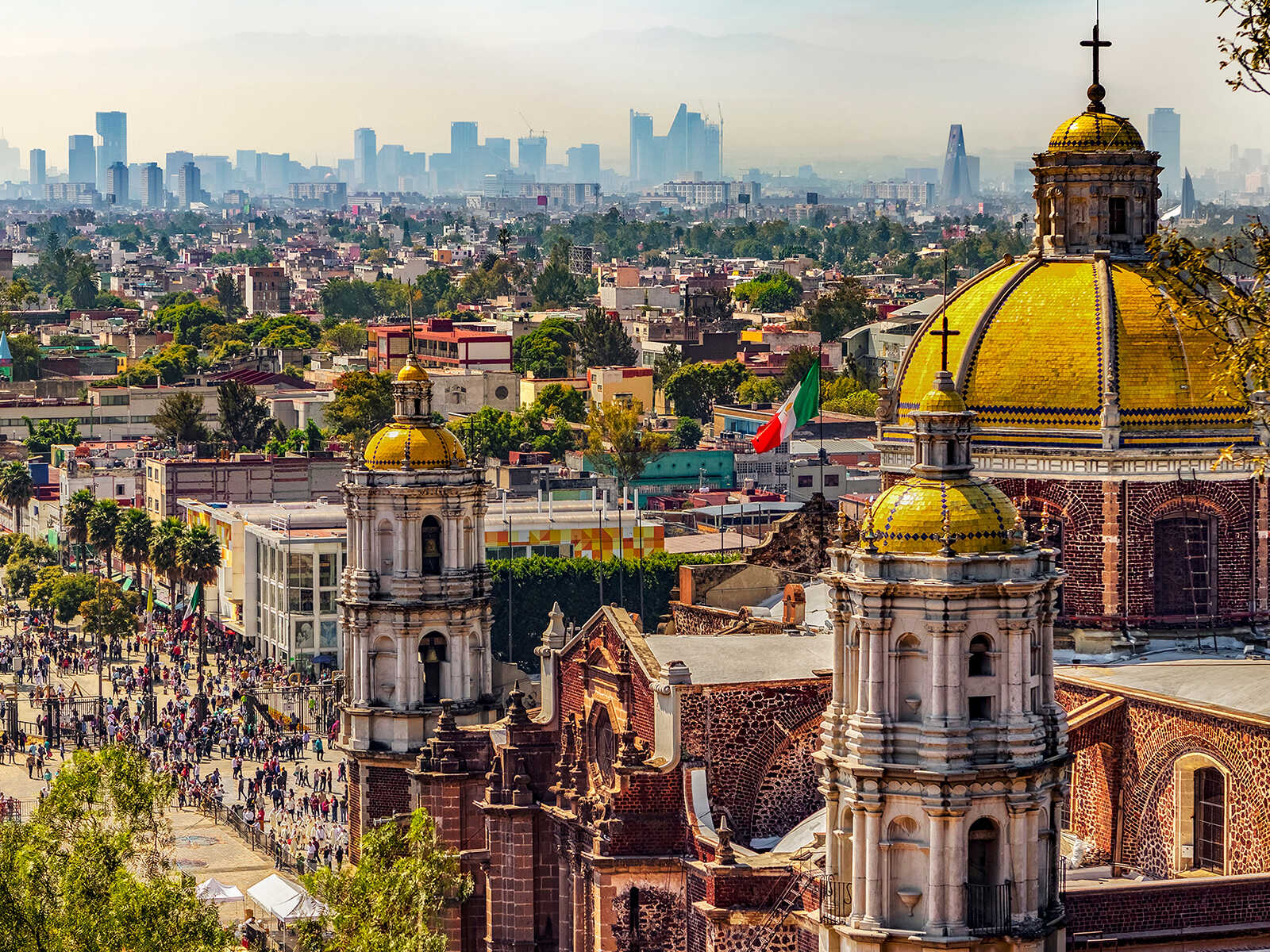
A Brief History of Mexico: From Ancient Civilizations to Modern Mexico
Mexico is a land steeped in history, where the echoes of ancient civilizations resonate through bustling modern cities and serene archaeological sites. Understanding its past is key to appreciating the vibrant culture, diverse landscapes, and resilient spirit that define this remarkable country today. Join us on a journey through millennia, exploring the pivotal moments that shaped Mexico.
Ancient Civilizations: The Cradle of Mesoamerica
The story of Mexico begins thousands of years ago with the emergence of complex societies in Mesoamerica. These civilizations, characterized by advanced agriculture, intricate calendars, monumental architecture, and sophisticated belief systems, laid the foundation for the nation's rich heritage.
The Olmecs: The "Mother Culture" (c. 1500-400 BCE)
Considered the earliest major Mesoamerican civilization, the Olmecs flourished in the tropical lowlands of south-central Mexico. Their influence is evident in later cultures, particularly through their monumental colossal head sculptures, sophisticated art, and early writing systems. They established patterns of urban planning and religious iconography that would be adopted and adapted by subsequent peoples.
The Maya: Intellectuals of the Jungle (c. 2000 BCE - 1500 CE)
Further south, the Maya developed an extraordinary civilization known for its profound understanding of astronomy, mathematics, and a complex hieroglyphic writing system. They constructed magnificent city-states across vast regions, leaving behind impressive temples and pyramids. Visitors can still marvel at their architectural prowess and intricate carvings at sites like Chichén-Itzá,Paraiso Maya Palenque, and the coastal Archeological Zone of Tulum.
Teotihuacán: The City of the Gods (c. 100 BCE - 550 CE)
In the central highlands, the immense city of San Juan Teotihuacán rose to become one of the largest and most influential urban centers in the ancient world. Its iconic Pyramids of the Sun and Moon, along with the Avenue of the Dead, demonstrate a mastery of engineering and urban planning that remains awe-inspiring. Though its rulers remain a mystery, Teotihuacán's impact on later cultures, including the Aztecs, was undeniable.
Other Notable Civilizations
Beyond these giants, numerous other cultures contributed to Mexico's ancient tapestry. The Zapotecs and Mixtecs of Oaxaca developed sophisticated urban centers and intricate artisanal traditions, while the Toltecs, based at Tula, are often seen as a crucial link between Teotihuacán and the later Aztec Empire.
The Aztec Empire: A Powerful Legacy (c. 1300-1521 CE)
The last great Mesoamerican empire before the arrival of Europeans was that of the Aztecs. Migrating from the north, they established their magnificent capital, Tenochtitlan, on an island in Lake Texcoco (the site of modern-day Mexico City) in 1325. Through military conquest and strategic alliances, they built a vast empire that dominated central Mexico.
The Aztecs developed a complex society with a rich pantheon of gods, elaborate rituals, and a sophisticated agricultural system that included "chinampas" or floating gardens. Their artistic and architectural achievements, though largely destroyed during the conquest, hint at a vibrant and powerful civilization.
Fun Fact:The Aztec capital, Tenochtitlan, was famously built on a lake and featured an intricate network of canals, comparable to Venice. It was home to an estimated 200,000 to 300,000 inhabitants, making it one of the largest cities in the world at the time.
The Spanish Conquest: A New Era (1519-1521)
The arrival of Hernán Cortés and his Spanish conquistadors in 1519 marked a dramatic turning point in Mexico's history. Exploiting internal divisions among indigenous groups and aided by superior weaponry and devastating diseases, Cortés orchestrated the fall of Tenochtitlan in 1521. This conquest ushered in three centuries of Spanish colonial rule, transforming the landscape, culture, and demographics of Mexico.
Under Spanish rule, the territory became "New Spain." European diseases decimated indigenous populations, while Spanish language, Catholicism, and new political and economic systems were imposed. The fusion of indigenous and European traditions created a unique mestizo culture, evident in everything from cuisine to art and architecture, like the stunning Mexico City Metropolitan Cathedral built atop sacred Aztec ground.
Towards Independence: A Nation Forged in Struggle (1810-1821)
By the early 19th century, discontent with Spanish rule had grown among various social classes in New Spain. Inspired by Enlightenment ideals and the American and French Revolutions, the desire for self-governance intensified. The spark for independence was ignited on September 16, 1810, when Father Miguel Hidalgo y Costilla issued his famous "Grito de Dolores" (Cry of Dolores), calling for rebellion against Spanish authorities.
What followed was a brutal and protracted war for independence, led by figures like Hidalgo, José María Morelos, and later Agustín de Iturbide. After a decade of fighting, Mexico finally achieved independence in 1821, becoming the First Mexican Empire, which soon transitioned into a republic. The struggle for freedom is commemorated at sites such as the Monumento al Pipila Guanajuato, overlooking a city central to the independence movement.
The 19th and Early 20th Centuries: Tumult and Transformation
The newly independent nation faced a tumultuous 19th century marked by political instability, foreign interventions, and significant territorial losses. The Mexican-American War (1846-1848) resulted in Mexico ceding vast territories, including present-day California, Nevada, Utah, Arizona, New Mexico, and parts of Colorado and Wyoming, to the United States.
Later, the country endured the French Intervention and the brief reign of Emperor Maximilian (1864-1867), before the rise of Porfirio Díaz, whose long dictatorship (the "Porfiriato," 1876-1911) brought economic modernization but also social inequality. This simmering discontent erupted into the Mexican Revolution (1910-1920), a decade-long civil war that profoundly reshaped the nation. Key figures like Emiliano Zapata, Pancho Villa, and Francisco I. Madero fought for land reform, social justice, and democracy, leading to the progressive Constitution of 1917.
Modern Mexico: Culture, Growth, and Challenges
The 20th century saw Mexico solidify its identity as a modern nation. Post-revolutionary governments focused on nation-building, land redistribution, and promoting a unified Mexican culture. Economic development, particularly after World War II, led to industrial growth and the rise of a robust tourism industry, with destinations like Cancún and Puerto Vallarta becoming world-renowned.
Today, Mexico is a vibrant, diverse, and influential country. It boasts a rich cultural tapestry celebrated globally, from its world-renowned cuisine and mariachi music to its colorful traditions like Día de Muertos. While facing contemporary challenges such as economic inequality and security issues, Mexico continues to evolve, drawing strength from its deep historical roots and the resilience of its people. Experiencing modern Mexico often involves engaging with its cultural heritage, whether at theme parks like Xcaret Park or in its bustling urban centers.
From the enigmatic pyramids of ancient empires to the dynamic pulse of its modern cities, Mexico's history is a captivating narrative of creation, conflict, and enduring spirit. Every visit offers a chance to walk through the pages of this incredible story.