
The History of Mauritania's Ancient Cities: Chinguetti, Ouadane & Beyond
Nestled within the vast, golden expanse of the Saharan desert, Mauritania's ancient cities stand as enduring testaments to a rich past. These UNESCO World Heritage sites, particularly Chinguetti and Ouadane, were once vibrant hubs of trans-Saharan trade and profound Islamic scholarship, their stories etched into the sun-baked stone and shifting sands.
Guardians of the Sahara: Mauritania's Historic Role
For centuries, Mauritania served as a crucial crossroads in West Africa, linking the Mediterranean world with the sub-Saharan regions. Its strategic position along ancient trade routes fostered the growth of powerful empires and the establishment of sophisticated urban centers. The rugged Adrar Plateau, in particular, provided sheltered oases and defensible locations for the development of these remarkable cities, which blossomed from the 11th century onwards.
Chinguetti: The Seventh Holy City of Islam
Founded in the 13th century,Chinguetti quickly rose to prominence as a vital caravanserai on the trans-Saharan trade route. Its location made it a natural stopping point for caravans laden with salt, gold, dates, and textiles. However, Chinguetti's fame transcended mere commerce; it became renowned as a significant center of Islamic learning, earning it the moniker "the seventh holy city of Islam."
During its golden age, Chinguetti attracted scholars and pilgrims from across the Islamic world. Its libraries housed thousands of ancient manuscripts covering theology, astronomy, mathematics, law, and medicine. These texts, painstakingly copied by hand, represent an invaluable repository of human knowledge and are still preserved by local families today.
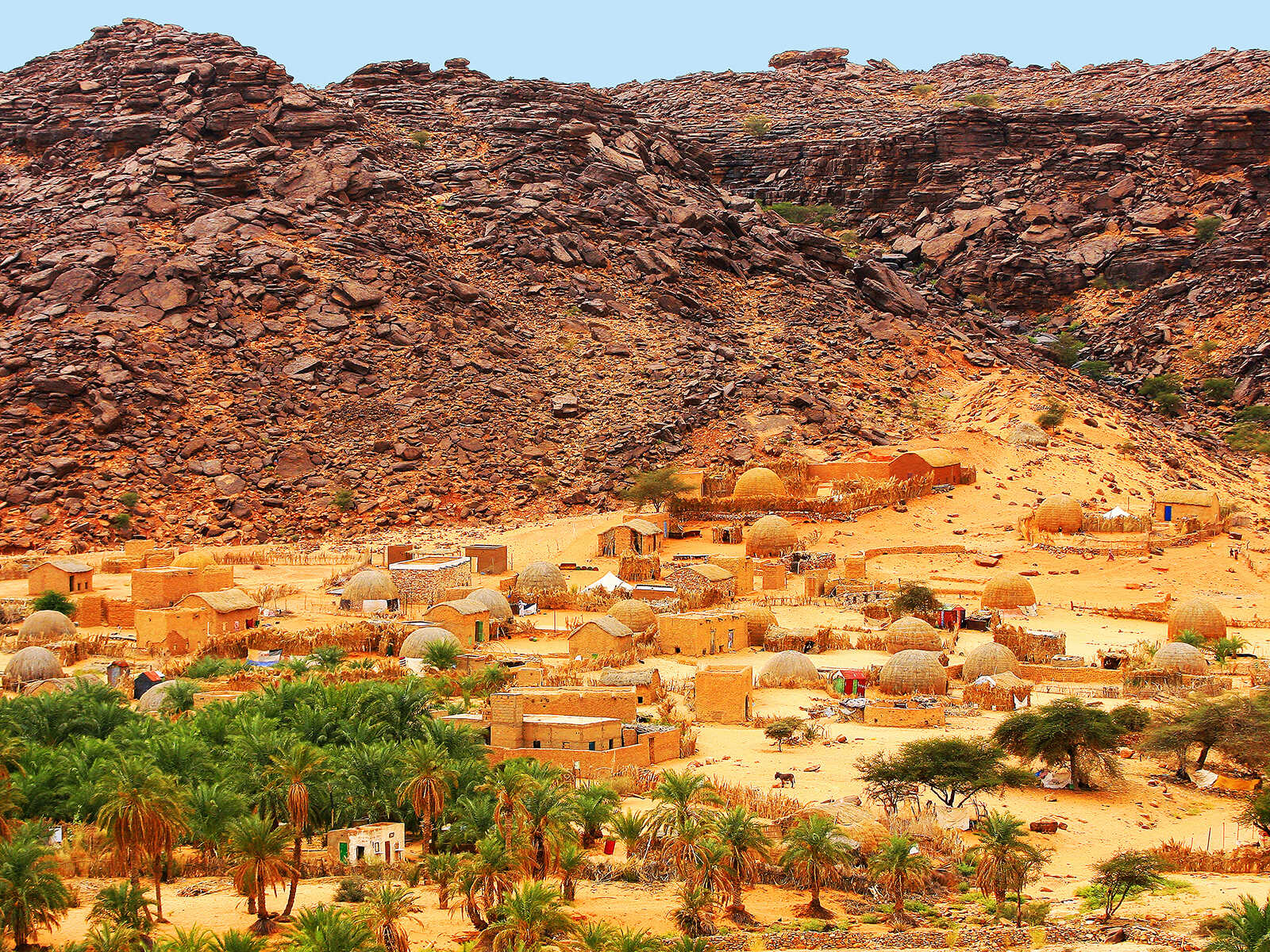
The city's most iconic structure is the ancient Chinguetti Mosque, a striking example of dry-stone architecture dating back to the 13th century. Its square minaret, devoid of ornamentation, is a powerful symbol of the city's austere beauty and spiritual depth. Walking through Chinguetti's narrow, sand-swept alleys is like stepping back in time, with mud-brick houses clinging to the rocky terrain, whispering tales of bygone eras.
Did you know?Chinguetti is said to have given Mauritania its Arabic name,Bilad Chinguetti, meaning "the land of Chinguetti," underscoring its historical significance to the nation.
Ouadane: The Gateway to the Sahara's Riches
Roughly 120 kilometers northeast of Chinguetti lies Ouadane, another ancient city that shared a similar fate and fortune. Founded in 1147 by Berber tribes, Ouadane predates Chinguetti and also played a crucial role in the trans-Saharan trade network, particularly in the salt and gold trade. Its strategic position allowed it to control access to the rich gold mines of the south and the salt pans of Idjil to the north.
Unlike Chinguetti, which retained a more cohesive urban structure, much of ancient Ouadane now lies in dramatic ruins, clinging precariously to a hillside. The contrast between the preserved mosque of Chinguetti and the extensive, evocative ruins of Ouadane offers a different perspective on the challenges of desert life and the passage of time. The ruins of Ouadane still reveal the intricate planning of the city, with remnants of fortified walls, houses, and public buildings.
Today, a smaller, modern settlement of Ouadane exists at the foot of the ancient city, maintaining a continuous human presence in this remote part of the Sahara. The area around Ouadane is also home to the striking Richat Structure, a colossal geological formation often called the "Eye of the Sahara," adding another layer of mystique to the region.
Beyond Chinguetti and Ouadane: Traces of a Prosperous Past
While Chinguetti and Ouadane are the most famous, the Adrar Plateau and surrounding regions hold other whispers of Mauritania's ancient past. Smaller settlements, caravanserai ruins, and rock art sites scattered across the desert point to a widespread network of trade and human habitation that thrived for millennia. These less-known sites, though not as grand, contribute to the understanding of the complex historical tapestry of the Mauritanian Sahara.
The Decline and Enduring Legacy
The eventual decline of these flourishing cities was multifaceted. Shifting trade routes, particularly with the advent of sea travel and later, modern transportation, gradually diminished the importance of trans-Saharan caravan routes. Desertification also played a role, slowly encroaching upon oases and making life more challenging. Despite their physical decline, the cultural and intellectual legacy of Chinguetti and Ouadane ensures their continued importance.
Their libraries, though threatened by sand and time, continue to hold precious manuscripts, serving as a vital link to a vibrant intellectual tradition. These cities are not merely ruins; they are living museums, preserving a unique heritage that profoundly shaped West African and Islamic civilization.
Visiting Mauritania's Ancient Cities: A Journey Through Time
A visit to Chinguetti and Ouadane is an unforgettable journey into the heart of the Sahara and the soul of Mauritanian history. Travelers can explore the ancient mosques, wander through the historic libraries, and witness traditional desert life. Due to their remote location, planning is essential, often involving guided tours that provide both logistical support and invaluable historical context.
Many visitors combine their exploration of these ancient cities with trips to other natural wonders of the Adrar Plateau, such as the picturesque oasis of Terjit, offering a refreshing contrast to the stark beauty of the desert cities. This journey not only offers a glimpse into Mauritania's past but also a profound connection with the timeless rhythm of the Sahara.
The ancient cities of Chinguetti and Ouadane stand as eloquent reminders of Mauritania's pivotal role in world history. They invite us to contemplate the enduring power of human ingenuity, scholarship, and trade in one of the planet's most challenging environments, offering a unique window into a glorious past that continues to inspire.