
The Rich History of Malta: Ancient Temples to Modern Nation
Malta, a small archipelago in the heart of the Mediterranean, boasts a history far grander than its size suggests. From enigmatic prehistoric temples to its pivotal role in global conflicts, the island nation offers a captivating journey through millennia of human endeavor and resilience. Discover the layers of civilizations that have shaped this unique and vibrant country.
Malta's Dawn: The Megalithic Marvels (5200 BC – 2500 BC)
The story of Malta begins with its first settlers, who arrived around 5200 BC during the Neolithic period. These early inhabitants were remarkable for their architectural prowess, constructing some of the oldest freestanding stone structures in the world. Their legacy is most evident in the magnificent Megalithic Temples, UNESCO World Heritage Sites scattered across the islands.
Among the most impressive are the Hagar Qim Temples and Mnajdra, commanding breathtaking views of the Mediterranean Sea. These intricate complexes, built with massive coralline limestone blocks, served as places of worship and communal gathering. Even more astonishing is the Hypogeum, an underground necropolis carved entirely out of rock, dating back to 3600 BC. This labyrinthine structure, believed to be a burial site and a temple, demonstrates an extraordinary level of craftsmanship and spiritual dedication from a society long past.
Fun Fact:Malta's Megalithic Temples are older than the Pyramids of Giza and Stonehenge, predating them by over a thousand years. They offer a rare glimpse into a sophisticated prehistoric culture.
Following the temple builders, the islands saw the emergence of the Bronze Age culture, evidenced by fortifications and the intriguing Bronze Age Grain Silos, hinting at evolving agricultural practices and defensive needs.
Crossroads of Civilizations: Phoenicians, Romans, and Arabs (800 BC – 1091 AD)
Due to its strategic location, Malta became a coveted prize for successive maritime powers. Around 800 BC, the Phoenicians, skilled seafarers and traders, established a significant presence, using Malta as a trading post. They introduced their language and culture, leaving a lasting impact, particularly on the Maltese language, which has Semitic roots.
The Romans followed in 218 BC, integrating Malta into their vast empire. Under Roman rule, the islands prospered, becoming a municipium with its own senate and assemblies. This era is famously associated with the shipwreck of St. Paul in 60 AD, an event that introduced Christianity to Malta. Visitors can explore sites like St. Paul's Catacombs in Rabat, believed to be early Christian burial grounds and places of worship.
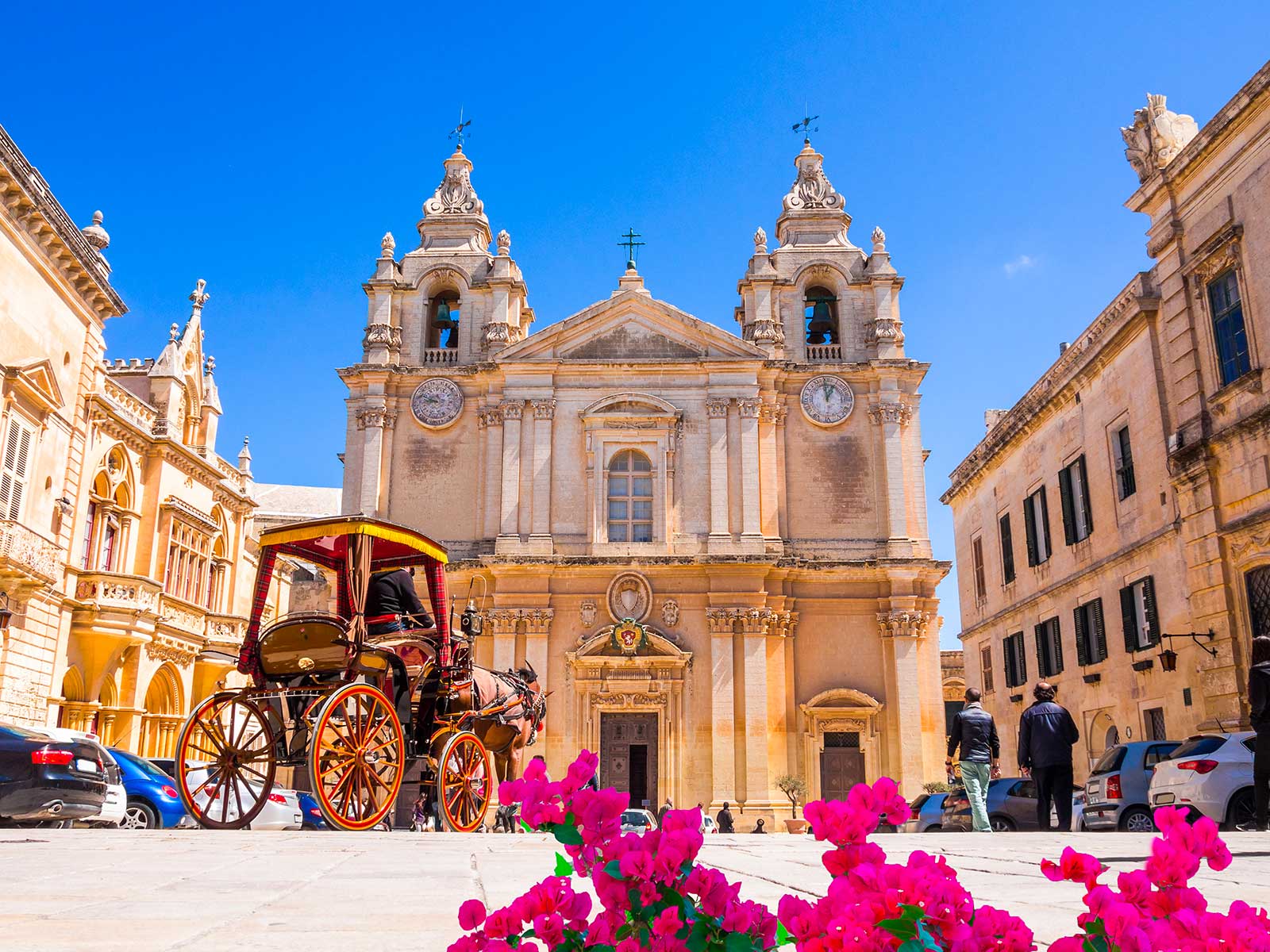
After the fall of the Western Roman Empire, Malta experienced a period of Byzantine rule, followed by the Arab conquest in 870 AD. The Arabs introduced new agricultural techniques, irrigation systems, and a rich vocabulary that heavily influenced modern Maltese. They fortified the ancient city of Mdina, giving it its current layout and the impressive Mdina Gate, which still stands as a testament to their engineering.
Medieval Malta: Normans, Aragonese, and the Sicilian Crown (1091 AD – 1530 AD)
In 1091, Count Roger I of Sicily conquered Malta, ushering in a period of Norman rule and reintegrating the islands into Christian Europe. For the next four centuries, Malta remained largely under the dominion of the Kingdom of Sicily, passing through various feudal lords and eventually coming under the Aragonese Crown. During this time, the island’s defensive capabilities were often neglected, leaving it vulnerable to raids from Barbary pirates and Ottoman forces. This period was characterized by a rural economy and a populace that often faced hardship and uncertainty, yet maintained a distinct cultural identity.
The Knights' Enduring Legacy: The Order of St. John (1530 AD – 1798 AD)
The most transformative chapter in Malta’s history began in 1530 when Emperor Charles V granted the islands to the Sovereign Military Order of St. John of Jerusalem. These warrior-monks, exiled from Rhodes, fortified Malta into an impregnable stronghold against the Ottoman Empire. Their defining moment came in 1565 during the Great Siege of Malta, where a vastly outnumbered force of Knights and Maltese defenders famously repelled a massive Ottoman invasion, a victory that resonated throughout Europe.
Following the siege, the Knights embarked on an ambitious building program, creating the new capital city of Valletta – a masterpiece of Baroque architecture and urban planning. Key sites like the Auberges, including the majestic Castille Place, served as residences for the Knights of different langues (tongues). The Knights also established hospitals, universities, and elaborate fortifications, leaving an indelible mark on the island's landscape and culture that remains palpable today. Their rule brought wealth, art, and a cosmopolitan flair to Malta.
Brief French Rule and British Empire (1798 AD – 1964 AD)
The Knights' reign ended abruptly in 1798 with the arrival of Napoleon Bonaparte, who seized Malta en route to Egypt. The French occupation was short-lived but impactful, abolishing the Order’s privileges and introducing reforms. However, French rule was met with local resistance, leading to a blockade. With the aid of the British, the French were expelled, and Malta voluntarily became a British protectorate in 1800, formally becoming a British colony in 1814.
Under British rule, Malta flourished as a vital naval base for the Royal Navy, especially during the two World Wars. Its strategic importance was never more evident than during World War II, when Malta endured a brutal siege and relentless bombing campaigns. For its exceptional bravery and resilience, the entire island was awarded the George Cross in 1942, a unique distinction. This period saw significant infrastructure development and the introduction of British legal and administrative systems, further shaping modern Malta.
From Colony to Republic: Modern Malta (1964 AD – Present)
Malta achieved independence from Britain on September 21, 1964, becoming a sovereign state within the Commonwealth. A decade later, in 1974, it transitioned into a republic. The post-independence era focused on diversifying the economy beyond military services, developing tourism, manufacturing, and financial services. A pivotal moment in its modern history was Malta's accession to the European Union in 2004, further integrating it into the European framework and economy.
Today, Malta is a vibrant, democratic nation that proudly embraces its complex past while looking to the future. It's a melting pot of cultures, where ancient traditions blend seamlessly with modern European life, and the echoes of its rich history are visible at every turn.
Experiencing Malta's History Today
Visiting Malta is like walking through an open-air museum. From the ancient temples to the Baroque splendor of Valletta, every corner tells a story. While exploring historical sites is a must, even natural wonders like the stunning Blue Grotto or the serene waters of Comino Island are part of the modern Maltese experience, shaped by centuries of human interaction with the landscape. Traditional villages like Zebbug offer a glimpse into local life, while Chateau Buskett (Buskett Gardens) connects you to the historical hunting grounds of the Knights. Even unique attractions like Popeye Village, a film set turned family park, contribute to the island's dynamic modern heritage. Malta truly offers an unparalleled journey through time.