
The History of Liechtenstein: From Principality to Modern Marvel
Nestled in the Alps between Switzerland and Austria, Liechtenstein is one of the smallest and wealthiest countries in the world. Far from being a mere footnote on the map, its rich and fascinating history tells a compelling story of resilience, strategic alliances, and remarkable transformation from a collection of medieval lordships into a thriving modern state.
Early Origins and Roman Roots
The land that constitutes modern-day Liechtenstein has been inhabited since the Stone Age, with archaeological findings suggesting early settlements. During Roman times, the region was part of the Roman province of Rhaetia, a crucial link connecting the empire's northern frontiers with Italy. Roman roads and fortifications dotted the landscape, leaving behind a legacy that hints at its strategic importance even then.
As the Roman Empire declined, various Germanic tribes moved into the area, eventually leading to the formation of local lordships and territories under the Holy Roman Empire.
The Medieval Landscape: Counties and Lordships
During the Middle Ages, the territory was fragmented, comprising several feudal domains. Two of the most significant were the Lordship of Schellenberg and the County of Vaduz. These territories were held by various noble families, including the Counts of Vaduz, who established their seat in the town that would later become the capital.
Medieval fortresses, like Burg Gutenberg in Balzers, stand as enduring testaments to this era, offering a glimpse into the defensive structures and power struggles of the time. The region's strategic location along trade routes meant it was often caught between larger powers, yet it managed to maintain a degree of autonomy under its local rulers.
The Birth of a Principality: The Liechtenstein Dynasty
The pivotal moment in Liechtenstein's history came with the arrival of the noble House of Liechtenstein. This powerful Austrian family, though prominent in the Habsburg court, lacked a direct landholding within the Holy Roman Empire that would grant them an immediate seat in the Imperial Diet (Reichstag). To achieve this coveted status, they sought to acquire an "immediate" territory – one subject directly to the Emperor, not to another feudal lord.
Prince Johann Adam Andreas von Liechtenstein made the crucial purchases: the Lordship of Schellenberg in 1699 and the County of Vaduz in 1712. These acquisitions, though geographically modest, fulfilled the requirement for imperial immediacy. On January 23, 1719, Emperor Charles VI officially decreed the unification of Schellenberg and Vaduz into the Imperial Principality of Liechtenstein, naming it after its new rulers. This act formally established Liechtenstein as a sovereign state within the Holy Roman Empire.
While the princely family acquired the territories, they did not actually set foot in their new principality for over a century. The focus was on securing their political status within the empire.
Did you know?For over 100 years after its founding, no reigning Prince of Liechtenstein ever visited their principality. The first Prince to set foot on Liechtenstein soil was Prince Alois II in 1842, more than a century after its creation.
Navigating Tumultuous Times: Napoleonic Era and German Confederation
The early 19th century brought significant upheaval across Europe with the Napoleonic Wars. Liechtenstein, like many other small states, found itself drawn into the conflict. In 1806, it joined the Confederation of the Rhine, a French client state, which effectively ended its ties to the Holy Roman Empire shortly before the Empire's dissolution. This period marked Liechtenstein's emergence as a truly sovereign nation.
After Napoleon's defeat, Liechtenstein became part of the German Confederation in 1815, an association of German-speaking states, but maintained its independence. During this time, the country began to develop its own constitutional framework.
Towards Sovereignty and Economic Transformation
The dissolution of the German Confederation in 1866 marked another turning point. Liechtenstein chose to remain fully independent, declaring its permanent neutrality in 1868 and famously disbanding its army, which at the time consisted of just 80 men. This commitment to neutrality has been a cornerstone of its foreign policy ever since.
For much of the 19th and early 20th centuries, Liechtenstein remained a poor, agrarian country, heavily reliant on farming and livestock. Many citizens emigrated in search of better opportunities. However, a series of strategic decisions set the stage for its dramatic economic turnaround:
- Customs Union with Austria (1852-1919):This provided some economic stability.
- Customs Union with Switzerland (1923):Following World War I, Liechtenstein forged a crucial customs and monetary union with Switzerland. This agreement, which remains in effect today, proved to be a masterstroke, integrating Liechtenstein into a stable economic zone and providing access to Swiss infrastructure and markets. The historic Alte Rheinbrücke(Old Rhine Bridge) symbolizes this enduring connection, linking Liechtenstein directly to Switzerland.
- Development of a Modern Legal Framework:The principality enacted liberal company laws and a strong banking secrecy tradition, attracting foreign capital and businesses.
This period saw Liechtenstein transform from an impoverished agricultural state into a highly industrialized and prosperous financial hub. The introduction of modern infrastructure, including roads and factories, further fueled this growth.
Modern Liechtenstein: A Thriving Microstate
Today, Liechtenstein stands as a testament to successful microstate governance and economic diversification. It boasts one of the highest GDP per capita in the world, driven by a robust financial sector, specialized high-tech manufacturing, and a growing tourism industry.
Politically, Liechtenstein is a constitutional monarchy with a unique blend of princely power and strong direct democracy. The Prince holds significant authority, but citizens have the power to initiate referendums and even abolish the monarchy through popular vote. The Landtag des Fürstentums Liechtenstein, the country's parliament, represents the democratic voice of its people.
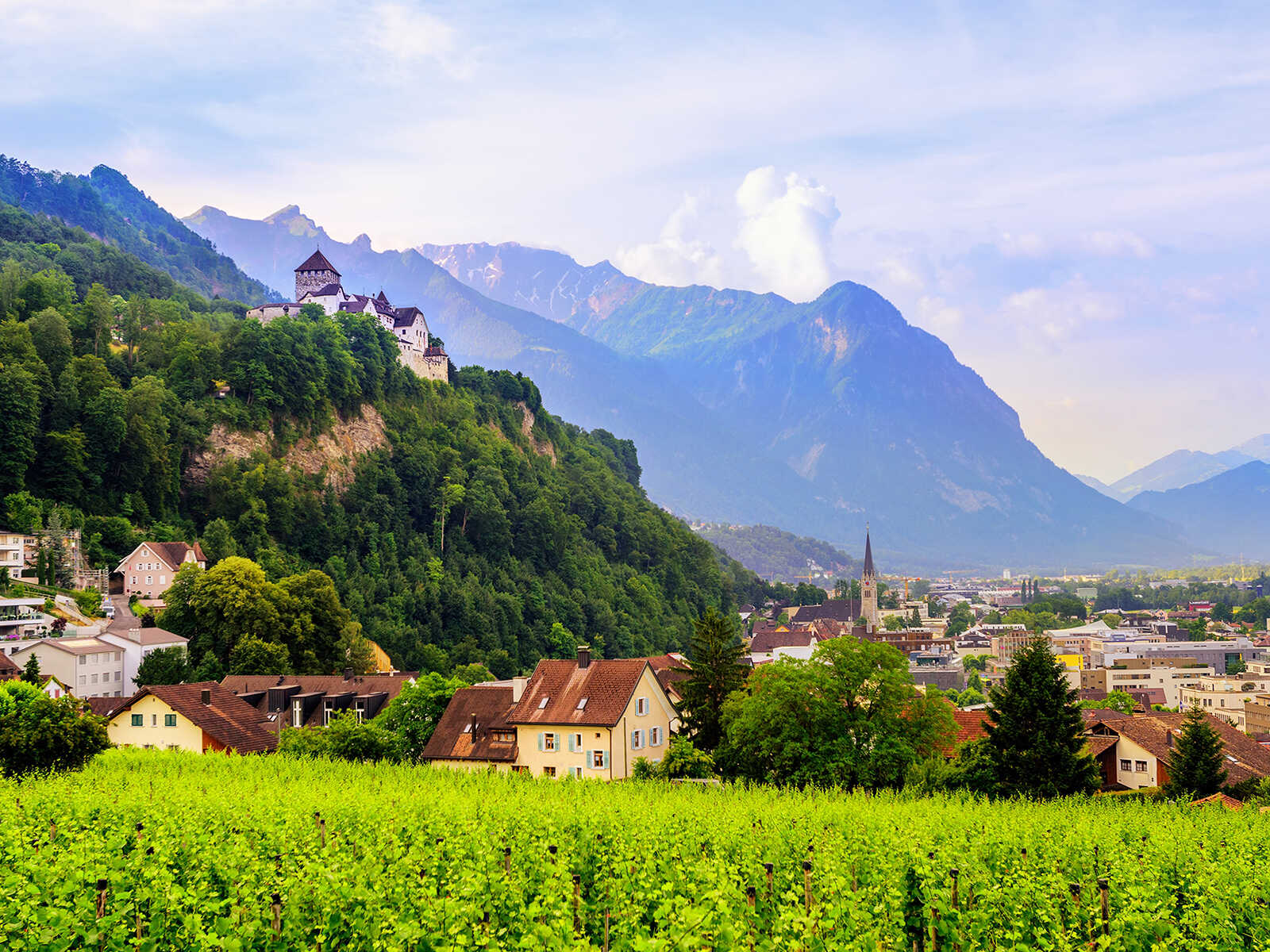
The princely family continues to play an active and respected role, residing at Vaduz Castle, which majestically overlooks the capital. Their enduring presence provides a continuous link to the nation's founding and its rich heritage.
The Princely Family Today
The reigning monarch, Prince Hans-Adam II, and his son, Hereditary Prince Alois, actively engage in the country's affairs and represent Liechtenstein on the international stage. Their commitment to the principality's welfare and their role in its modern development underscore the unique relationship between the ruling house and its citizens.
Planning Your Visit to Liechtenstein
Exploring Liechtenstein today offers a chance to experience a country that beautifully blends its rich history with modern innovation. From medieval castles like Vaduz Castle and Burg Gutenberg to the contemporary art museums in Vaduz, there's a fascinating journey at every turn. Hike the stunning Fürstensteig trail for breathtaking Alpine views, or stroll across the Alte Rheinbrücke, connecting two nations. Its history is not just in books; it's etched into the landscape and the very fabric of this remarkable principality.
Whether you're drawn by the allure of its past or the vibrancy of its present, Liechtenstein promises an unforgettable experience, a true modern marvel forged from centuries of history.