
Lebanon for History Buffs: Ancient Sites & Archaeological Treasures
Lebanon, a land steeped in millennia of history, beckons history buffs with an unparalleled collection of ancient sites and archaeological wonders. From the legendary Phoenician cities to the colossal Roman temples, this small nation offers a profound journey through the annals of human civilization.
Often referred to as the "Cradle of Civilizations," Lebanon's strategic position on the eastern Mediterranean coast made it a melting pot of empires and cultures. Phoenicians, Assyrians, Babylonians, Persians, Greeks, Romans, Byzantines, Arabs, Crusaders, and Ottomans have all left their indelible mark, creating a rich tapestry of historical treasures waiting to be explored.
The Phoenician Legacy: Pioneers of Trade and Alphabet
Byblos: The Ancient Port City
No historical tour of Lebanon is complete without a visit to Byblos (Jbeil), one of the oldest continuously inhabited cities in the world. Dating back over 7,000 years, Byblos was a vital Phoenician port and a hub for maritime trade, particularly in cedar wood. Walk through layers of history, from Neolithic dwellings to Egyptian temples, and the impressive Byblos Citadel built by the Crusaders.
The Phoenicians of Byblos are credited with developing one of the earliest known phonetic alphabets, a crucial step in human communication.
Visitors can explore the ruins of temples dedicated to the "Lady of Byblos," a Roman theater, and ancient royal tombs. The site's close proximity to the sea provides a stunning backdrop to its millennia-old stones, making it a truly immersive experience.
Tyre: Island City and Roman Splendor
Further south lies Tyre (Sour), another magnificent Phoenician city, once a formidable island fortress and a major maritime power. Today,Tyre World Heritage Site boasts extensive Roman and Byzantine archaeological remains. Marvel at the monumental Arch of Triumph, the sprawling Roman hippodrome—one of the largest and best-preserved in the world—and the vast necropolis.
The ruins are spread across two main archaeological sites: Al-Mina, with its Roman colonnades and public baths, and Al-Bass, home to the impressive hippodrome and a Roman road lined with sarcophagi. Tyre offers a powerful glimpse into the grandeur of Roman imperial presence in the Levant.
Roman Grandeur: Temples of the Gods
Baalbek: Colossal Temples of Heliopolis
Deep in the Beqaa Valley lies Baalbek, home to some of the most spectacular and monumental Roman ruins ever constructed. Known as Heliopolis during Roman times, this site features two immense temple complexes: the Temple of Jupiter and the Temple of Bacchus. The sheer scale and architectural ambition of Baalbek Roman Ruins are awe-inspiring.
The Temple of Jupiter, with its towering Corinthian columns, once housed one of the largest Roman temples ever built. Adjacent to it, the Temple of Bacchus is remarkably well-preserved, showcasing intricate carvings and decorative elements that speak to the height of Roman artistry. A smaller, circular Temple of Venus also adds to the complex's allure. Baalbek stands as a testament to Roman engineering prowess and religious devotion.
Umayyad and Mamluk Legacies
Anjar: A Unique Umayyad City
In the Beqaa Valley, Anjar stands as a singular example of an inland Umayyad trading city, founded in the 8th century. Unlike other sites built on existing ruins, Anjar was constructed from scratch, following a strict orthogonal plan. The well-preserved ruins include a grand palace, mosques, public baths, and residential quarters, all enclosed within fortified walls.
Anjar offers a rare glimpse into early Islamic urban planning and architecture, showcasing a blend of Roman and Byzantine influences. Its unique preservation provides valuable insights into the Umayyad dynasty's administrative and commercial ambitions.
Tripoli: Crusader Castles and Mamluk Souqs
Lebanon's second-largest city, Tripoli, is a treasure trove of Mamluk architecture, with a vibrant old city that transports visitors back in time. Dominating the skyline is the imposing Citadel of Raymond de Saint-Gilles, a Crusader fortress built on an earlier Byzantine castle.
Beneath the citadel, a labyrinthine network of souqs (markets), hammams (public baths), and mosques awaits exploration. The Mansouri Great Mosque, dating back to the Mamluk period, is a prime example of the city's rich Islamic heritage. Tripoli's historical core offers a bustling, authentic experience of medieval Middle Eastern urban life.
Beirut: Layers of Time
Even the modern capital, Beirut, reveals its ancient past beneath the bustling streets. Archaeological excavations in the city center have uncovered Roman baths, Byzantine mosaics, and remnants of Phoenician settlements. The National Museum of Beirut is an essential stop for any history enthusiast, housing an extraordinary collection of artifacts spanning prehistory to the Ottoman era, including Phoenician sarcophagi, Roman mosaics, and bronze statues.
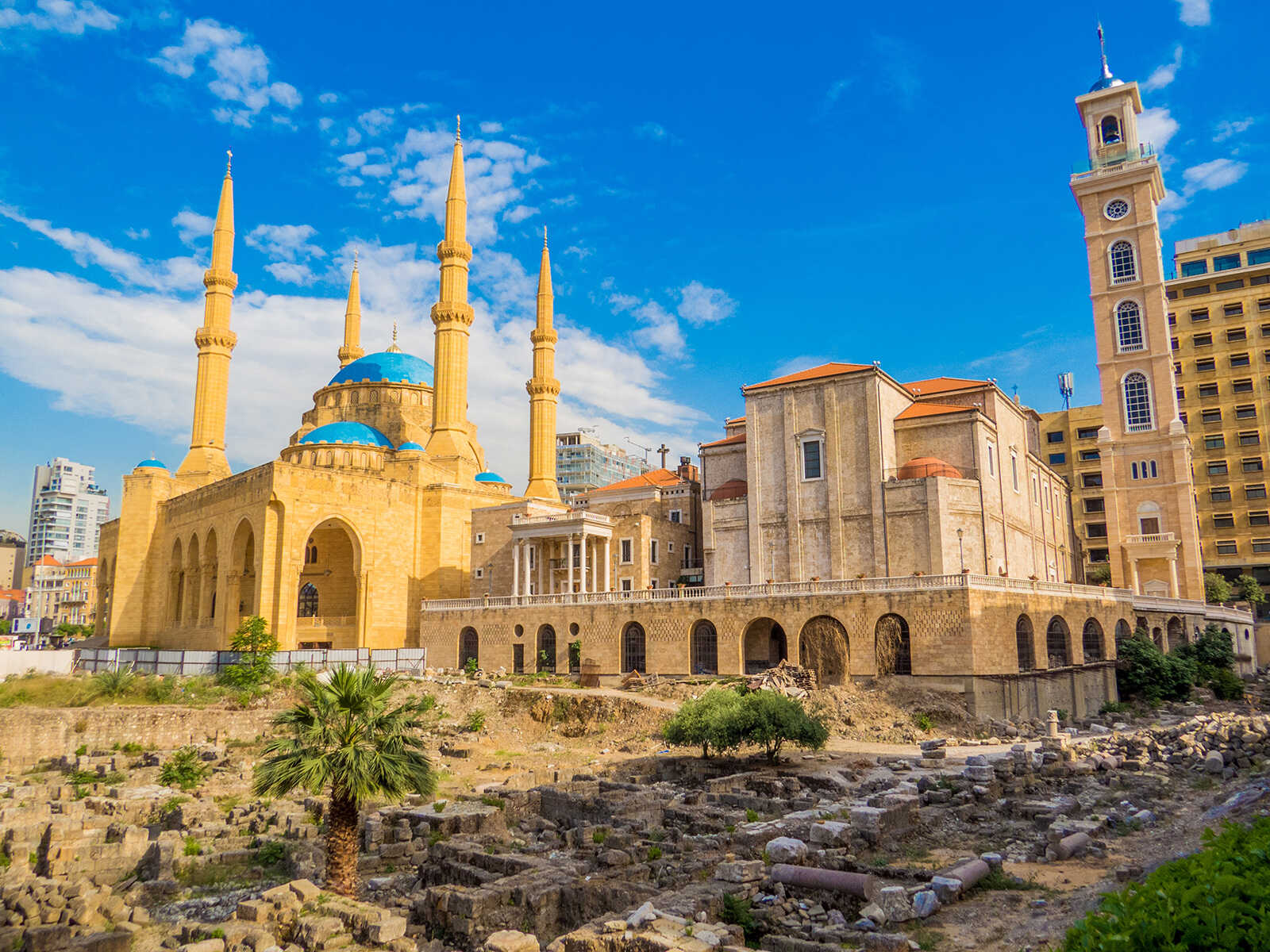
While exploring downtown Beirut, one might stumble upon the Roman Baths Garden or the archaeological remains near the Mohammad Al-Amin Mosque, offering glimpses into the city's continuous habitation.
Beyond the Major Sites: Hidden Gems and Sacred Valleys
Sidon: Echoes of Crusaders and Ottomans
South of Beirut, Sidon (Saida) offers a blend of Crusader and Ottoman history. Its most iconic landmark is the Sea Castle, a Crusader fortress built on a small island, connected to the mainland by a causeway. Explore the atmospheric Khan al-Franj, a 17th-century caravanserai, and the unique Debbane Palace, an Ottoman-era residence.
Kadisha Valley: The Holy Valley
For those seeking a blend of natural beauty and profound spiritual history, the Kadisha Valley(Holy Valley) is a must-visit. This UNESCO World Heritage site is a deep gorge carved into the mountains, dotted with ancient monasteries and hermitages carved into the cliffs. It has served as a refuge for Christian communities for centuries, preserving a unique monastic tradition.
Nearby, the ancient Cedars Of God Bsharri stand as living testaments to Lebanon's biblical and ecological heritage, their timber once used to build temples and palaces across the ancient world.
Deir al-Qamar and Beiteddine: Ottoman Splendor
In the Chouf Mountains, the charming village of Deir al-Qamar, once the capital of Mount Lebanon, showcases traditional Lebanese architecture and a rich Ottoman-era history. Just a short drive away is the magnificent Beiteddine Palace, a masterpiece of 19th-century Lebanese architecture. Built for Emir Bashir Chehab II, its courtyards, fountains, and sumptuously decorated rooms offer a glimpse into the opulent lifestyle of Lebanon's Ottoman rulers.
Practical Tips for History Buffs
- Best Time to Visit:Spring (April-May) and Autumn (September-October) offer pleasant weather for exploring outdoor sites.
- Getting Around:Renting a car provides flexibility, but guided tours are highly recommended for historical context and ease of access to multiple sites.
- Guided Tours:Consider hiring a licensed guide, especially for sites like Baalbek and Byblos, to fully appreciate their historical significance.
- Dress Code:When visiting religious sites, modest attire (shoulders and knees covered) is advisable.
- National Museum:Begin or end your historical journey at the National Museum of Beirut to gain a comprehensive overview of Lebanon's archaeological timeline.
Conclusion
Lebanon for history buffs is an extraordinary adventure, a journey through millennia where every stone has a story to tell. From the legendary Phoenician ports to the colossal Roman temples and the sacred valleys, the country offers an unparalleled density of ancient sites and archaeological treasures. Prepare to be captivated by a land that has shaped civilizations and continues to reveal the wonders of its past.