
Architecture of Lebanon: From Roman Ruins to Ottoman Palaces
Lebanon, a land steeped in millennia of history, offers an unparalleled journey through architectural time. From the monumental remnants of grand empires to the intricate details of feudal palaces, the country's buildings tell a captivating story of diverse civilizations and enduring cultural heritage.
A Tapestry of Time: Lebanon's Architectural Legacy
Positioned at the crossroads of continents, Lebanon has been a coveted prize for countless empires, each leaving an indelible mark on its landscape. This rich history is visibly etched in the stones and structures that dot the country, presenting a fascinating blend of styles, techniques, and cultural influences. Exploring Lebanon's architecture is akin to walking through an open-air museum, where every corner reveals a new chapter in human ingenuity and artistic expression.
Ancient Foundations: Phoenician and Roman Grandeur
The Phoenician Legacy: Masters of the Sea
While often less visually prominent than later structures due to time and subsequent rebuilding, the ancient Phoenicians, renowned for their maritime prowess and city-states, laid the groundwork for many of Lebanon's coastal cities. Sites like Byblos, one of the oldest continuously inhabited cities in the world, reveal layers of Phoenician foundations, including temples and dwellings, often buried beneath later Roman, Crusader, and Ottoman constructions. Their innovative use of stone and strategic city planning were foundational.
Roman Empire's Monumental Imprint
The Roman Empire, which controlled the region for centuries, left the most imposing ancient architectural marvels in Lebanon. Their ambition and engineering prowess are evident in colossal temples, vast public baths, and impressive theatres. The most spectacular example is undoubtedly the Baalbek Roman Ruins, a UNESCO World Heritage site.
The Temple of Bacchus at Baalbek is considered one of the best-preserved Roman temple ruins in the world, showcasing intricate carvings and monumental scale that continue to awe visitors.
Here, visitors can marvel at the Temple of Jupiter, with its six surviving colossal columns, and the exquisitely detailed Temple of Bacchus. Further south, the Tyre World Heritage Site boasts impressive Roman and Byzantine remains, including a magnificent hippodrome, one of the largest and best-preserved of its kind, and a triumphal arch, offering a glimpse into the grandeur of Roman urban planning.
Byzantine and Early Islamic Eras: Transition and Continuity
Following the Roman period, the Byzantine Empire continued to shape the region, constructing numerous churches and basilicas, often reusing Roman materials. Though many have fallen into ruin or been repurposed, their foundations and mosaics can still be found. With the advent of Islam, new architectural forms began to emerge, characterized by mosques and early Islamic fortifications. These early Islamic structures often blended existing Byzantine and Roman elements with nascent Islamic design principles, emphasizing courtyards, minarets, and intricate geometric patterns.
Crusader Fortifications: Stone Sentinels
The Crusader period (11th-13th centuries) saw the construction of formidable castles and fortifications across Lebanon, built to defend strategic coastal towns and mountain passes. These structures, often erected on earlier Roman or Phoenician foundations, were characterized by their robust military engineering. The Byblos Citadel, for instance, is a prominent Crusader castle built atop ancient ruins, offering panoramic views and a tangible connection to this turbulent era. Other Crusader castles, while less accessible, stand as testament to a period of intense conflict and control.
Mamluk and Ottoman Splendor: Palaces and Traditional Homes
The Mamluk and later the Ottoman Empire brought distinct architectural styles that profoundly influenced Lebanon, particularly from the 16th to the early 20th century. This era is characterized by elegant palaces, elaborate mosques, and the development of the iconic traditional Lebanese house.
Ottoman Palaces and Residences
The pinnacle of Ottoman-era Lebanese architecture is arguably the magnificent Beiteddine Palace. Built in the early 19th century by Emir Bashir Shihab II, this sprawling complex embodies traditional Lebanese feudal architecture with strong Ottoman influences. It features grand courtyards, intricately carved wooden ceilings, marble fountains, hammams (bathhouses), and stunning mosaic work. The palace serves as a superb example of the luxurious lifestyle of regional rulers and the sophisticated craftsmanship of the period.
Traditional Lebanese Houses
Beyond the grand palaces, the traditional Lebanese house developed its own distinctive character during the Ottoman period. Often built of local stone, these homes typically feature red-tiled roofs, central courtyards or liwans, and the famous "triple-arch" window design. Villages throughout the Shouf Biosphere Reserve and other mountainous regions preserve many beautiful examples of this architectural style, reflecting a harmonious blend of functionality, aesthetics, and adaptation to the local climate.
Religious Architecture of the Ottoman Era and Beyond
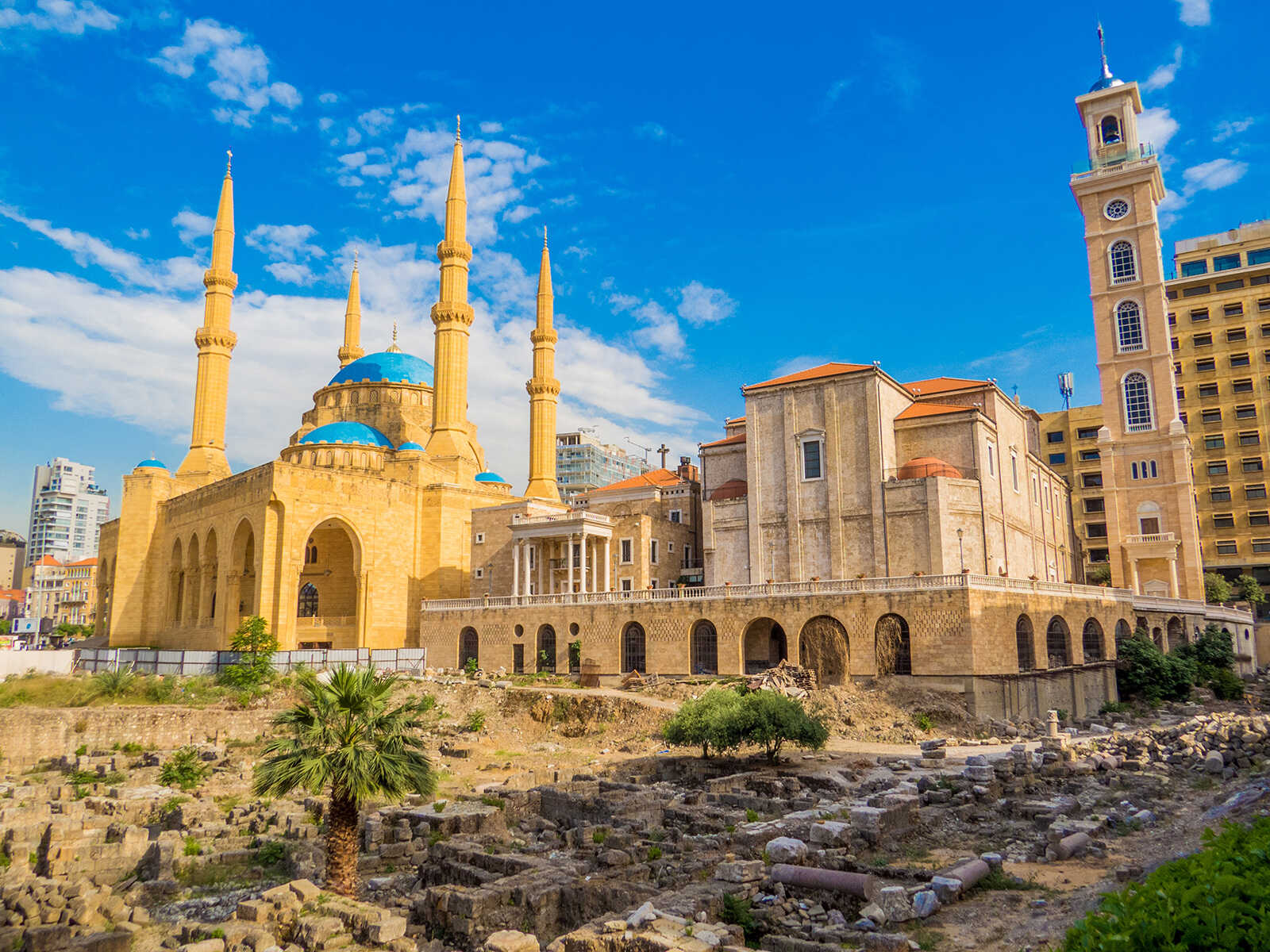
Ottoman influence also extended to religious structures. While many older churches and mosques exist, the Ottoman period saw the construction and renovation of numerous significant religious buildings. A more contemporary yet historically inspired example is the striking Mohammad Al-Amin Mosque in Beirut. While completed in 2008, its design draws heavily on classical Ottoman architecture, particularly the Blue Mosque in Istanbul, with its prominent blue domes and towering minarets, making it a modern landmark reflecting historical grandeur. Similarly, the iconic Our Lady of Lebanon in Harissa, while a 20th-century construction, stands as a significant religious landmark, its contemporary design drawing visitors for both spiritual reflection and panoramic views.
Modern and Contemporary Influences: Beirut's Urban Fabric
The 20th century, particularly under the French Mandate and post-independence, brought new architectural trends to Lebanon. Beirut, in particular, became a hub for Art Deco, Neo-Classical, and later, modernist movements. The city's Central District, meticulously rebuilt after the civil war, showcases an intriguing blend of restored Ottoman-era buildings alongside sleek contemporary high-rises, reflecting a city constantly reinventing itself while honoring its past.
Exploring Lebanon's Architectural Gems
To truly appreciate Lebanon's architectural diversity, consider visiting various regions:
- Coastal Cities:Explore the layers of history in Byblos and Tyre, where Phoenician, Roman, and Crusader ruins stand testament to ancient civilizations.
- Beqaa Valley:Journey to Baalbek to witness the colossal scale of Roman temple architecture.
- Shouf Mountains:Discover the grandeur of Beiteddine Palace and the charm of traditional Lebanese villages nestled within the Shouf Biosphere Reserve.
- North Lebanon:Venture into the Kadisha Valley for ancient monastic cave dwellings and churches carved into cliffs, and nearby Cedars Of God Bsharri, where centuries-old trees stand beside historic religious sites.
- Beirut:Wander through the Beirut Central District to see the blend of Ottoman, French Mandate, and modern architectural styles, including the impressive Mohammad Al-Amin Mosque.
Conclusion: A Journey Through Time, Etched in Stone
Lebanon's architecture is a compelling narrative of human history, resilience, and artistic evolution. From the colossal Roman temples that dominate the landscape to the elegant Ottoman palaces and the distinctive traditional homes, each structure offers a unique window into the cultures that have shaped this remarkable nation. A visit to Lebanon is not just a trip; it's an immersive journey through millennia of architectural ingenuity, waiting to be discovered.