
Tash Rabat Caravanserai: Journey Back in Time on the Silk Road
Deep within the rugged Tian Shan mountains of Kyrgyzstan lies Tash Rabat, a remarkably preserved 15th-century caravanserai. This ancient stone inn offers an unparalleled opportunity to step back in time and experience the enduring legacy of the fabled Silk Road.
Far from the bustling cities, Tash Rabat stands as a silent testament to centuries of trade, adventure, and human endeavor. Its remote location, combined with its unique architecture, makes it one of Central Asia's most authentic historical treasures, inviting travelers to imagine the lives of merchants, monks, and nomads who once sought refuge within its formidable walls.
The Enduring Legacy of Tash Rabat
Origins and Purpose
While some theories suggest earlier origins as a Nestorian monastery, Tash Rabat is widely believed to have been constructed in the 15th century, serving as a vital caravanserai along a branch of the Silk Road. This particular route connected the Fergana Valley and parts of Central Asia with Kashgar in what is now China, through the challenging Torugart Pass.
A caravanserai was essentially a roadside inn where caravan travelers – merchants with their goods, animals, and retinues – could rest, recover, and trade. Tash Rabat provided not only shelter from the harsh mountain weather but also a secure, fortified space to protect against bandits, offering a crucial respite in a long and arduous journey. Its existence highlights the strategic importance of this high-altitude corridor. Travelers interested in other Silk Road historical sites in Kyrgyzstan might also consider a visit to Burana Tower, a striking minaret with its own rich history.
Architectural Grandeur in Stone
Tash Rabat is an architectural marvel, especially considering its remote location and the era of its construction. Built primarily from large, locally sourced stone blocks, it features a robust, almost fortress-like structure that has withstood centuries of severe weather. The design is nearly symmetrical, with a grand entrance leading into a central hall topped by a large dome.
The interior layout is fascinating, comprising 31 rooms or chambers arranged around the central hall. These rooms served various purposes: sleeping quarters for travelers, storage for valuable goods, and even a prayer room. There are also indications of a dungeon, underscoring the need for security in such a wild and untamed region. The ingenious design provided warmth in winter and coolness in summer, a testament to the builders' understanding of their environment. Exploring its winding passages and vaulted chambers is like stepping into a labyrinth of history, each stone whispering tales of past travelers.
Planning Your Expedition to Tash Rabat
Where is Tash Rabat Located?
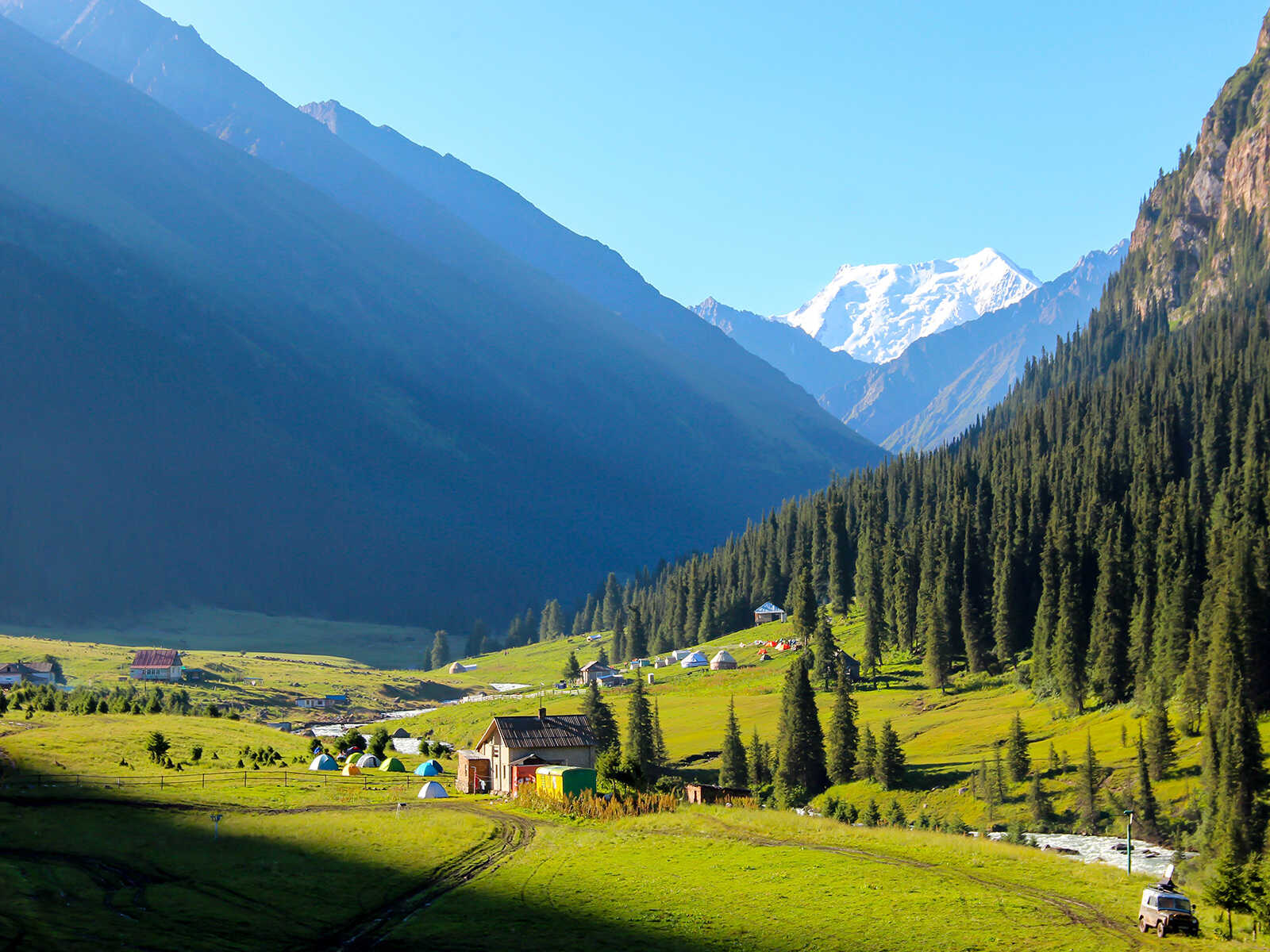
Tash Rabat is situated in the Naryn region of Kyrgyzstan, nestled in a picturesque valley of the Tian Shan mountains. It lies at an impressive altitude of approximately 3,200 meters (10,500 feet) above sea level, not far from the modern border with China and the Torugart Pass. Its high-altitude setting contributes significantly to its isolated and pristine environment.
Getting There: A Scenic Adventure
Reaching Tash Rabat is an adventure in itself, making the journey as memorable as the destination. Most visitors arrange transport from Naryn town, which is the regional capital and a common base for exploring this part of Kyrgyzstan. The drive typically takes several hours and requires a sturdy 4x4 vehicle, as the road eventually turns into a gravel track, winding through stunning alpine landscapes, vast pastures, and occasional nomadic yurt camps.
The scenery along the way is breathtaking, characterized by rolling hills, snow-capped peaks, and crystal-clear streams. It's common to see herds of horses, sheep, and yaks grazing freely, offering a genuine glimpse into the nomadic lifestyle that still thrives in these mountains.
Travel Tip:The journey to Tash Rabat is an experience in itself. Allow ample time to soak in the views of the stunning Tian Shan mountains and perhaps stop for photos. Consider combining it with a visit to Song-Kul for another immersive nomadic experience, as both offer a deep dive into Kyrgyzstan's high-altitude culture and landscapes.
Experiencing Tash Rabat: What to See and Do
Exploring the Ancient Walls
Upon arrival at Tash Rabat, the primary activity is to explore the caravanserai itself. Visitors can wander through the ancient stone corridors, peer into the various chambers, and marvel at the central domed hall. Imagine the voices, the smells, and the sounds of centuries past – the clatter of hooves, the murmur of different languages, the warmth of a fire after a long day's journey. The raw, unadorned beauty of the stone structure encourages contemplation and historical immersion.
Embracing the Nomadic Culture
Beyond the caravanserai, the surrounding valley is often dotted with traditional Kyrgyz yurt camps during the summer months. Many of these offer simple but comfortable accommodation, allowing visitors to experience authentic nomadic hospitality. Guests can enjoy traditional meals, watch cultural demonstrations, and even participate in activities like horse riding. Horse trekking in the valleys around Tash Rabat is a popular way to explore the pristine environment, often leading to hidden valleys and spectacular viewpoints.
Wildlife and Nature
The high-altitude environment around Tash Rabat is home to various wildlife, including marmots, eagles, and if you're exceptionally lucky, perhaps even a glimpse of an ibex or Marco Polo sheep in the higher reaches. The pristine alpine meadows burst with wildflowers in summer, making it a beautiful spot for nature lovers and photographers.
Best Time to Visit and Practical Advice
Optimal Seasons
The best time to visit Tash Rabat is from late spring to early autumn, generally fromJune to September. During these months, the weather is milder, and the mountain passes are clear of heavy snow, making access easier. Even in summer, evenings and nights can be very cold due to the high altitude, so come prepared.
Essential Packing List
- Layered Clothing:Even in summer, temperatures can fluctuate dramatically. Pack warm layers, including a good jacket, hat, and gloves.
- Sturdy Footwear:Comfortable hiking boots are essential for exploring the caravanserai and its surroundings.
- Sun Protection:The sun at high altitude can be intense. Bring sunscreen, sunglasses, and a wide-brimmed hat.
- Water and Snacks:Facilities are limited, so carry enough water and some energy-rich snacks.
- Camera:The scenery and the caravanserai itself offer incredible photographic opportunities.
- Cash:Remote areas often rely on cash for services like yurt stays or horse rentals.
Logistics and Guides
Due to its remote nature, it is highly recommended to arrange your transport and, if desired, a local guide in advance. This can typically be done through guesthouses or tour operators in Naryn or Karakol. A knowledgeable guide can enhance your experience by providing historical context and facilitating interactions with local nomadic families. Remember that internet and mobile connectivity will be sparse or non-existent in this area.
For those planning a broader trip through Kyrgyzstan, incorporating Tash Rabat into an itinerary that includes other iconic destinations like the shores of Issyk Kul or the hiking trails of Ala Archa National Park can create a truly comprehensive adventure.
Beyond Tash Rabat: More Kyrgyz Wonders
Kyrgyzstan is a land of incredible natural beauty and historical depth. After immersing yourself in the history of Tash Rabat, consider exploring other remote wonders like the ethereal lake Köl-Suu, another high-altitude gem. For those interested in ancient rock art, the Petrogliphs Museum near Cholpon-Ata offers fascinating insights into early human presence.
Conclusion: A Journey Worth Taking
Tash Rabat Caravanserai is more than just an ancient ruin; it's a doorway to a bygone era. Its rugged beauty, historical significance, and dramatic mountain setting offer an experience unlike any other. For travelers seeking authentic history, stunning landscapes, and a glimpse into the heart of Central Asia's nomadic culture, the journey to Tash Rabat is an unforgettable expedition back in time along the legendary Silk Road.