
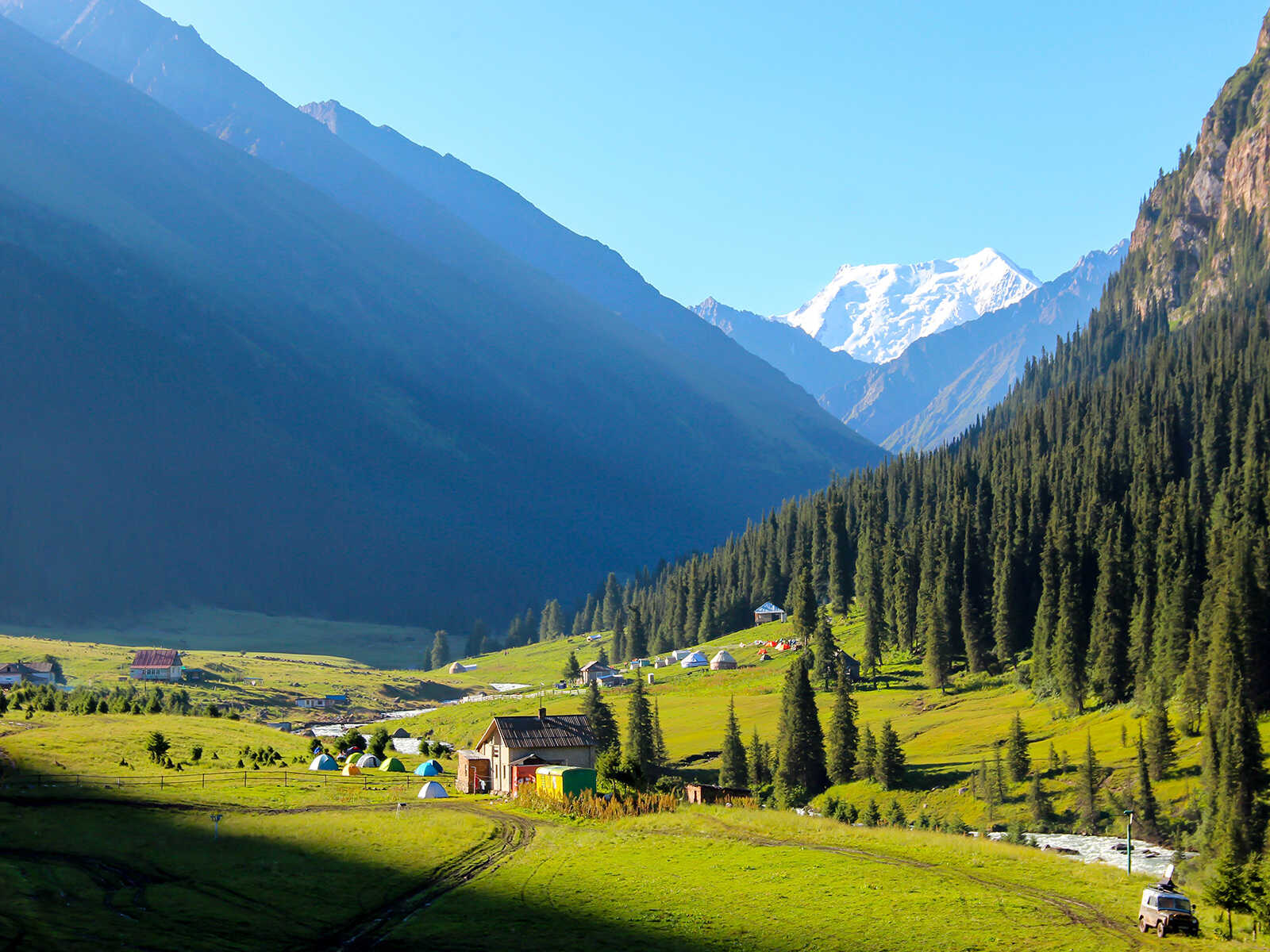
Lenin Peak Expedition: A Guide for High-Altitude Climbers
Rising majestically on the Kyrgyzstan-Tajikistan border,Lenin Peak, at 7,134 meters (23,406 feet), stands as one of the Pamir's most accessible and sought-after 7,000-meter summits. This comprehensive guide provides essential insights for experienced mountaineers aspiring to conquer its challenging slopes.
Overview of Lenin Peak
Formerly known as Mount Kaufmann, Lenin Peak is part of the Trans-Alai Range in the Pamir Mountains. Renowned for its relatively straightforward standard route, it serves as an excellent objective for climbers aiming to gain experience at extreme altitudes before tackling more technical peaks. Despite its "accessible" reputation, it remains a serious high-altitude expedition demanding significant physical fitness, robust mental strength, and a solid understanding of alpine climbing techniques.
Why Choose Lenin Peak for Your Expedition?
Lenin Peak offers a unique blend of challenge and reward. Its non-technical standard route, while still arduous, allows climbers to focus on the demands of extreme altitude rather than complex ice or rock climbing. The expedition provides breathtaking panoramic views of the Pamir mountain range and an invaluable opportunity to develop skills crucial for future high-altitude endeavors. Furthermore, the logistical support from Bishkek or Osh, the gateway cities, is well-established, making the planning process smoother than for many other remote peaks.
Prerequisites for a Successful Ascent
Attempting a 7,000-meter peak requires more than just enthusiasm. Thorough preparation is paramount.
Prior Climbing Experience
You should have previous experience with multi-day alpine expeditions, including glacier travel, crevasse rescue techniques, self-arrest, and the use of fixed ropes. Experience on peaks of 5,000 to 6,000 meters is highly recommended to understand how your body reacts to altitude.
Physical Fitness
An exceptional level of cardiovascular fitness, strength, and endurance is non-negotiable. Regular training should include long-distance hiking with a heavy pack, trail running, cycling, and strength training, ideally for at least six months leading up to the expedition.
Mental Fortitude
High-altitude climbing is as much a mental game as a physical one. The ability to persevere through discomfort, extreme cold, fatigue, and isolation is crucial for success.
The Expedition Route: A General Itinerary
A typical Lenin Peak expedition spans approximately 21-25 days, allowing ample time for acclimatization.
Arrival and Journey to Base Camp (BC)
Expeditions typically start from Osh, the southern capital of Kyrgyzstan. From Osh, a scenic drive through the Alay Valley leads to Achik-Tash, the location of Lenin Peak Base Camp (BC) at approximately 3,600 meters (11,811 feet). The journey offers glimpses of local life and stunning landscapes.
Advanced Base Camp (ABC)
From BC, the route ascends to Advanced Base Camp (ABC) at 4,400 meters (14,435 feet). This involves crossing the Puteshestvennikov Pass (4,200m) and traversing a moraine. ABC is a hub of activity, serving as the primary staging point for the higher camps.
Camp 1 (C1)
The trek from ABC to Camp 1 (C1) at 5,300 meters (17,388 feet) is a significant step. It involves traversing the expansive Lenin Glacier, a heavily crevassed area that requires careful roped travel. Fixed ropes are often in place on steeper sections towards C1.
Camp 2 (C2)
Ascending from C1 to Camp 2 (C2) at 6,100 meters (20,013 feet) is one of the most physically demanding sections. This steep climb, often referred to as the "frying pan" due to its sun exposure and heat, typically requires the use of a jumar on fixed ropes. This camp is highly exposed to wind and weather.
Camp 3 (C3)
From C2, the route continues to Camp 3 (C3) at 6,400 meters (20,997 feet). This section involves traversing a relatively less steep but exposed ridge, leading to a small, protected area for C3. This is the highest camp and the final launchpad for the summit push.
Summit Day
Summit day is a long and arduous undertaking, typically starting in the early hours of the morning. Climbers face a relentless ascent over varied terrain, including snowfields and rocky sections. Several false summits can challenge mental resilience before the true summit at 7,134 meters is reached. The descent back to C3 or even C2 is equally demanding and requires extreme caution.
Key Challenges and Risks
Despite its reputation as an "accessible" 7,000-meter peak, Lenin Peak presents significant challenges:
- Altitude Sickness:Acute Mountain Sickness (AMS), High-Altitude Pulmonary Edema (HAPE), and High-Altitude Cerebral Edema (HACE) are constant threats. Proper acclimatization is crucial.
- Extreme Weather:The weather in the Pamirs can change rapidly and dramatically, bringing blizzards, strong winds, and extreme cold (-30°C to -40°C is not uncommon at higher camps).
- Crevasses:The Lenin Glacier, particularly between ABC and C1, is heavily crevassed, necessitating careful roped travel.
- Avalanche Risk:Fresh snowfall can significantly increase the risk of avalanches, especially on steeper slopes.
- Exhaustion and Dehydration:The physical demands of the climb, coupled with thin air and often inadequate fluid intake, can lead to severe exhaustion.
"Acclimatization is not a race. Listen to your body, respect the mountain, and never rush your ascent. A slow and steady approach dramatically increases your chances of success and safety."
Essential Gear Checklist
Proper gear is critical for safety and comfort on Lenin Peak:
- Personal Climbing Gear:Ice axe, crampons (suitable for high-altitude boots), climbing harness, helmet, ascender (jumar), descender (ATC/figure-8), several locking carabiners, prusik cords.
- Clothing:A multi-layered system including thermal base layers, fleece mid-layers, down jacket/parka (800+ fill power), waterproof and windproof shell jacket and pants, expedition-grade down suit (recommended for summit day).
- Footwear:High-altitude double or triple mountaineering boots, sturdy trekking boots for BC/ABC approaches, multiple pairs of warm socks.
- Handwear:Thin liner gloves, fleece gloves, waterproof shell gloves, expedition-grade down mittens.
- Headwear:Warm hat, balaclava, glacier glasses (Category 4), ski goggles.
- Camping Gear:High-altitude sleeping bag (rated -30°C or lower), insulated sleeping mat.
- Navigation & Safety:GPS device/smartphone with mapping apps, compass, headlamp with spare batteries, comprehensive first-aid kit, satellite phone or personal locator beacon (PLB)/inReach device.
- Miscellaneous:Trekking poles, large expedition backpack (80-100L), daypack, thermos flask, multiple water bottles, sun protection (high SPF sunscreen and lip balm).
Best Time to Climb
The climbing season for Lenin Peak is relatively short, typically running fromJuly to August. This period offers the most stable weather windows, though conditions can still be unpredictable. Early July or late August might offer fewer crowds but potentially colder temperatures.
Logistics and Support
Most climbers join an organized expedition through a reputable climbing operator. These services typically include:
- Permits and border zone registration.
- Transportation from Osh to Base Camp and back.
- Full board and tent accommodation at Base Camp and Advanced Base Camp.
- Food supplies for higher camps.
- Medical support and communication facilities at BC/ABC.
- Porter services for group equipment.
- Experienced mountain guides (optional, but highly recommended for those without prior 7,000m experience).
Beyond the Climb: Exploring Kyrgyzstan
After the rigors of Lenin Peak, consider exploring the stunning natural beauty and rich culture of Kyrgyzstan. You could relax by the shores of Issyk Kul, the world's second-largest high-altitude lake, or trek through the picturesque Ala Archa National Park near Bishkek. For a glimpse into nomadic life, a visit to Song-Kul lake offers yurt stays and horse riding. The ancient Tash Rabat Caravanserai provides a historical detour, while Sulayman Too in Osh offers cultural insights right where your expedition began.
Conclusion
A Lenin Peak expedition is an extraordinary adventure that tests the limits of human endurance and spirit. It offers an unparalleled opportunity to experience the grandeur of the Pamir Mountains and to join the elite ranks of high-altitude mountaineers. With meticulous preparation, a healthy respect for the mountain, and a commitment to safety, the summit of Lenin Peak can be a truly unforgettable achievement. Start planning your journey to the Roof of the World today!