
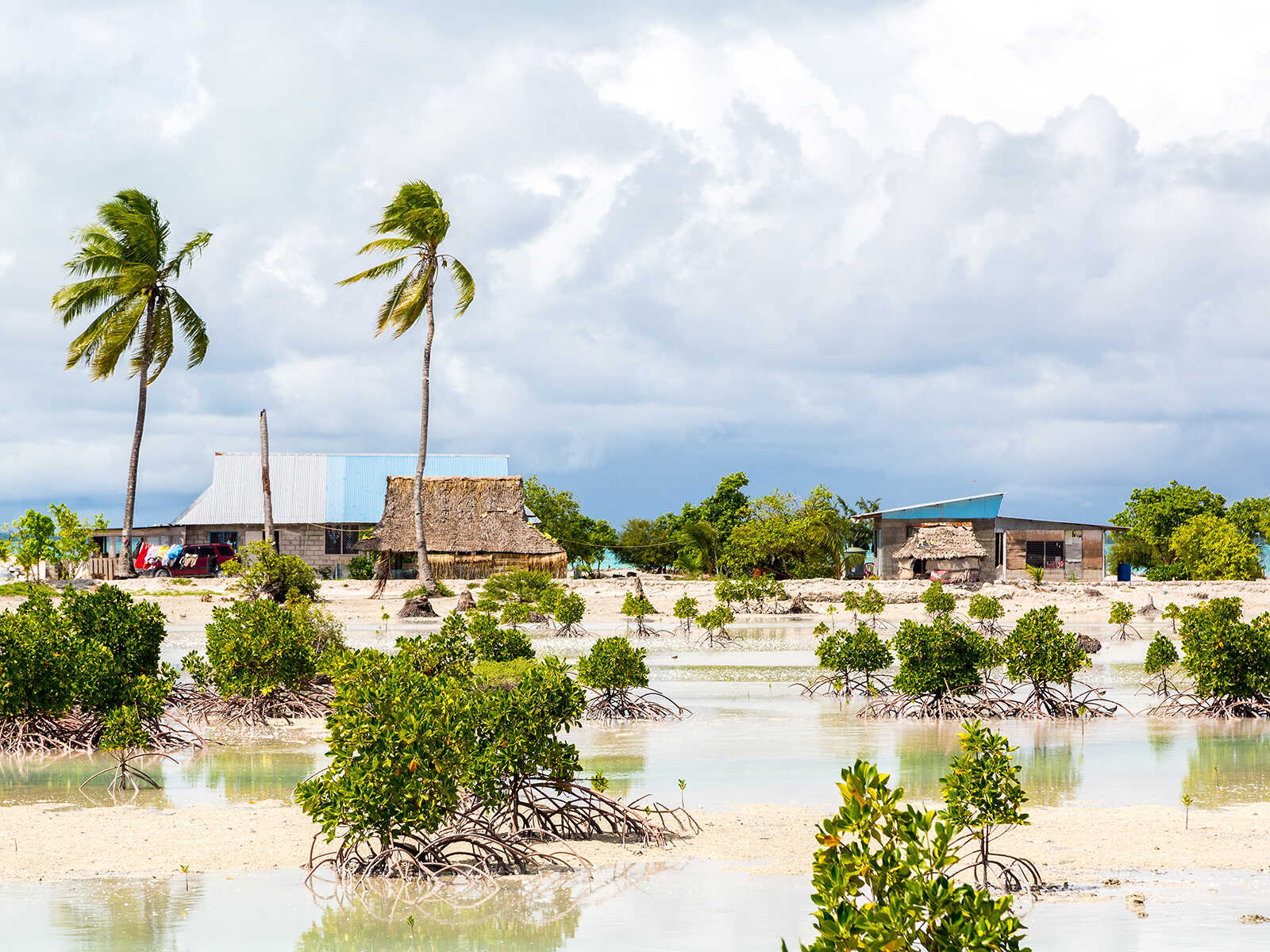
The History of Kiribati: From WWII to Ancient Traditions
Kiribati, a nation of 33 coral atolls scattered across the central Pacific, boasts a history as vast and deep as the ocean surrounding it. From its earliest Polynesian and Micronesian navigators to its pivotal role in World War II and its journey to independence, understanding Kiribati's past illuminates its vibrant present and resilient future.
Ancient Origins and Early Settlements
The story of Kiribati begins thousands of years ago with intrepid voyagers from Polynesia and Micronesia. These skilled navigators, using sophisticated knowledge of stars, currents, and bird migrations, traversed vast ocean expanses to settle the remote atolls. Life on these low-lying islands demanded remarkable resilience and ingenuity.
Early I-Kiribati societies developed unique cultures centered around strong communal ties, resourcefulness, and a deep respect for the ocean. Traditional knowledge of fishing, agriculture (like growing taro in pits), and constructing durable dwellings from local materials were paramount for survival. Themaneaba, a large, open-sided meeting house, became the heart of community life, serving as a venue for ceremonies, judicial proceedings, and social gatherings, a tradition that endures today.
European Contact and Colonial Rule
The first documented European sighting of the islands occurred in the 16th century by Spanish explorers, but it was Captain Thomas Gilbert who mapped many of the northern atolls in 1788, leading to them eventually being named the "Gilbert Islands" by Russian hydrographer Adam Johann von Krusenstern in the 1820s. The name Kiribati is the local pronunciation of "Gilberts."
The 19th century brought whalers, traders, and missionaries to the islands, dramatically altering the traditional way of life. The introduction of new goods, diseases, and religious beliefs had a profound impact. In 1892, fearing expansionist powers and in response to requests from local chiefs for protection from 'blackbirding' (forced labor recruitment), the United Kingdom declared the Gilbert and Ellice Islands a British Protectorate. This status was upgraded to a Crown Colony in 1916, consolidating British administrative control over the scattered islands.
The name "Kiribati" is derived from the local pronunciation of "Gilberts," reflecting the long-standing European influence on the islands' identity.
The Scars of World War II
The tranquil Pacific was shattered by the outbreak of World War II. Kiribati's strategic location made it a target for Japanese expansion. In December 1941, Japanese forces occupied several islands, including parts of Tarawa and Makin.
The most brutal and significant engagement in Kiribati's history was the Battle of Tarawa in November 1943. This three-day battle between American Marines and entrenched Japanese defenders on Betio islet was one of the bloodiest in the Pacific theater. The fierce fighting resulted in immense casualties on both sides and left a lasting legacy on the landscape and the collective memory of the I-Kiribati people, who endured the conflict as their homes became battlegrounds. Many memorials and remnants of the war can still be found on Tarawa today.
Post-War Era and the Road to Independence
After the war, Kiribati began a slow process of recovery and rebuilding under continued British administration. The mid-20th century also saw another significant, albeit controversial, chapter unfold: the British nuclear testing program.
Between 1957 and 1962, the UK conducted a series of nuclear weapons tests, primarily around Malden Island and Kiritimati(Christmas Island), then part of the Gilbert and Ellice Islands Colony. These tests had long-term environmental and health implications for the region. The post-war decades also witnessed a growing global movement towards decolonization, and the people of the Gilbert and Ellice Islands began to press for greater self-governance.
In 1975, the Ellice Islands voted to separate from the Gilberts, becoming Tuvalu in 1978. The remaining Gilbert Islands moved towards full independence. On July 12, 1979, the Republic of Kiribati was declared a sovereign nation, adopting its unique name. The new nation established its government, with the Parliament Building located in Ambo, on Tarawa, serving as the seat of its democratic processes.
Independent Kiribati and Enduring Traditions
Since gaining independence, Kiribati has navigated the challenges of nation-building as a small island developing state. Its government has focused on sustainable development, protecting its marine resources, and addressing the existential threat of climate change, particularly rising sea levels which pose a significant risk to its low-lying atolls.
Despite modern challenges, the ancient traditions and cultural heritage of the I-Kiribati people remain strong. Themaneabacontinues to be a vital community hub, and traditional knowledge of the ocean, navigation, and resource management is actively preserved. Efforts are also made to protect unique ecosystems and historical sites, such as those on islands like Tabuaeran or the mysterious Nikumaroro island, which holds secrets potentially linked to Amelia Earhart's disappearance.
Kiribati's history is a testament to the resilience and adaptability of its people. From ancient voyagers to a nation forged by global conflicts and striving for a sustainable future, the story of Kiribati is one of enduring spirit and a profound connection to its ocean home.