
Exploring the Kazakh Steppe: A Guide to Its Vast Landscapes & Heritage
The Kazakh Steppe, an immense ocean of grass stretching across Central Asia, is a land of unparalleled beauty, profound history, and enduring nomadic culture. This comprehensive guide will take you through its diverse landscapes, rich heritage, and provide practical tips for an unforgettable journey into the heart of Kazakhstan.
The Endless Horizon: Understanding the Kazakh Steppe
More than just a geographical feature, the Kazakh Steppe is the soul of Kazakhstan. Covering over a third of the country's landmass, it is the largest dry steppe region in the world, renowned for its flat, treeless grasslands that meet the sky in an unbroken horizon. This vast expanse has shaped the destiny of countless nomadic tribes, fostering a unique culture deeply intertwined with horses, freedom, and the rhythms of nature.
While often imagined as uniformly flat, the steppe is surprisingly diverse, encompassing semi-deserts, rolling hills, salt flats, and even dramatic mountain foothills in its periphery. Its sheer scale offers a profound sense of solitude and connection to an ancient world.
Diverse Landscapes Within the Vastness
Journeying across the Kazakh Steppe reveals a spectrum of natural wonders:
- Golden Grasslands:The quintessential image of the steppe, these areas stretch for hundreds of kilometers, changing color with the seasons – vibrant green in spring, golden in summer, and a muted brown in winter.
- Semi-Deserts and Salt Flats:Towards the south and west, the steppe transitions into arid zones, characterized by sparse vegetation and shimmering salt flats, creating surreal, otherworldly vistas. The regions around the partially recovered Aral Sea are particularly stark and compelling.
- Mountain Foothills and Canyons:In the southeastern parts of Kazakhstan, the steppe gives way to the majestic Tien Shan mountains. Here, you'll find incredible geological formations like Charyn Canyon National Park, often called the "Grand Canyon of Central Asia," and the stunning sunken forest of Lake Kaindy. Nearby, the turquoise waters of Big Almaty Lake offer a stark contrast to the surrounding plains.
- Lakes and Rivers:Dotting the steppe are numerous lakes, from small ephemeral ponds to vast inland seas like Lake Balkhash, a unique body of water that is half freshwater and half saltwater. These oases provide vital habitats for migratory birds and other wildlife.
Did You Know?The Kazakh Steppe is believed to be the place where horses were first domesticated over 5,500 years ago, fundamentally changing human history and mobility.
Nomadic Heritage: The Soul of the Steppe
For millennia, the steppe has been home to nomadic peoples, whose way of life was dictated by the movement of their herds and the changing seasons. This heritage is deeply embedded in modern Kazakh culture:
- Yurt Dwellings:The traditional yurt (yurtaorkiez ui) remains a powerful symbol. These portable, felt-covered dwellings are perfectly adapted to the steppe environment, offering warmth in winter and coolness in summer. Experiencing a night in a yurt is a highlight for many visitors.
- Horse Culture:Horses are central to Kazakh identity, revered for their strength, speed, and companionship. Traditional sports like Kokpar (a form of polo played with a goat carcass) and Kyz Kuu (a chasing game between a man and a woman on horseback) showcase this enduring bond.
- Hospitality (Dastarkhan):Kazakh hospitality is legendary. Guests are traditionally welcomed with warmth, elaborate meals (dastarkhan), and often music. Expect to be offered tea, kumys (fermented mare's milk), and delicious national dishes like beshbarmak.
- Ancient Routes and Sites:The steppe was crisscrossed by ancient trade routes, including parts of the Silk Road. Historical sites like the magnificent Mausoleum of Khoja Ahmed Yasawi in Turkestan stand as grand testaments to the region's rich past and spiritual depth. Further east, the ancient petroglyphs at Tamgaly-Tas offer glimpses into prehistoric nomadic art.
Wildlife and Biodiversity
Despite its seemingly austere appearance, the Kazakh Steppe is a critical ecosystem supporting unique wildlife. The most iconic inhabitant is theSaiga antelope, with its distinctive proboscis-like nose, which once roamed in vast herds. Other species include various types of eagles and falcons, steppe wolves, foxes, marmots, and numerous migratory birds that flock to the steppe's wetlands. Efforts are ongoing to protect these vulnerable species and their habitats.
Experiencing the Steppe: Practical Advice for Travelers
Exploring the steppe requires preparation and respect for its vastness:
Best Time to Visit
The shoulder seasons ofspring (April-May)andautumn (September-October)are generally ideal. Spring brings blooming wildflowers and lush green grass, while autumn offers pleasant temperatures and golden landscapes. Summers can be very hot, and winters bitterly cold with heavy snow.
Getting Around
For independent exploration, a4x4 vehicleis highly recommended, especially for venturing off main roads. Many travelers opt for guided tours, which can arrange transportation, accommodation, and cultural experiences. Public transport is limited in remote areas.
Accommodation
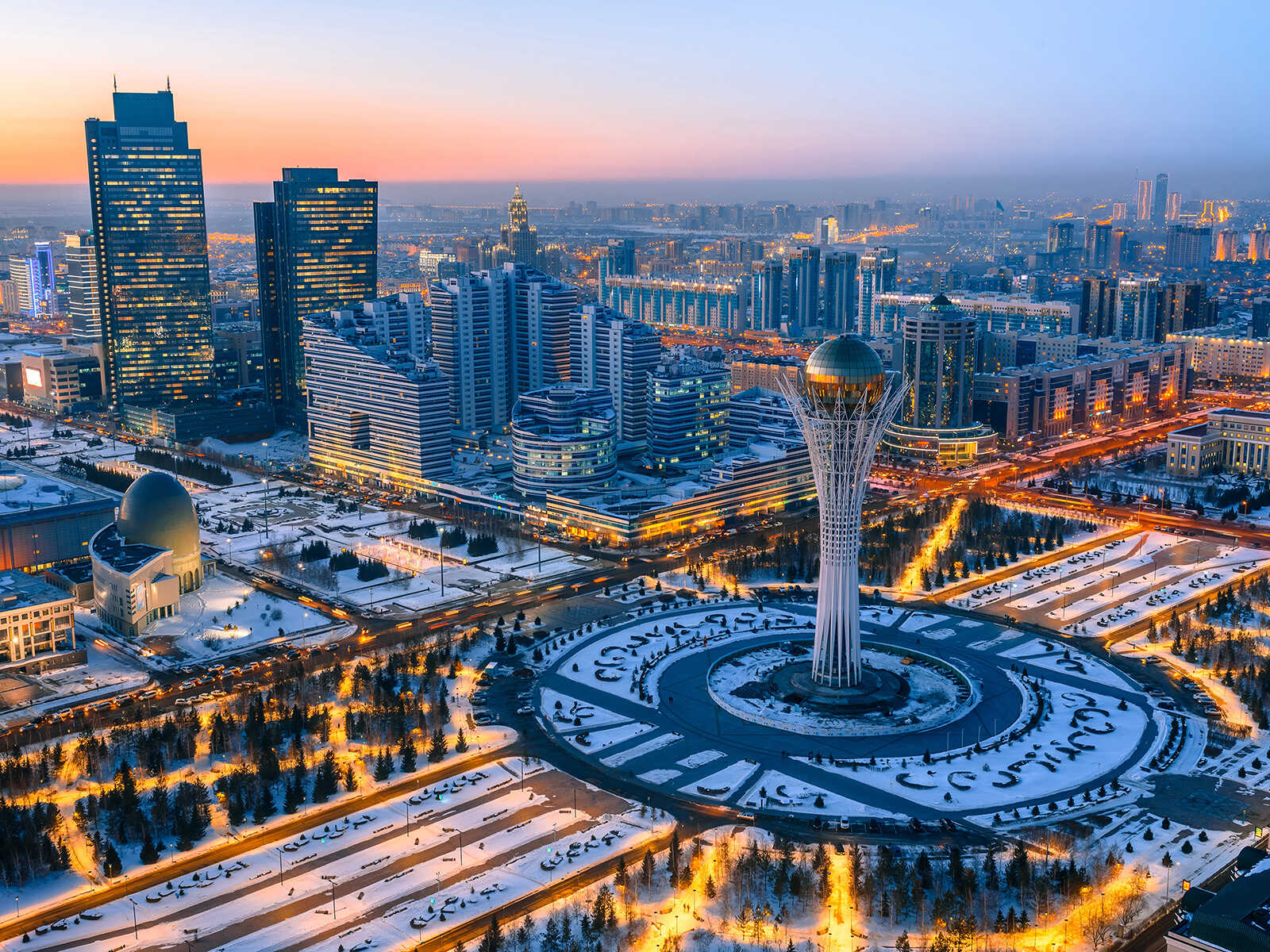
Options range from basic guesthouses in smaller towns to traditionalyurt stayswith local families, offering an authentic cultural immersion. In larger cities like Astana and Almaty, modern hotels are readily available. From Astana, you can easily visit modern landmarks like the iconic Baiterek Tower, the futuristic Khan Shatyr Entertainment Center, and the impressive Hazret Sultan Mosque. In Almaty, the majestic Zenkov's Cathedral offers a glimpse into historical architecture, and the nearby mountains provide excellent skiing at Shymbulak. The port city of Aktau in Western Kazakhstan also offers a distinct steppe-adjacent experience along the Caspian Sea.
What to Pack
- Layers:Temperatures can fluctuate dramatically, even within a single day.
- Sun Protection:Hat, sunglasses, high-SPF sunscreen are essential.
- Sturdy Footwear:For walking and hiking.
- Water & Snacks:Supplies can be scarce in remote areas.
- Basic First Aid Kit:Including any personal medications.
- Offline Maps & Communication:Cell service can be unreliable in many parts of the steppe.
Respecting Local Culture
Always ask permission before taking photos of people. Be open to trying local foods and customs. A small gift for hosts if staying in a yurt is always appreciated.
Beyond the Horizon: Unique Steppe Experiences
- Baikonur Cosmodrome:Witnessing a rocket launch from the legendary Baikonur Cosmodrome, located deep within the steppe, is an unparalleled experience, blending ancient landscapes with cutting-edge space exploration.
- Eagle Hunting Demonstrations:In certain regions, particularly in the south and east, you can observe demonstrations of traditional eagle hunting (berkutchi), a centuries-old art form.
- Stargazing:Far from city lights, the steppe offers some of the most spectacular night skies imaginable, perfect for astronomy enthusiasts.
- Road Trips:Simply driving across the endless plains, with the vast sky above and the horizon stretching indefinitely, is an experience in itself, offering a profound sense of freedom and perspective.
The Kazakh Steppe is more than just a landscape; it's an immersive journey into the heart of Central Asia's nomadic past and vibrant present. Its vastness invites contemplation, its culture offers warmth, and its beauty leaves an indelible mark on every traveler.