
The History of Greece: From Ancient Civilizations to Modern Nation
Greece, a land where history breathes through ancient stones and whispers across sun-drenched islands, offers a journey through millennia of human endeavor. From the birth of Western civilization to its modern, vibrant identity, the story of Greece is one of enduring influence and remarkable resilience.
The Dawn of Civilization: Prehistoric and Early Bronze Age
The earliest traces of human activity in Greece date back to the Paleolithic era. However, the first significant civilizations emerged much later, laying the groundwork for the rich tapestry of Greek history.
- Cycladic Civilization (c. 3200-1100 BCE):Flourishing in the Cycladic Islands, this culture is renowned for its distinctive marble figurines, simple yet elegant forms that predate the grandeur of later eras.
- Minoan Civilization (c. 2700-1450 BCE):Centered on the island of Crete, the Minoans developed a sophisticated maritime empire. Their grand palaces, notably Knossos, featured advanced plumbing, vibrant frescoes, and intricate labyrinths, giving rise to myths like that of the Minotaur. The Minoans were a peaceful, trading power, whose influence extended across the Aegean.
- Mycenaean Civilization (c. 1600-1100 BCE):On the Greek mainland, the Mycenaeans emerged as a powerful warrior society, building heavily fortified citadels like Mycenae, Tiryns, and Pylos. These Bronze Age kingdoms, often associated with the epic tales of Homer like the Trojan War, were characterized by impressive cyclopean walls, elaborate tholos tombs, and a hierarchical social structure. Their collapse around 1100 BCE led to a period known as the Greek Dark Ages. The broader region of the Peloponnese holds many secrets from this fascinating period.
The Glory of Ancient Greece: A Legacy Unrivaled
Following the Dark Ages, Greece entered an era of unprecedented intellectual, artistic, and political growth that profoundly shaped Western thought.
Archaic Period (c. 800-500 BCE)
This period saw the emergence of thepolis, or city-state, as the fundamental unit of Greek society. Colonization expanded Greek influence across the Mediterranean and Black Seas. It was also the era of Homer's epic poems, theIliadand theOdyssey, which helped define Greek identity and mythology. The first Olympic Games, founded in 776 BCE at Olympia, united Greeks in athletic competition, fostering a shared sense of Hellenic identity.
Classical Period (c. 500-323 BCE)
Often considered the zenith of Greek civilization, the Classical Period witnessed the rise of democracy in Athens, the defeat of the mighty Persian Empire in the Persian Wars, and intense rivalries between city-states like Athens and Sparta, culminating in the Peloponnesian War.
This era was a crucible of innovation:
- Philosophy:Thinkers like Socrates, Plato, and Aristotle laid the foundations of Western philosophy, ethics, and logic.
- Democracy:The Athenian model of direct democracy, though limited, set a precedent for future political systems.
- Arts and Architecture:Masterpieces like the Parthenon on the Acropolis of Athens showcased unparalleled architectural and sculptural prowess. Greek theatre, with its tragedies and comedies performed at sites like Epidaurus, explored the human condition.
- Oracles:The Oracle of Delphi served as a central religious and political authority, its prophecies influencing decisions across the Greek world.
"Our constitution is called a democracy because power is in the hands not of a minority but of the whole people."- Pericles, on Athenian democracy.
The period concluded with the conquests of Alexander the Great, who, from his Macedonian base, spread Greek culture and influence across a vast empire stretching to India.
Hellenistic Period (323-31 BCE)
After Alexander's death, his empire fragmented into several Hellenistic kingdoms. While the political center shifted, Greek language, art, and science flourished in new capitals like Alexandria in Egypt and Antioch in Syria. Major cultural centers like Rhodes continued to be significant maritime and intellectual hubs, exemplified by the Colossus of Rhodes, one of the Seven Wonders of the Ancient World.
Roman Conquest and Byzantine Empire
Greece eventually fell under Roman rule in 146 BCE, becoming a province of the Roman Empire. While politically subdued, Greek culture continued to exert a profound influence on its conquerors, with many Roman elites adopting Greek language and philosophy.
With the division of the Roman Empire, Greece became the heartland of the Eastern Roman (Byzantine) Empire. For over a thousand years (330-1453 CE), Constantinople (modern-day Istanbul) was its capital, and Greek remained the official language. Christianity became the dominant religion, shaping art, architecture, and daily life. Cities like Thessaloniki became significant centers of Byzantine culture and trade, adorned with magnificent churches and mosaics.
The Ottoman Yoke: Centuries of Occupation
The fall of Constantinople to the Ottoman Turks in 1453 marked the beginning of nearly four centuries of Ottoman rule over Greece. Despite the occupation, the Greek Orthodox Church played a crucial role in preserving Greek language, culture, and national identity.
Birth of a Modern Nation: Independence and Beyond
The spirit of independence rekindled in the early 19th century. The Greek War of Independence, launched in 1821, was a long and arduous struggle, eventually gaining support from European powers. In 1830, Greece was recognized as an independent kingdom.Nafplio, a picturesque town in the Peloponnese, served as the first capital of the newly established Greek state.
The 19th and early 20th centuries saw Greece gradually expand its borders, incorporating territories with significant Greek populations. The nation endured the Balkan Wars, two World Wars, and a devastating Civil War in the mid-20th century. Despite these challenges, Greece rebuilt and modernized, joining the European Economic Community (now the European Union) in 1981.
Greece Today: Echoes of the Past, Vibrance of the Present
Modern Greece stands as a testament to its enduring legacy. Its contributions to democracy, philosophy, science, and the arts continue to resonate globally. Today, Greece is a vibrant European nation, celebrated for its rich history, breathtaking landscapes, and warm hospitality.
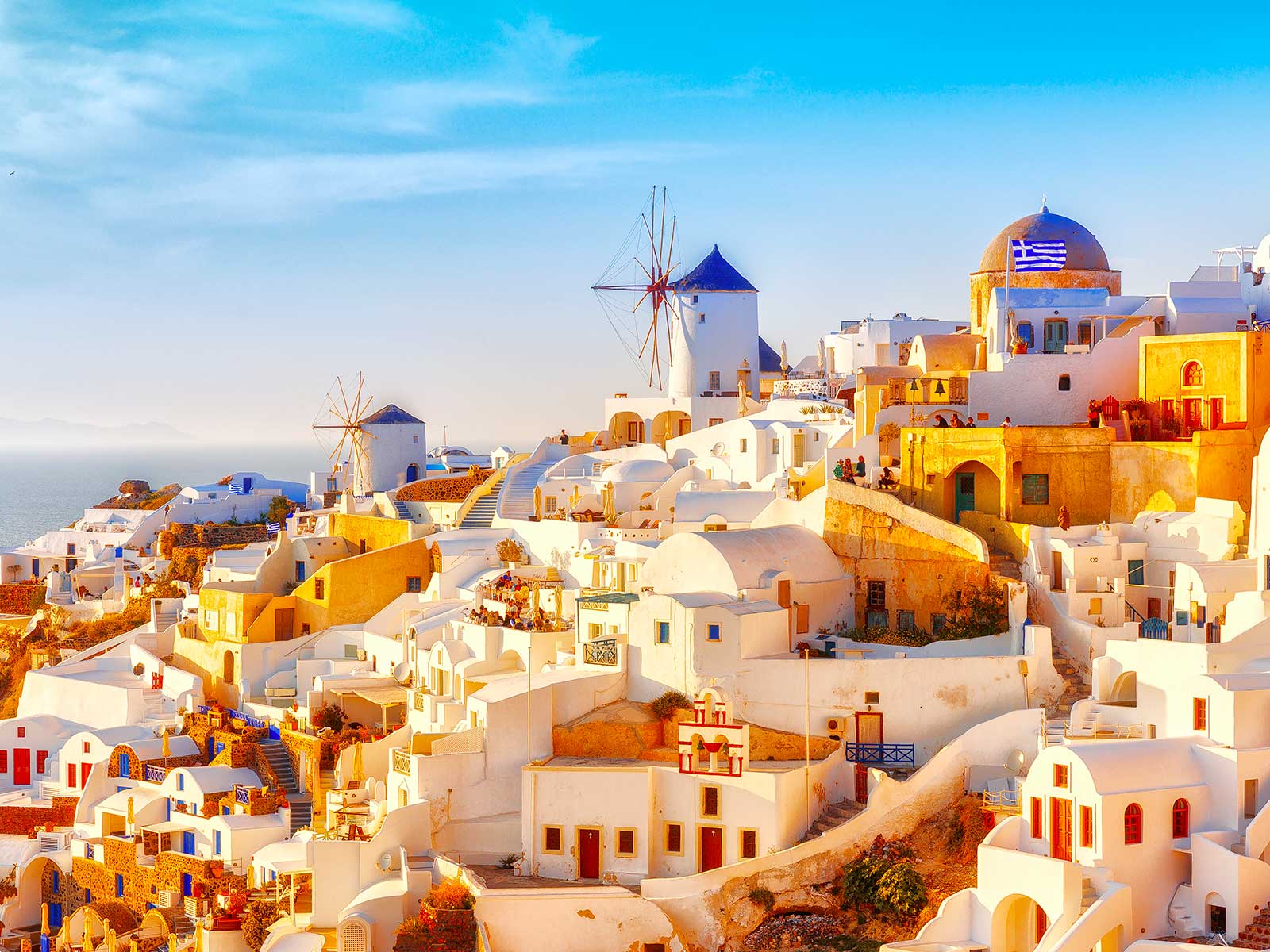
Millions visit annually to explore ancient ruins, relax on pristine beaches, and experience its unique culture. From the iconic white-washed villages of Santorini and the vibrant nightlife of Mykonos to the lush greenery of Corfu and Zakynthos, the awe-inspiring monasteries of Meteora, the serene beauty of Kefalonia, the family-friendly resorts of Halkidiki, the charming car-free island of Hydra, and the lively atmosphere of Skiathos, Greece offers a diverse array of experiences that bridge its storied past with its dynamic present.
From the earliest Minoan palaces to the bustling streets of Athens, Greece's history is a continuous narrative of innovation, struggle, and rebirth. Exploring this captivating land is to walk through the pages of time, witnessing the very foundations of Western civilization and understanding the spirit of a nation that has shaped the world.