
History of Ecuador: From Ancient Civilizations to Modern Day
Ecuador, a land of stunning natural beauty, boasts a history as rich and diverse as its landscapes. From its earliest inhabitants who shaped complex societies to the rise and fall of empires, and through colonial rule to its vibrant modern identity, Ecuador's past is a captivating tapestry of human endeavor and cultural evolution. Understanding this journey provides invaluable context for experiencing the country today.
Ancient Civilizations: The Foundations of a Nation
Long before the arrival of European explorers, Ecuador was home to a multitude of sophisticated indigenous cultures. Archaeological evidence points to human habitation dating back over 10,000 years, with distinct societies emerging across the varied geographical regions.
Early Coastal Cultures
Along the Pacific coast, some of the continent's earliest organized societies flourished. TheValdivia culture(3500-1800 BCE) is renowned for its advanced pottery, including the iconic "Venus of Valdivia" figurines, suggesting complex social and spiritual beliefs. Following them, theMachalilla(1800-1000 BCE) andChorrera(1000-300 BCE) cultures further developed ceramic artistry and trade networks, laying foundations for future coastal civilizations.
Highland and Amazonian Societies
In the Andean highlands, groups like theQuituandCañariestablished thriving communities, developing advanced agricultural techniques, intricate textiles, and distinct architectural styles. These highland groups often engaged in trade with their coastal and Amazonian neighbors, exchanging goods and cultural practices across Ecuador's diverse ecosystems. The Amazonian regions also harbored unique societies, adapting to the rainforest environment and maintaining distinct cultural identities.
The Inca Empire: A Brief but Profound Reign
By the late 15th century, the mighty Inca Empire, originating in what is now Peru, began its expansion northwards into modern-day Ecuador. This conquest, led initially by Tupac Yupanqui and later consolidated by his son Huayna Capac, was met with fierce resistance, particularly from the Cañari people in the south.
Despite the resistance, the Inca eventually integrated much of Ecuador into their vast empire, establishing administrative centers and an extensive road system (Qhapaq Ñan). They introduced new agricultural methods, administrative structures, and the Quechua language, which remains widely spoken in parts of Ecuador today. The most significant Inca site in Ecuador is Ingapirca Ruinas, a remarkable complex that served as a temple, fortress, and astronomical observatory, showcasing impressive Inca stonework and Cañari influence.
Fun Fact:The Inca Empire's northern capital was established in Tomebamba (modern-day Cuenca), and it was the favorite city of Huayna Capac, who reportedly spent more time there than in Cusco. His death in Tomebamba around 1527 from a European disease (likely smallpox) triggered a devastating civil war between his sons, Atahualpa and Huáscar, just before the arrival of the Spanish.
Spanish Conquest and Colonial Rule
The Inca civil war left the empire vulnerable. In 1532, Spanish conquistadors led by Francisco Pizarro arrived in Peru, quickly capitalizing on the internal strife. Sebastián de Benalcázar, one of Pizarro's lieutenants, led the Spanish forces into Ecuador, conquering Quito in 1534 after fierce battles against indigenous resistance, including Rumiñahui's forces.
The Spanish established theReal Audiencia de Quitoin 1563, a judicial and administrative district within the Viceroyalty of Peru (later the Viceroyalty of New Granada). For nearly 300 years, Ecuador was under Spanish colonial rule. This era saw the imposition of European laws, religion, and social structures. Indigenous populations were subjected to forced labor (encomiendaandmitasystems), leading to significant demographic decline and cultural transformation.
Colonial Quito, the administrative center, flourished, becoming a hub of religious art and architecture. Grand churches and monasteries were built, many of which still stand today, such as the magnificent Church of the Jesuits, known for its intricate gold-leaf interior. The Spanish also introduced new crops, livestock, and technologies, fundamentally altering the landscape and economy.
Struggles for Independence and the Birth of a Republic
The seeds of independence began to sprout in the late 18th and early 19th centuries, fueled by Enlightenment ideals, discontent with Spanish rule, and the weakening of the Spanish Empire. The first cry for independence in Ecuador occurred onAugust 10, 1809, in Quito, though this initial movement was quickly suppressed.
True independence came as part of a larger South American liberation movement led by figures like Simón Bolívar and Antonio José de Sucre. Sucre's decisive victory over Spanish royalist forces at theBattle of Pichincha on May 24, 1822, secured Ecuador's freedom. Following independence, Ecuador briefly joined Gran Colombia, a federation envisioned by Bolívar, which included present-day Colombia, Venezuela, and Panama.
However, political differences and regionalism led to the dissolution of Gran Colombia. OnMay 13, 1830, Ecuador declared itself a sovereign republic, marking the official birth of the modern nation.
The Republic of Ecuador: From Instability to Modernity
The early decades of the Republic were characterized by political instability, conflicts between liberal and conservative factions, and regional rivalries. Key figures emerged during this period, shaping the nation's trajectory:
- Gabriel García Moreno (1860-1875):A conservative leader who centralized power, promoted education, and connected the country through infrastructure projects, but also enforced a rigid Catholic-centric state.
- Eloy Alfaro (1895-1912):A liberal revolutionary who championed secularism, established public education, and initiated significant infrastructure developments, including the construction of the ambitious Guayaquil-Quito railway, which famously includes the engineering marvel known as La Nariz del Diablo(The Devil's Nose) section.
The 20th century saw Ecuador grappling with border disputes (most notably with Peru), the rise and fall of various governments, and the discovery of significant oil reserves in the Amazon region in the 1960s. The oil boom brought economic changes but also new challenges related to environmental impact and equitable distribution of wealth.
After periods of military rule, Ecuador transitioned back to democracy, solidifying its democratic institutions in recent decades. Today, Ecuador is a vibrant nation navigating the complexities of globalization, environmental conservation (especially in the Galápagos Islands, a UNESCO World Heritage site), and social development.
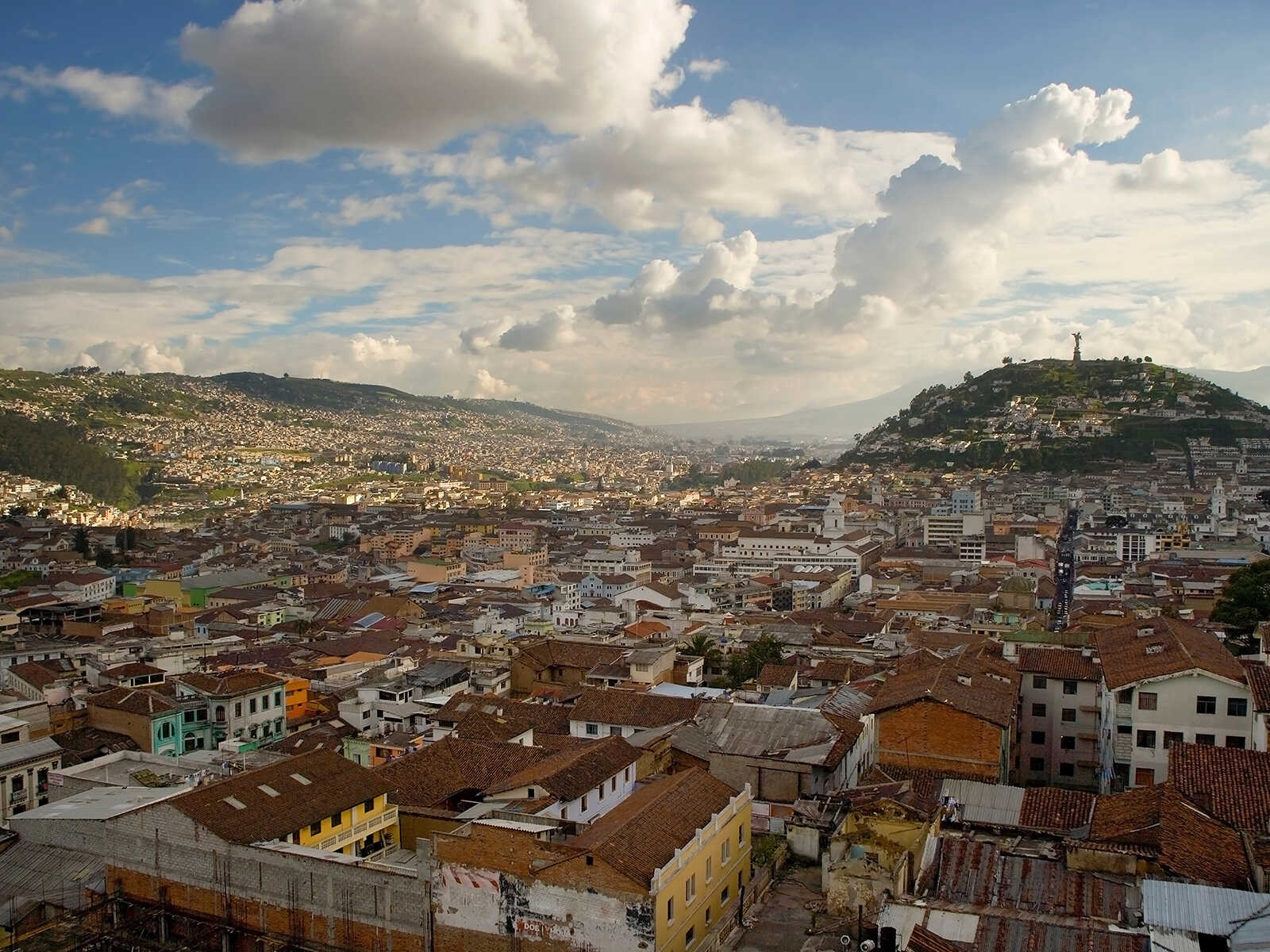
Visitors can explore the country's rich heritage at sites like the Middle of the World monument, standing on the equatorial line, or from the panoramic views atop Loma El Panecillo in Quito, which offers a breathtaking perspective of the historic city and its surrounding mountains, including the majestic Cotopaxi volcano in the distance on a clear day. The enduring legacy of its past is woven into every aspect of Ecuadorian life, from its bustling markets like Otavalo Market to its stunning natural wonders.
Ecuador's history is a testament to resilience, cultural richness, and ongoing evolution. Each era has left an indelible mark, creating a destination that offers profound historical insights alongside unparalleled natural beauty.