
History of Croatia: From Roman Ruins to Modern Independence
Croatia's history is a vibrant tapestry woven from empires, kingdoms, and struggles for freedom. From the grandeur of Roman architecture to the resilience of a modern independent nation, its past profoundly shapes the culture and landscapes visitors experience today.
Ancient Roots: Illyrians, Romans, and Early Slavs
The land now known as Croatia has been inhabited for millennia. Its earliest recorded inhabitants were the Illyrians, an ancient Indo-European people who established various tribes and kingdoms along the Adriatic coast and hinterland. Their presence left behind numerous hillforts and burial mounds.
However, it was the arrival of the Romans in the 3rd century BC that truly transformed the region. By the 1st century BC, the Romans had conquered the Illyrians, establishing the provinces of Dalmatia and Pannonia. Roman rule brought extensive infrastructure, including roads, aqueducts, and magnificent cities. Key examples of this enduring legacy can be seen in Split, where the monumental Diocletian's Palace, built for Emperor Diocletian in the 4th century AD, stands as one of the best-preserved Roman palatial complexes in the world. Similarly,Zadar boasts remnants of a Roman forum and other structures, underscoring the deep Roman influence.
As the Roman Empire declined, the region became a crossroads for various migrations. In the 7th century AD, Slavic tribes, the ancestors of modern Croats, migrated into the area, gradually assimilating or displacing the existing Romanized populations and establishing their own settlements.
Medieval Kingdoms and Dynasties
The early medieval period saw the emergence of distinct Croatian duchies. By the 9th century, these duchies had begun to consolidate, embracing Christianity. The crowning of King Tomislav in 925 AD marked the establishment of the independent Kingdom of Croatia, a powerful state that extended its influence across much of present-day Croatia and Bosnia and Herzegovina.
This period, often considered Croatia's "Golden Age," saw the development of unique Croatian culture and art. However, by 1102, after a period of dynastic struggles, Croatia entered a personal union with the Kingdom of Hungary, retaining its own parliament (Sabor) and autonomy, but sharing a monarch. This union lasted for over eight centuries, significantly shaping Croatia's political and cultural landscape, particularly in the northern regions and the city of Zagreb, which began its rise as a central hub.
Under Foreign Rule: Habsburgs, Ottomans, and Venice
The late medieval and early modern periods were characterized by external pressures and fragmentation. The Ottoman Empire's expansion into Europe from the 15th century onwards led to centuries of warfare, pushing Croatia's borders westward and dividing the historical Croatian lands. Many areas became part of the "Military Frontier," a buffer zone against Ottoman incursions.
Meanwhile, the powerful maritime Republic of Venice gained control over much of the Dalmatian coast, leaving an indelible mark on cities like Zadar,Split, and the numerous islands. Venetian architecture, lion statues, and cultural influences are still visible today.
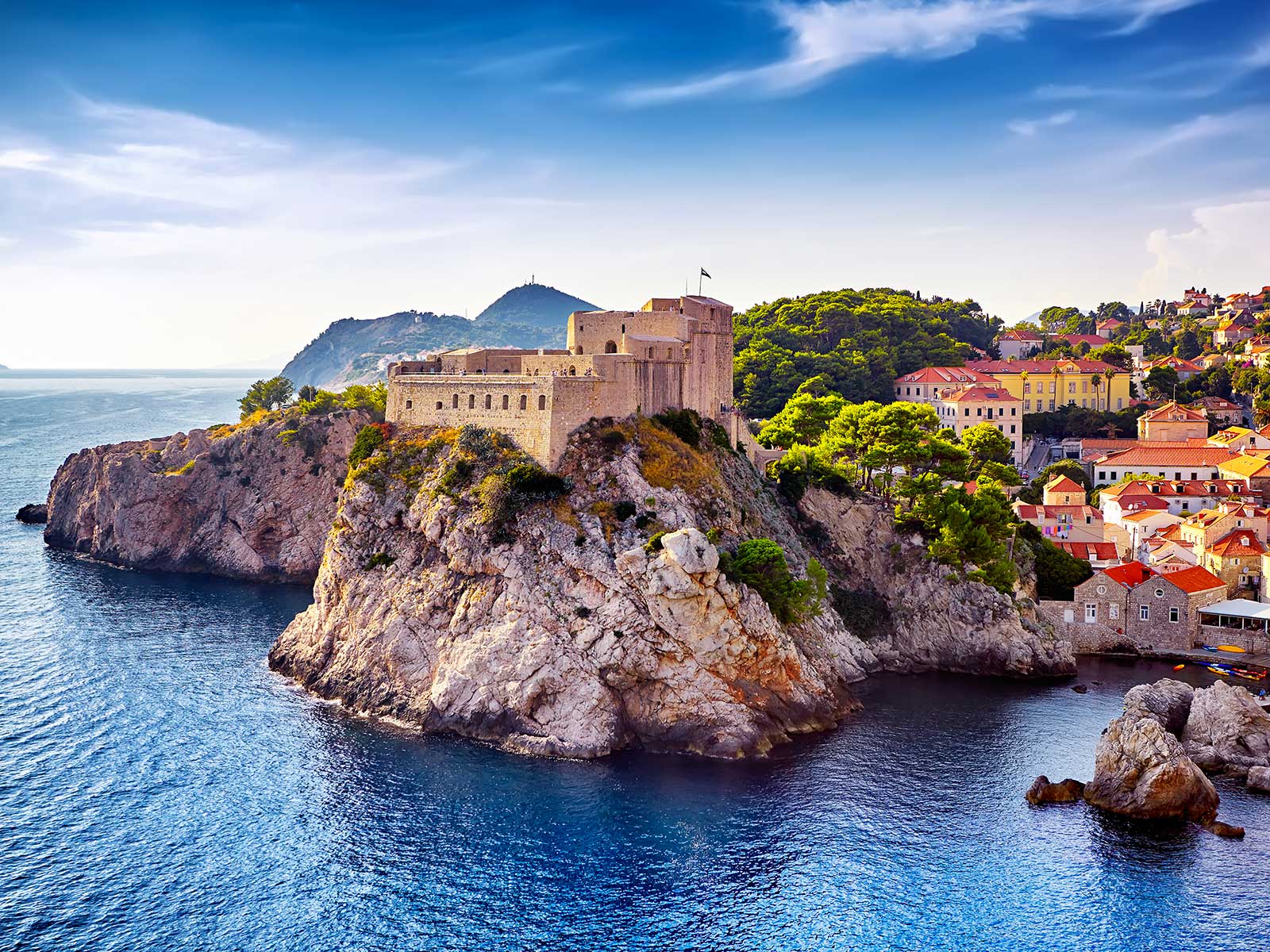
Did you know?The city-state of Dubrovnik, then known as the Republic of Ragusa, maintained its independence for centuries, skillfully navigating between major powers like Venice, the Ottomans, and the Habsburgs. Its diplomatic prowess and flourishing trade made it one of the most prosperous and culturally rich cities in the Adriatic.
By the 18th century, with the decline of the Ottoman Empire, most of Croatia came under the rule of the Habsburg Monarchy (the Austrian Empire), which later evolved into the Austro-Hungarian Empire. This period saw significant urban development, particularly in Zagreb, which grew into a modern European capital with institutions like the Cathedral of Zagreb being a prominent landmark.
The Rise of Nationalism and Yugoslavia
The 19th century witnessed a powerful surge of Croatian national awakening, known as the Illyrian Movement. This cultural and political movement championed the Croatian language, literature, and political autonomy within the Habsburg Empire, laying the groundwork for future independence aspirations.
After World War I and the collapse of the Austro-Hungarian Empire in 1918, Croatia joined the newly formed Kingdom of Serbs, Croats, and Slovenes, which was renamed Yugoslavia in 1929. This was an attempt to unite South Slavs, but it was fraught with tensions between various ethnic groups and centralizing Serbian policies.
World War II brought immense suffering and further division. Croatia was briefly established as the Independent State of Croatia, a fascist puppet state aligned with Nazi Germany, which perpetrated atrocities. However, a strong anti-fascist Partisan movement, led by Josip Broz Tito, emerged, fighting both the Axis powers and their collaborators. Following the war, Croatia became a constituent republic within the Socialist Federal Republic of Yugoslavia, a communist state under Tito's leadership, which pursued a non-aligned foreign policy.
Towards Independence: The Homeland War
The death of Tito in 1980 and the subsequent decline of communism across Eastern Europe led to a resurgence of nationalistic sentiments within Yugoslavia. Economic disparities and political tensions between the republics escalated. In 1991, following a referendum, Croatia declared its independence from Yugoslavia.
This declaration sparked the Croatian War of Independence (Domovinski Rat, or Homeland War), as Serb-dominated forces within Yugoslavia and local Serb militias resisted the secession. The war, lasting from 1991 to 1995, involved fierce fighting, including the tragic siege of cities like Vukovar and the shelling of Dubrovnik from Srđ mountain. The conflict resulted in significant loss of life, displacement, and widespread destruction.
In 1995, Croatia launched Operation Storm (Oluja), a decisive military offensive that effectively ended the war and restored Croatian sovereignty over most of its territory. This paved the way for international recognition and the arduous process of post-war reconstruction.
Modern Croatia: A European Nation
Since gaining full independence, Croatia has made remarkable progress. The country embarked on a path of democratic reform, economic transition, and integration into European and international structures. It joined NATO in 2009 and achieved its long-held goal of becoming a full member of the European Union in 2013.
Today, Croatia is a vibrant, modern European nation. Its rich history and stunning natural beauty, from the ancient walls of Dubrovnik to the waterfalls of Plitvice Lakes National Park, have made it one of the most popular tourist destinations in the world. Visitors can explore Roman ruins, medieval towns, Habsburg-era architecture in Zagreb, and vibrant coastal cities like Split and Zadar, all while experiencing the warmth of Croatian hospitality and a dynamic culture shaped by centuries of diverse influences.
The scars of the past are slowly fading, replaced by a confident nation proud of its heritage and looking forward to its future within the global community.