
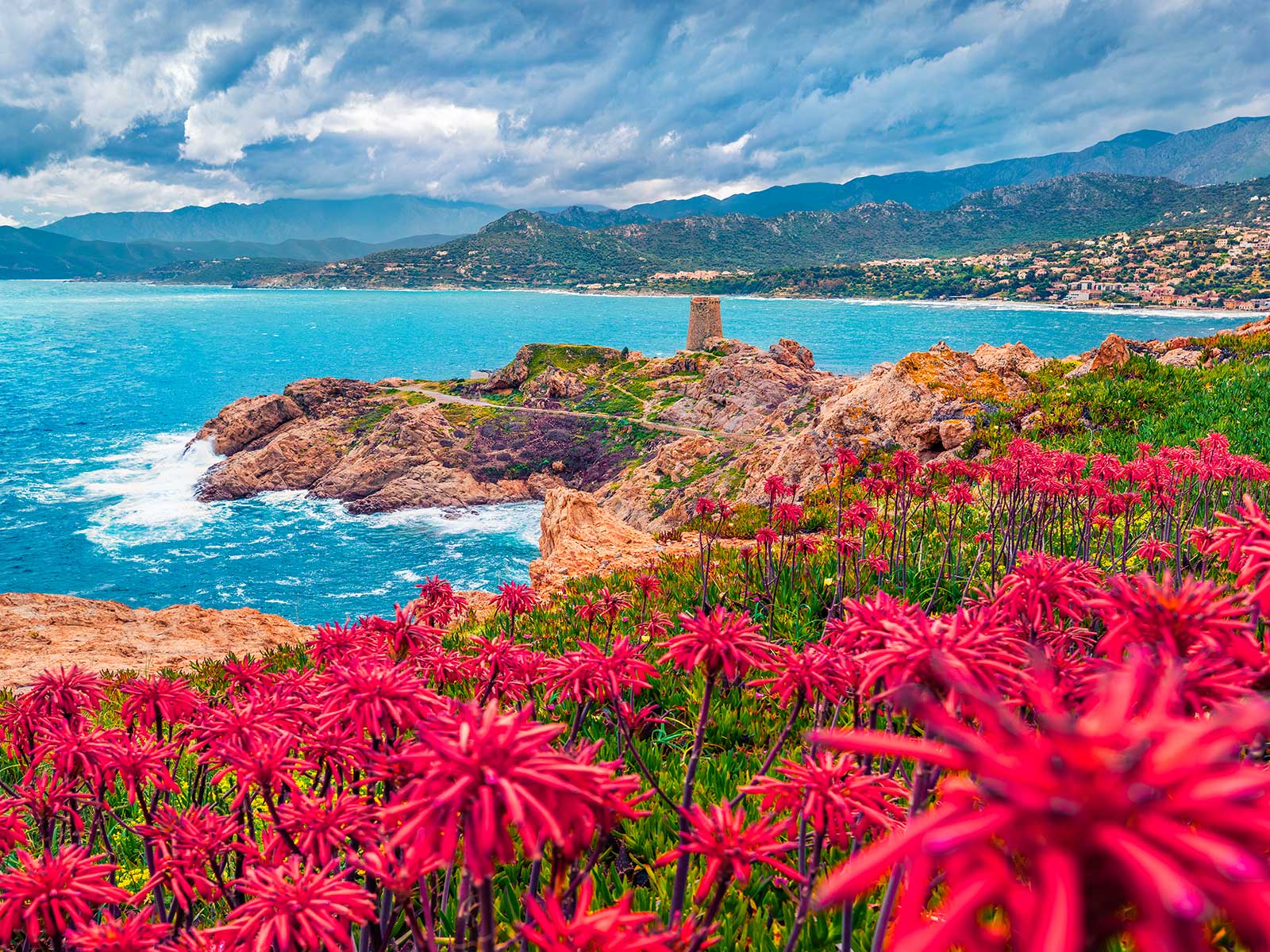
Corsica's Geography & Regions: Unveiling the Island's Diversity
Often dubbed the "Île de Beauté" (Island of Beauty), Corsica is a microcosm of diverse landscapes, where rugged mountains plunge into the azure Mediterranean Sea. Its unique geography has shaped its history, culture, and the distinct character of its many regions, offering an unparalleled tapestry for every traveler.
This comprehensive guide delves into the island's captivating geography, exploring its major features and distinct regions to help you understand and plan your Corsican adventure.
The Mountainous Heart: Corsica's Spine
At the core of Corsica's identity is its formidable mountain range, making it the most mountainous island in the Mediterranean. Over two-thirds of the island is covered by mountains, with approximately 20 peaks exceeding 2,000 meters (6,500 feet) in elevation. The highest point, Monte Cinto, proudly stands at 2,706 meters (8,878 feet).
This dramatic topography is a hiker's paradise, home to the legendary GR20, one of Europe's most challenging long-distance treks. Beyond the famous trails, countless shorter routes lead through ancient forests, past glacial lakes, and along crystal-clear rivers. The island's interior is a stark contrast to its sunny coastline, with cooler temperatures, dense maquis shrubland, and chestnut forests. These mountains are the source of numerous rivers, carving out deep gorges and creating stunning waterfalls, such as the impressive Cascades de Purcaraccia, offering refreshing natural pools for a summer dip.
Fun Fact:Corsica is often referred to as a "mountain in the sea" due to its dramatic elevation changes, with peaks visible from the coast just a few kilometers inland.
The Diverse Coastlines: From Rugged Cliffs to Golden Sands
Corsica boasts over 1,000 kilometers (620 miles) of coastline, each stretch offering a unique charm and character.
The Wild West Coast
The western coast is arguably the most dramatic, characterized by its reddish-orange granite cliffs, hidden coves, and spectacular rock formations. This is where you'll find UNESCO World Heritage Sites like the breathtaking Calanques de Piana, with their sculpted porphyry rocks plunging into the sea, and the pristine Scandola Nature Reserve, accessible primarily by boat, protecting a rich marine and terrestrial ecosystem.
Major towns along this coast include the capital of Corse-du-Sud,Ajaccio, a vibrant city with a rich history, and the picturesque coastal town of Porto.
The Sun-Drenched South
The southern coast is famous for its dazzling white sand beaches and turquoise waters, reminiscent of tropical paradises. Iconic spots include the famous Palombaggia Beach and Santa Giulia Beach near Porto-Vecchio, perfect for swimming, sunbathing, and watersports. Further south, the dramatic cliff-top town of Bonifacio stands proudly on white limestone cliffs, overlooking the Strait of Bonifacio and offering boat trips to the nearby Lavezzi islands, a protected marine reserve.
The Gentler East Coast
In contrast to the rugged west and south, Corsica's eastern coast is generally flatter, characterized by long, sweeping stretches of sandy beaches backed by agricultural plains (the Plaine Orientale). This region is less developed for tourism than the south, offering a more tranquil experience and a glimpse into Corsica's agricultural heartland.
The Untamed North: Cap Corse and Désert des Agriates
The northern tip of the island is dominated by Cap Corse, a wild and mountainous peninsula stretching like a finger into the sea. Its dramatic, windswept landscapes are dotted with ancient Genoese towers, charming fishing villages, and terraced vineyards. To its west lies the unique Désert des Agriates, a vast, arid wilderness of maquis, beaches, and rocky outcrops, once cultivated but now preserved for its rugged beauty, accessible by 4x4 or boat to its stunning beaches like Saleccia.
Key Regions: Administrative & Cultural Divisions
Administratively, Corsica is divided into two departments, each with distinct characteristics:
Haute-Corse (Upper Corsica)
Encompassing the northern part of the island, Haute-Corse is characterized by its wilder landscapes, higher mountains, and a strong sense of traditional Corsican identity. It includes:
- Cap Corse:The dramatic northern peninsula, known for its scenic coastal road and remote villages.
- Balagne:Often called the "Garden of Corsica," this region on the northwest coast is famous for its olive groves, charming hilltop villages (like Sant'Antonino), and beautiful beaches around Calvi and L'Île-Rousse.
- Castagniccia:A densely forested, mountainous region in the northeast, known for its ancient chestnut groves (which historically fed the population) and remote, authentic villages.
- Nebbio:An agricultural valley nestled between Cap Corse and the Désert des Agriates, famous for its Patrimonio vineyards.
- Cortenaise:The central mountainous region surrounding Corte, Corsica's historical capital, offering access to many high-altitude hiking trails.
Corse-du-Sud (Southern Corsica)
The southern department is generally more developed for tourism, with its iconic beaches, vibrant towns, and slightly gentler landscapes (though still very mountainous in its interior). Key areas include:
- Ajaccio Region:Home to Ajaccio, the capital of Corsica and birthplace of Napoleon Bonaparte. This area offers a mix of urban amenities, beautiful beaches, and easy access to the western mountains.
- Sartène & Alta Rocca:A rugged, authentic region in the deep south, characterized by dense maquis, ancient megalithic sites (Filitosa), and traditional villages like Sartène, often considered "the most Corsican of Corsican towns."
- Porto-Vecchio &Bonifacio Region:This southeastern corner is the island's premier beach destination, with stunning white sands and vibrant nightlife in Porto-Vecchio.Bonifacio, with its dramatic clifftop setting, is a must-see for its history and natural beauty.
Understanding the Micro-Climates
Corsica's varied geography also leads to significant micro-climates. While the coasts enjoy a Mediterranean climate with hot, dry summers and mild, wet winters, the mountainous interior experiences cooler temperatures, more rainfall, and even snow in winter. This allows for a unique juxtaposition: you can ski in the mountains in the morning and sunbathe on the beach in the afternoon during certain times of the year.
Conclusion: An Island of Endless Discovery
From the granite peaks of the interior to the dramatic red cliffs of the west, the pristine white sands of the south, and the wild beauty of Cap Corse, Corsica's geography is a testament to its extraordinary diversity. Each region offers a unique experience, inviting travelers to explore its rugged mountains, idyllic beaches, ancient forests, and charming villages. Unveiling Corsica's geographical tapestry is the first step to unlocking an unforgettable journey on this truly captivating island.