
Best Time to Visit Cape Verde: Weather, Activities, and Events
Cape Verde, an archipelago nation off the west coast of Africa, offers an enticing blend of sun, sea, and unique culture. With its year-round warm climate, deciding the "best" time to visit often depends on your preferred activities and what kind of weather you enjoy most.
This guide delves into Cape Verde's distinct seasons, helping you plan the perfect trip based on weather patterns, exciting activities, and vibrant local events.
Understanding Cape Verde's Climate
Cape Verde enjoys a tropical, dry climate influenced by the Atlantic Ocean and Saharan winds. The islands generally experience two main seasons:
- Dry Season (November to June):Characterized by consistently warm temperatures, abundant sunshine, lower humidity, and steady trade winds. This is generally considered the peak tourist season.
- Wet Season (July to October):Often referred to as the "green season," this period brings slightly higher temperatures, increased humidity, and occasional, short-lived rainfall, particularly in August and September. Winds are generally calmer.
Temperatures across the islands remain relatively stable throughout the year, typically ranging from 24°C to 30°C (75°F to 86°F). The ocean maintains a pleasant swimming temperature, averaging 23°C to 27°C (73°F to 81°F).
The Dry Season: November to June
This extended dry period is Cape Verde's most popular time for visitors, offering ideal conditions for a wide range of activities.
Weather Highlights
- November - February:Mildest temperatures, around 24-27°C (75-81°F). Cooler evenings (a light jacket might be needed). Steady, fresh trade winds.
- March - June:Temperatures gradually rise, reaching 27-30°C (81-86°F) by June. Winds remain consistent, making for pleasant days.
Activities and Events
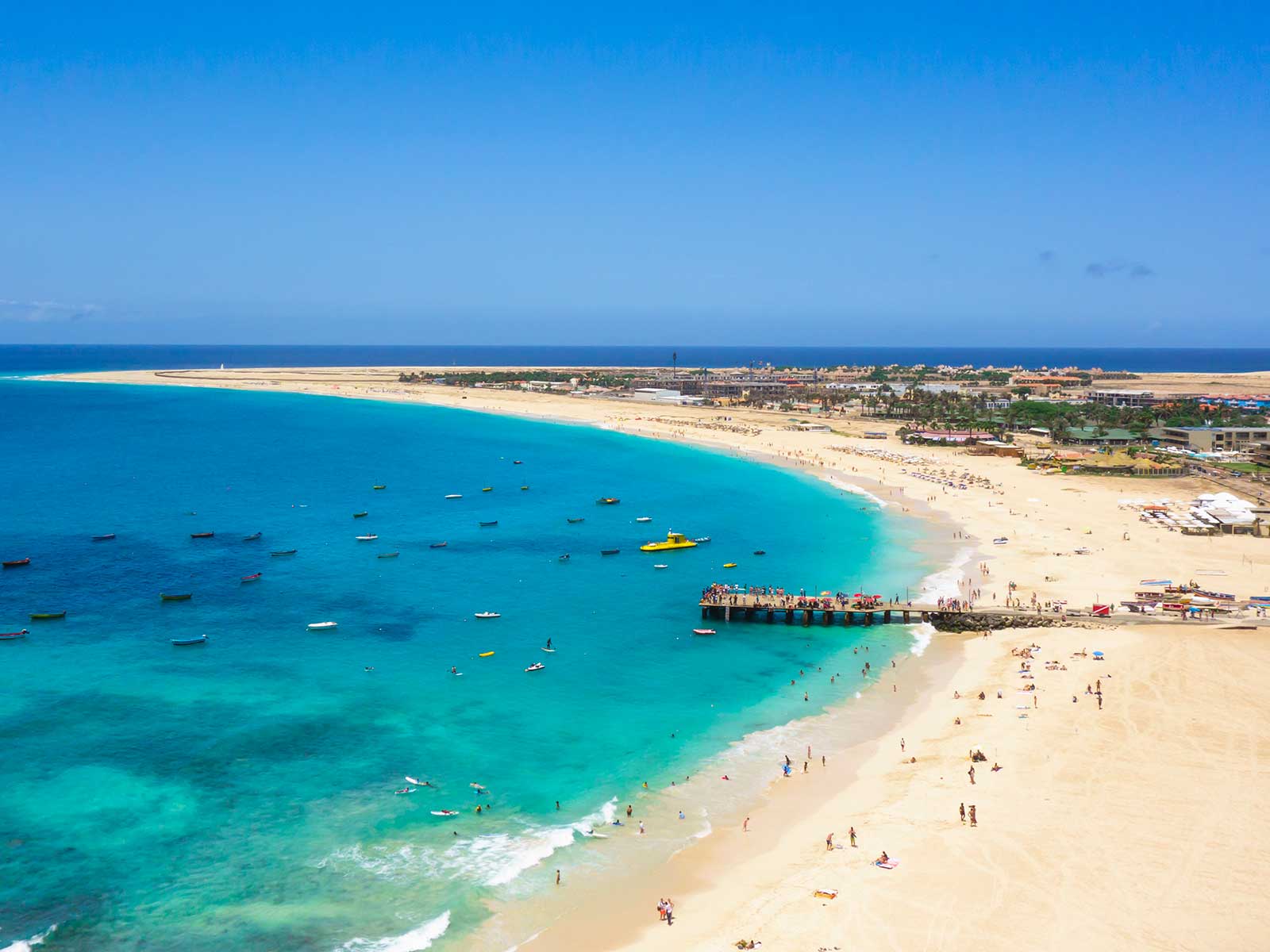
- Beach Holidays & Sunbathing:With abundant sunshine and minimal rain, this is prime time for relaxing on the stunning beaches of Sal Island,Boa Vista, and Maio. Popular spots include Praia de Chaves and Praia de Santa Mónica on Boa Vista, or Tarrafal beach on Santiago Island.
- Water Sports:The consistent trade winds make Cape Verde a world-class destination for kitesurfing and windsurfing, especially from November to April.Sal Island is particularly renowned for its conditions. Surfing can also be excellent, with good swells from November to March.
- Hiking & Trekking:The cooler, drier months are perfect for exploring the lush valleys and dramatic volcanic landscapes of islands like Santo Antão and Fogo Island. Climbing Pico de Fogo is more comfortable during this season.
- Whale Watching:Humpback whales migrate through Cape Verdean waters, with the peak viewing season typically running from March to May, particularly around Boa Vista.
- Cultural Exploration:Discover the unique natural wonders like the Blue Eye at Buracona on Sal Island, or the desert landscapes of Deserto de Viana on Boa Vista.
Travel Tip:If you plan to visit during the peak Christmas/New Year period or for Carnival, book flights and accommodation well in advance, as prices will be at their highest.
Key Events During the Dry Season
- Christmas & New Year (December):A festive atmosphere across the islands, with special celebrations and events.
- Carnival (February/March):Cape Verde's most spectacular annual event, particularly vibrant on São Vicente, where the Mindelo Carnival rivals those of Brazil. Expect colourful parades, music, and dancing.
The Wet Season: July to October
While called the "wet season," rainfall is typically sporadic and short-lived, often occurring as tropical showers that quickly give way to sunshine. This period offers a different, often quieter, experience.
Weather Highlights
- July - October:Hottest months, with temperatures often reaching 28-32°C (82-90°F). Humidity is higher, making it feel warmer. Winds are generally lighter, and the sea is calmer.
- August - September:The period most likely to see rain, though it's rarely disruptive. The landscapes become greener, especially on the more mountainous islands.
Activities and Events
- Turtle Nesting:This is a major draw for the wet season. Loggerhead sea turtles come ashore to lay their eggs from July to October, primarily on Boa Vista and Sal Island. Guided tours are available to witness this incredible natural spectacle.
- Surfing:While the dry season has consistent wind swells, the wet season can bring larger Atlantic swells, offering excellent conditions for experienced surfers on certain breaks.
- Fishing:The calmer seas can be ideal for deep-sea fishing excursions, targeting species like marlin and tuna.
- Exploring Lush Landscapes:Post-rain, the more verdant islands like Santo Antão and Santiago Island are at their most beautiful, with vibrant flora. Be prepared for higher humidity if hiking.
Key Events During the Wet Season
- Independence Day (July 5th):A national holiday celebrated across the archipelago.
- Music Festivals (August/September):Several islands host vibrant music festivals during this period, showcasing local talent and international acts. Notable events include the Baía das Gatas Festival on São Vicente and the Santa Maria Music Festival on Sal Island.
Choosing Your Best Time to Visit
Ultimately, the best time to visit Cape Verde depends on your priorities:
- For Sun Worshippers & Beach Lovers:November to Juneoffers consistently sunny days, lower humidity, and pleasant temperatures for lounging on the sand and swimming.
- For Water Sports Enthusiasts (Kitesurfing/Windsurfing):November to Aprilprovides the strongest, most reliable trade winds.
- For Hikers & Trekkers:November to Mayoffers cooler temperatures and less humidity, making exploration of Santo Antão or Fogo Island more comfortable.
- For Wildlife Spotters (Whales & Turtles):
- Whale Watching:March to Mayis prime time for humpback whales.
- Turtle Nesting:July to Octoberoffers the best chance to witness loggerhead turtles.
- For Cultural Immersion & Festivals:ConsiderFebruary/Marchfor Carnival on São Vicente, orAugust/Septemberfor music festivals.
- For Budget Travellers & Fewer Crowds:The shoulder months ofJuneandOctober/November, or the heart of the wet season (July-September), generally see fewer tourists and potentially lower prices for flights and accommodation.
Conclusion
Cape Verde truly is a year-round destination, each season offering its own unique charm and set of experiences. Whether you're chasing the perfect wave, seeking serene beach days, embarking on a hiking adventure, or hoping to witness incredible wildlife, this captivating archipelago has something to offer. By considering your personal preferences and the seasonal variations, you can pinpoint the ideal time for your unforgettable Cape Verdean escape.