
Best Time to Visit Canada: Province-by-Province Weather Guide
Canada, a country of immense natural beauty and diverse landscapes, offers a unique experience in every season. Deciding the "best time" to visit truly depends on your desired activities and the specific region you plan to explore, as its vastness encompasses a multitude of climates. This guide will help you navigate Canada's weather patterns province by province, ensuring you plan the perfect trip.
Before diving into specific regions, here's a general overview of Canada's seasons:
- Summer (June to August):Generally the most popular time, offering warm temperatures across most of the country, ideal for hiking, camping, and city exploration. Expect larger crowds and higher prices.
- Fall (September to October):Crisp air, fewer crowds, and breathtaking foliage, especially in Eastern Canada. Temperatures are cooler but pleasant.
- Winter (November to March):A wonderland for snow sports enthusiasts, with opportunities for skiing, snowboarding, ice skating, and Northern Lights viewing. Temperatures can be very cold, especially inland and in the North.
- Spring (April to May):A transition period with melting snow, budding flowers, and fewer tourists. Weather can be unpredictable, but it's great for wildlife viewing and lower costs.
Western Canada
British Columbia
British Columbia boasts incredibly varied climates, from the mild, rainy Pacific coast to the dry, hot interior and the snowy mountains.
- Coastal Regions (Vancouver, Victoria,Granville Island,Salt Spring Island):Summers (July-August) are warm and dry (20-25°C), perfect for exploring. Winters are mild and wet (5-10°C), with infrequent snow. Spring and fall offer pleasant temperatures and fewer crowds.
- Interior & Mountains (Whistler, Kelowna,Golden,Cheakamus Lake,Watersprite Lake):Summers are hot and dry (25-35°C), ideal for hiking and lake activities. Winters are cold and snowy, making it a prime destination for skiing and snowboarding from December to April.
Tip:For whale watching off the coast of Vancouver Island, visit between May and October.
Alberta
Known for its stunning Rocky Mountains and vast prairies, Alberta experiences distinct seasons.
- Rocky Mountains (Banff, Jasper,Lake Louise,Malign Lake,Mount Edith Cavell):Summers (July-August) are glorious, with daytime temperatures around 20-25°C, perfect for hiking, kayaking, and sightseeing. Nights can be cool. Winters (December-March) are cold and snowy, ideal for skiing and ice skating, with temperatures often -5°C to -15°C, but feeling colder.
- Prairies (Calgary, Edmonton):Summers are warm to hot (20-30°C) with occasional thunderstorms. Winters are cold (-10°C to -25°C) and dry, often broken by warm Chinook winds that can temporarily raise temperatures above freezing.
Saskatchewan
Saskatchewan's continental climate means hot summers and very cold winters, with clear skies dominating both seasons.
- Summer (July-August):Warm to hot days (25-30°C) are perfect for exploring the province's many lakes and national parks.
- Winter (December-February):Extremely cold temperatures (-15°C to -30°C, often colder with wind chill) characterize winter, making it suitable for ice fishing and snowmobiling for the hardy.
Manitoba
Similar to Saskatchewan, Manitoba experiences extreme temperature swings.
- Summer (July-August):Hot and often humid (25-30°C), ideal for outdoor festivals and lake activities.
- Winter (December-February):Very cold and snowy, with temperatures frequently dropping below -25°C. Churchill, in northern Manitoba, is famous for polar bear viewing in October and November.
Central Canada
Ontario
Ontario's climate varies significantly between its southern and northern regions.
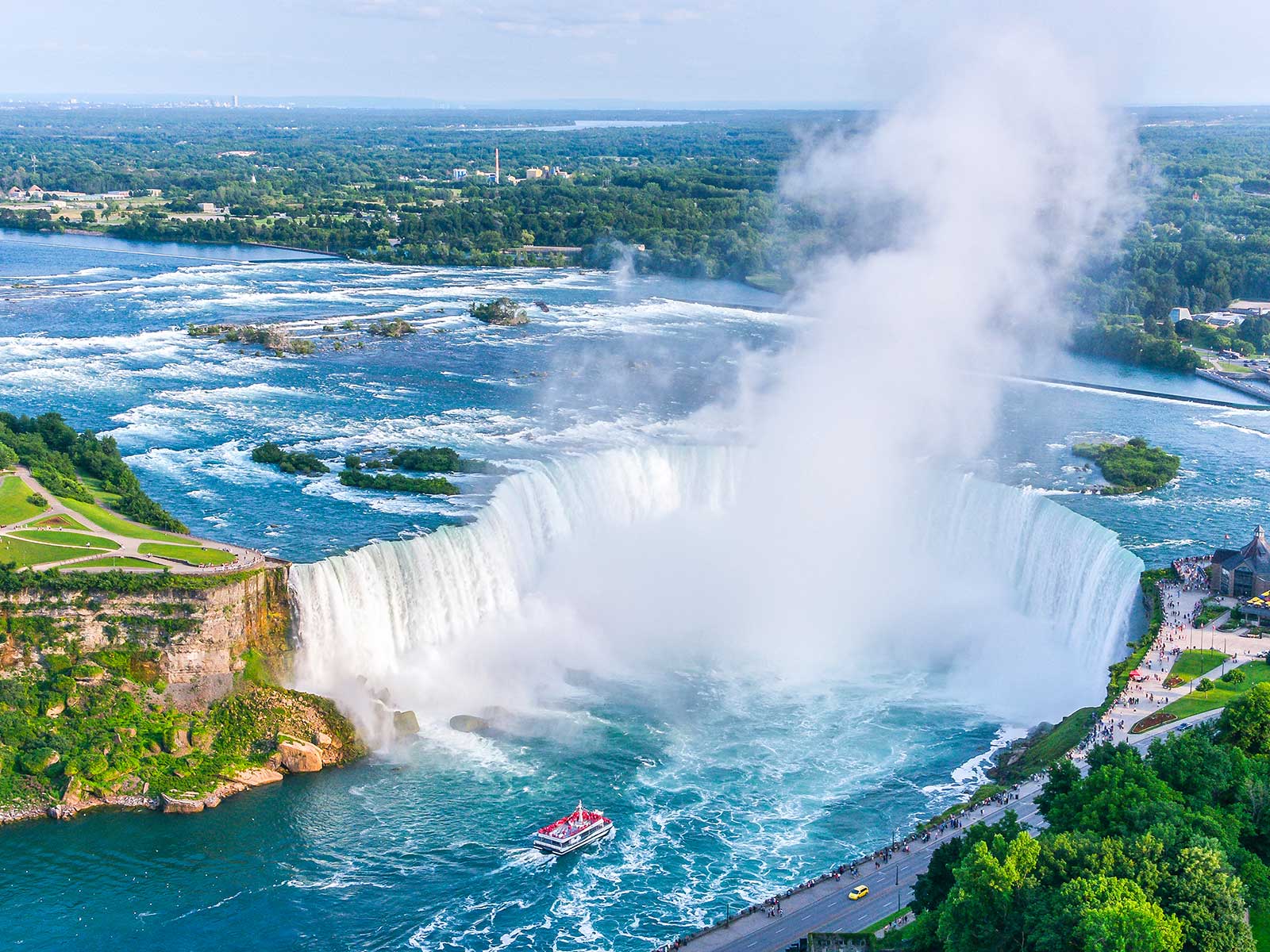
- Southern Ontario (Toronto,CN Tower,Niagara Falls):Summers (June-August) are warm to hot and humid (25-30°C), perfect for city exploration, lake activities, and festivals. Winters (December-March) are cold and snowy, with temperatures often around -5°C to -15°C, ideal for ice skating and winter sports.
- Northern Ontario:Winters are much longer and colder, with heavy snowfall. Summers are shorter and milder.
Quebec
Quebec, a vast province, has a continental climate, with some variation towards the coast.
- Southern Quebec (Montreal, Quebec City,Laurentian Mountains):Summers (July-August) are warm and often humid (20-28°C), great for city walks and outdoor dining. Fall (September-October) is spectacular for viewing vibrant autumn foliage. Winters (December-March) are cold and snowy (-10°C to -20°C), perfect for skiing and winter carnivals.
- Eastern Quebec (Gaspé Peninsula,Forillon National Park Of Canada,Percé Rock):Slightly milder summers and colder, snowier winters due to coastal influence.
Fun Fact:Quebec City hosts the world's largest winter carnival, the Carnaval de Québec, every February.
Atlantic Canada
The Atlantic provinces are heavily influenced by the ocean, leading to milder winters and cooler summers compared to inland provinces, but with more precipitation.
New Brunswick
New Brunswick experiences a humid continental climate.
- Summer (July-August):Warm and pleasant (20-25°C), ideal for exploring coastal areas and the Bay of Fundy.
- Fall (September-October):Beautiful foliage displays and mild temperatures.
- Winter (December-March):Cold and snowy, suitable for snowmobiling and cross-country skiing.
Nova Scotia
Nova Scotia has a moderate maritime climate.
- Summer (July-August):Mild and comfortable (20-25°C), perfect for coastal drives, exploring Peggy's Cove, or visiting Cape Sable Island.
- Fall (September-October):Crisp air and stunning autumn colours, especially along the Cabot Trail.
- Winter (December-March):Milder than inland Canada, but still cold with significant snowfall and occasional rain.
Prince Edward Island
Canada's smallest province, PEI, enjoys a similar maritime climate to Nova Scotia.
- Summer (July-August):Warm and sunny (20-25°C), making its red sand beaches and cycling trails very appealing.
- Fall (September-October):Pleasant temperatures and picturesque fall colours.
- Winter (December-March):Cold and snowy, with strong winds.
Newfoundland and Labrador
This province has a diverse climate, from maritime on the island to subarctic in Labrador.
- Newfoundland Island:Summers (July-August) are mild (18-22°C) and often foggy, excellent for iceberg viewing (late May-June) and puffin tours. Winters (December-March) are cold with heavy snowfall, especially inland.
- Labrador:Experiences colder, harsher winters and cooler summers.
The North
The Canadian North is characterized by long, extremely cold winters and short, cool summers. This region is prime for aurora borealis viewing.
Yukon
Yukon has a subarctic continental climate.
- Summer (June-August):Short, mild to warm days (15-25°C) with long daylight hours (the "midnight sun"), ideal for hiking and exploring the Dempster Highway.
- Winter (November-March):Long, extremely cold, and dark, with temperatures often below -30°C. Best time for Northern Lights viewing (late August to April).
Northwest Territories
Experiences a similar subarctic climate, with even colder winters inland.
- Summer (June-August):Mild (15-20°C) with extended daylight, great for fishing in Great Slave Lake and wildlife viewing.
- Winter (November-March):Brutally cold, with temperatures frequently -25°C to -40°C.Yellowknife is renowned as one of the best places in the world to see the aurora borealis, particularly from late August to early April.
Nunavut
The Arctic climate of Nunavut means very long, cold winters and very short, cool summers.
- Summer (July-August):The brief window of slightly warmer weather (5-15°C) is best for wildlife viewing (polar bears, seals, whales) and exploring unique landscapes.
- Winter (October-May):Extremely cold, dark, and snowy, with temperatures often below -30°C, offering incredible opportunities for aurora viewing and authentic Inuit cultural experiences.
Conclusion
Canada's sheer size means there's no single "best" time to visit. Whether you dream of sunny hikes in the Rockies, vibrant fall foliage in Quebec, whale watching off the Atlantic coast, or witnessing the Northern Lights dance across the Arctic sky, Canada offers a unique seasonal charm in every province and territory. By considering the specific weather patterns and your desired activities, you can plan an unforgettable Canadian adventure tailored perfectly to your preferences.