
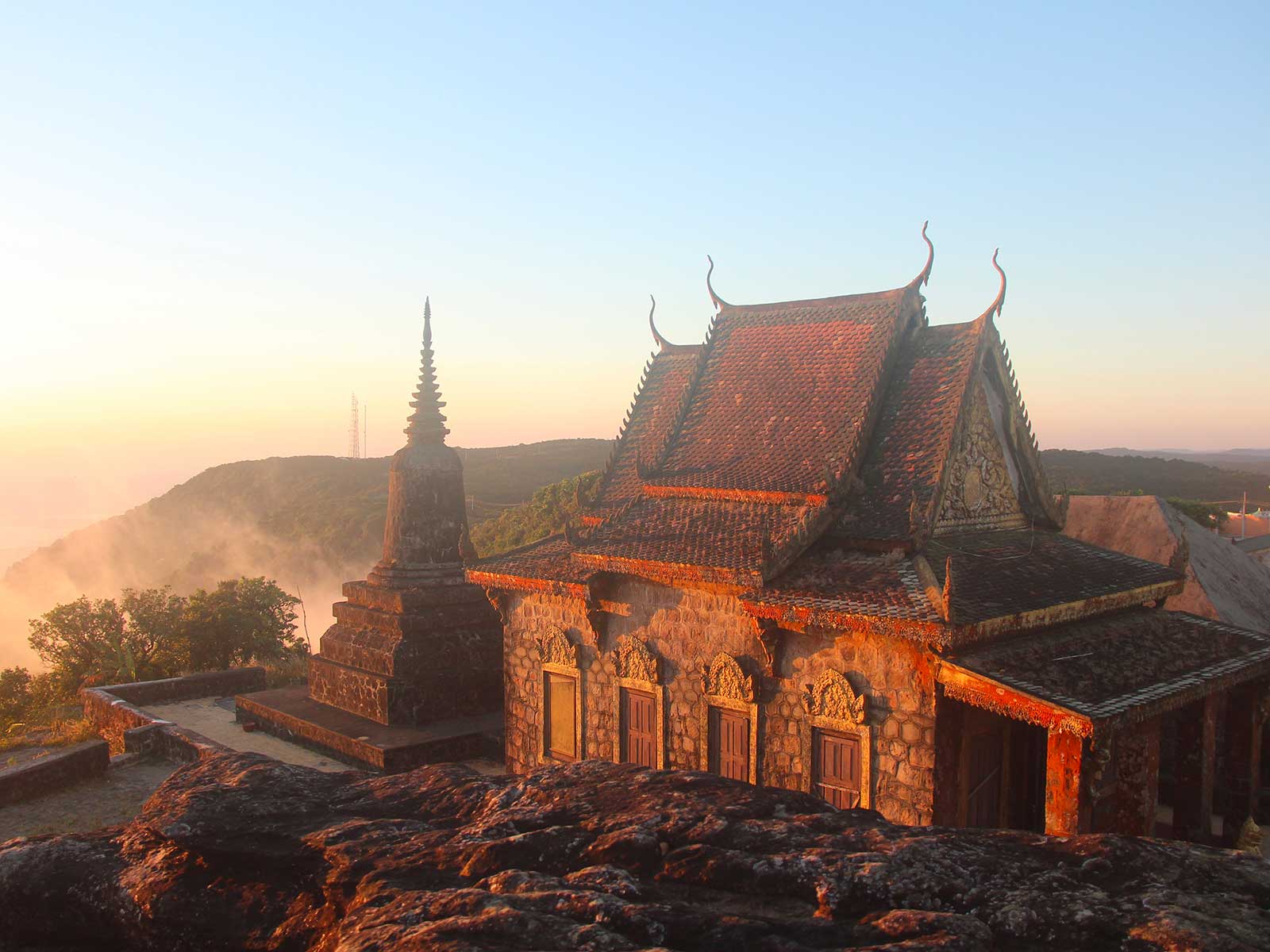
A Brief History of Cambodia: From Ancient Empires to Modern Day
Cambodia, a nation famed for its breathtaking temples and serene landscapes, possesses a history as rich and intricate as the carvings on its ancient stones. From powerful empires that shaped Southeast Asia to periods of profound challenge and inspiring resilience, understanding Cambodia's past is key to appreciating its vibrant present.
The Dawn of Kingdoms: Funan and Chenla (1st - 9th Century AD)
Cambodia's story begins with the Funan kingdom, emerging around the 1st century AD in the Mekong Delta. This powerful maritime state thrived on trade, establishing crucial links between India and China. Indian cultural influence, including Hinduism and Buddhism, art, and writing systems, profoundly shaped Funan society.
By the 6th century, Funan began to wane, giving way to the Chenla kingdom. Initially a vassal state, Chenla absorbed Funan's territories and shifted the focus from maritime trade to land-based agricultural power. The kingdom eventually fragmented into 'Land Chenla' and 'Water Chenla,' setting the stage for the rise of a unified, even more powerful empire centered around the fertile plains surrounding Tonlé Sap Lake.
The Golden Age: The Khmer Empire (9th - 15th Century)
The undisputed zenith of Cambodian history arrived with the Khmer Empire. In 802 AD, Jayavarman II was consecrated as a "devaraja" (god-king) on Phnom Kulen, unifying various principalities and declaring independence, thus founding the empire. For over 600 years, the Khmer Empire dominated much of Southeast Asia, leaving an indelible legacy of architectural and artistic brilliance.
The empire's heart was the Angkor region, where successive kings constructed an astonishing series of temple complexes, cities, and sophisticated hydraulic systems. Kings like Suryavarman II, responsible for the magnificent Angkor Wat in the 12th century, and Jayavarman VII, who built Angkor Thom and the enigmatic Bayon temple, oversaw periods of immense prosperity and artistic flourishing. These structures were not merely religious sites but also symbols of imperial power and complex cosmic diagrams.
Beyond Angkor Wat, the empire's reach is evidenced by other impressive sites like Prasat Preah Vihear, a stunning temple complex perched atop a cliff on the border with Thailand, showcasing the advanced engineering and aesthetic sensibilities of the Khmer people.
A Period of Decline: The Post-Angkor Era (15th - 19th Century)
The decline of the Khmer Empire began around the 15th century. While the exact reasons are debated, factors include prolonged wars with neighboring Siam (Thailand) and Vietnam, climate change, internal strife, and the over-reliance on the complex hydraulic system. Angkor was eventually abandoned as the capital, and the center of power shifted southeast, eventually settling in Phnom Penh.
This period, often referred to as Cambodia's "Dark Ages," saw the kingdom severely weakened and frequently caught between its more powerful neighbors. Much territory was lost, and Cambodia struggled to maintain its sovereignty.
French Colonial Rule (1863 - 1953)
Facing annexation by Siam and Vietnam, King Norodom sought protection from France, leading to Cambodia becoming a French Protectorate in 1863. While French rule brought some stability and infrastructure development, such as roads and railways, it also saw the exploitation of resources and the suppression of Cambodian nationalism.
The French were instrumental in rediscovering and preserving the ancient temples of Angkor, drawing international attention to Cambodia's rich heritage. During this era, cities like Phnom Penh saw significant development, and regional centers like Kampot,Kep, and Krong Battambang grew as administrative and commercial hubs, often featuring distinctive colonial architecture.
Independence and the Shadows of War (1953 - 1975)
Cambodia gained full independence from France in 1953 under the leadership of King Norodom Sihanouk. For a time, Sihanouk navigated a path of neutrality, attempting to keep Cambodia out of the escalating conflicts in neighboring Vietnam and Laos. However, the Vietnam War inevitably spilled over Cambodia's borders.
The country became a clandestine battleground, with Vietnamese communist forces using Cambodian territory as sanctuaries and supply routes. This led to extensive American bombing campaigns in eastern Cambodia, destabilizing the country and contributing to the rise of the Khmer Rouge, a radical communist movement led by Pol Pot.
The Horrors of the Khmer Rouge (1975 - 1979)
In April 1975, the Khmer Rouge marched into Phnom Penh, ending the civil war and ushering in one of the darkest periods of the 20th century. Their vision was to transform Cambodia into a purely agrarian, classless society, free from foreign influence and modern institutions. They immediately evacuated all cities, forcing millions into the countryside to work in collective farms and labor camps.
"The Cambodian genocide, perpetrated by the Khmer Rouge, stands as one of the darkest chapters in human history, claiming the lives of an estimated 1.5 to 2 million people – nearly a quarter of the population – through execution, starvation, disease, and overwork."
Intellectuals, professionals, ethnic minorities, and anyone perceived as a threat to the regime were systematically purged. This brutal regime was eventually overthrown by a Vietnamese invasion in late 1978, which installed a new government in 1979.
Recovery and Rebuilding (1979 - Present)
The overthrow of the Khmer Rouge did not immediately bring peace. Cambodia endured another decade of civil war, with various factions, including remnants of the Khmer Rouge, fighting against the Vietnamese-backed government. In 1991, the Paris Peace Accords paved the way for the United Nations Transitional Authority in Cambodia (UNTAC) to oversee elections and establish a new constitution.
Since the mid-1990s, Cambodia has embarked on a path of reconstruction and development. While challenges like poverty, corruption, and political stability remain, the country has made significant strides. Tourism, particularly to Angkor Wat, has become a vital economic driver. Efforts are also being made to develop sustainable tourism in areas like Kratie, known for its Irrawaddy dolphins, and the lush Cardamom Mountains, a biodiversity hotspot.
Modern Cambodia is a nation of contrasts, blending ancient traditions with rapid development. Coastal areas like Sihanoukville and islands like Koh Rong Sanleom are popular beach destinations, while the eastern province of Mondulkiri offers unique elephant conservation experiences and natural beauty. The country's resilience and vibrant spirit are evident in its people and its ongoing journey of progress.
Experiencing Cambodia's Rich History Today
Visiting Cambodia today offers a profound journey through time. From the awe-inspiring grandeur of the Khmer Empire at Angkor Wat to the solemn reminders of recent tragedy at the Killing Fields, the country's past is palpably present. Yet, alongside these historical echoes, you'll find a resilient and welcoming people, a burgeoning modern culture, and landscapes of breathtaking beauty. Cambodia invites you to discover its enduring spirit and the captivating narrative of its remarkable history.