
The History of Brunei: From Ancient Sultanates to Modern Nation
Brunei Darussalam, a small yet historically rich nation on the island of Borneo, boasts a captivating past that spans centuries. From its humble beginnings as a maritime trading hub to its current status as a prosperous modern state, Brunei's journey is one of resilience, power, and transformation.
Early Beginnings and the Golden Age of the Bruneian Empire
The earliest records of a Bruneian polity date back to Chinese chronicles from the Song and Yuan dynasties (960-1368 AD), referring to a place called "Poli" or "Poni" which is believed to be Brunei. These early mentions highlight its strategic location and its role as a key trading post in Southeast Asia, connecting routes between China, India, and the Malay Archipelago.
The formal establishment of the Sultanate of Brunei is traditionally attributed to Awang Alak Betatar, who converted to Islam and became Sultan Muhammad Shah in the 14th century. This conversion marked a pivotal moment, intertwining the state's identity with Islam and setting the stage for its future trajectory. The nascent sultanate quickly grew in influence, benefiting from its control over lucrative trade routes and abundant natural resources.
The 15th and 16th centuries marked the zenith of the Bruneian Empire. Under powerful rulers like Sultan Bolkiah (the 5th Sultan), the empire's reach extended across much of Borneo, including parts of modern-day Sarawak and Sabah, and even reaching the southern Philippines. This period, often referred to as Brunei's Golden Age, saw the sultanate become a dominant maritime power, fostering rich cultural and economic exchanges.
Did you know?Kampong Ayer, Brunei's historic water village, has been continuously inhabited for over 1,300 years, making it one of the oldest and largest water settlements in the world. It stands as a living testament to Brunei's ancient maritime traditions.
European encounters began in the 16th century, with Portuguese and Spanish explorers documenting Brunei's power and prosperity. Ferdinand Magellan's fleet visited Brunei in 1521, offering vivid descriptions of its grandeur. However, these interactions also brought conflict, notably the Castilian War in 1578, where Spanish forces briefly occupied Brunei Town before being repelled.
Decline and the Rise of European Influence
Following its Golden Age, the Bruneian Empire began a gradual decline from the late 17th century onwards. A combination of factors contributed to this, including internal dynastic disputes, the rise of competing regional powers, and the increasing presence of European colonial powers. Piracy also became a significant problem, disrupting trade and weakening the sultanate's control over its vast territories.
The 19th century proved to be a particularly challenging period. The British, seeking to expand their influence and suppress piracy, started to chip away at Brunei's territorial integrity. James Brooke, a British adventurer, was granted vast territories in Sarawak in exchange for his help in quelling a rebellion, establishing the Brooke Rajahs. Over subsequent decades, more land was ceded to the Brooke Rajahs and the British North Borneo Company, drastically shrinking Brunei's once-sprawling empire to its present-day size.
In 1888, Brunei became a British Protectorate, effectively placing its foreign affairs under British control. While the Sultan retained internal sovereignty, this agreement marked the end of Brunei's full independence and solidified British influence in the region.
The British Protectorate and World War II
The early 20th century brought significant changes, most notably the discovery of oil in Seria in 1929. This momentous find transformed Brunei's economic landscape, laying the foundation for its future prosperity. Oil revenues began to flow, leading to gradual improvements in infrastructure and social services, albeit under British administration.
The tranquility was shattered with the outbreak of World War II. Japanese forces invaded Brunei in December 1941, occupying the country for over three years. This period was marked by hardship, economic disruption, and loss of life. Allied forces, predominantly Australian, liberated Brunei in June 1945, and the country was then placed under British Military Administration before civil government was restored.
Towards Independence and Modern Brunei
After World War II, Brunei continued as a British Protectorate, but the winds of change were blowing across the globe. Post-war constitutional developments aimed at greater self-governance. In 1959, a new constitution was promulgated, granting Brunei internal self-government while Britain remained responsible for defence and foreign affairs.
A significant juncture arose in the early 1960s with the proposal to form the Federation of Malaysia. While initially considered, Brunei ultimately decided not to join, primarily due to disagreements over the distribution of oil revenues and the status of the Sultan. This decision paved the way for Brunei to pursue its own path towards full independence.
On January 1, 1984, Brunei Darussalam achieved full independence from the United Kingdom. His Majesty Sultan Haji Hassanal Bolkiah Mu'izzaddin Waddaulah, the 29th Sultan, became the head of state, continuing a lineage that dates back to the 14th century. The celebration of independence was a momentous occasion, symbolizing the culmination of centuries of history and the dawn of a new era.
Since independence, Brunei has transformed into a modern, prosperous nation, largely fueled by its oil and gas reserves. The government has prioritized education, healthcare, and social welfare, providing its citizens with a high quality of life. Efforts are also underway to diversify the economy beyond hydrocarbons, focusing on sectors like tourism, finance, and Islamic banking.
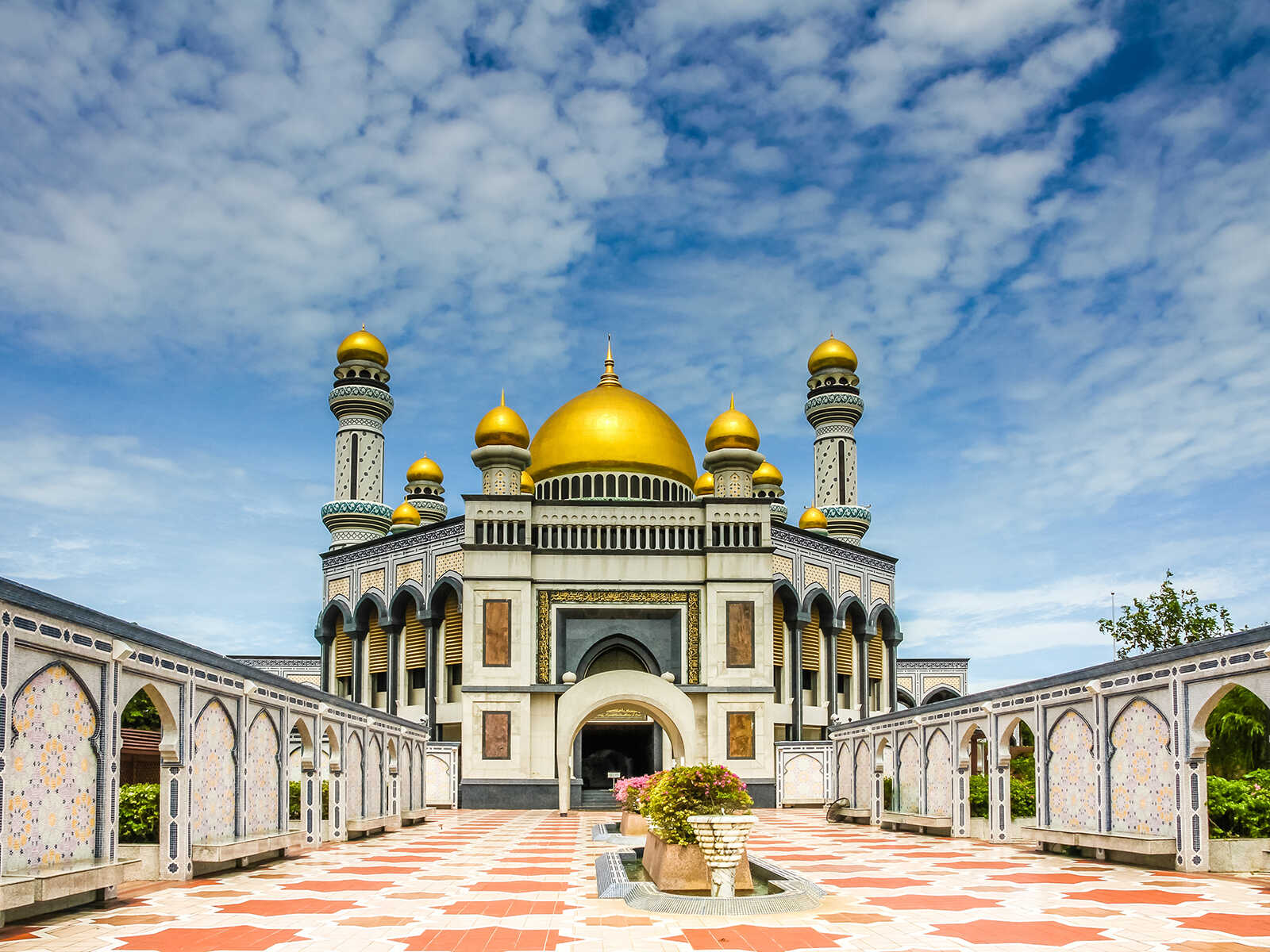
Modern Brunei proudly showcases its heritage while embracing progress. Iconic structures like the majestic Omar Ali Saifuddin Mosque and the grand Jame' Asr Hassanil Bolkiah Mosque stand as testaments to the nation's deep Islamic faith and architectural prowess. The Royal Regalia Museum offers visitors a glimpse into the Sultanate's rich traditions and the regalia used during coronations and royal ceremonies.
Brunei's history is a compelling narrative of a resilient kingdom that navigated the complexities of regional rivalries and colonial expansion to emerge as a stable and prosperous sovereign state. Its journey from ancient trading hub to a modern, independent nation is a testament to its enduring cultural identity and strategic significance in Southeast Asia. While the nation has modernized, its commitment to preserving its rich heritage, exemplified by sites like Ulu Temburong National Park which protects its natural wonders, remains strong.