
Exploring Brunei's Stunning Mosques: A Visitor's Guide
Brunei Darussalam, the "Abode of Peace," is a nation deeply rooted in Islamic faith, and this is beautifully reflected in its magnificent mosques. These architectural marvels are not just places of worship but also iconic landmarks, offering visitors a glimpse into the country's spiritual heart and rich cultural heritage.
The Significance of Mosques in Brunei
Islam is the official religion of Brunei, and its principles permeate all aspects of Bruneian life. Mosques stand as central pillars of the community, serving as spiritual centers for daily prayers, Friday congregations, and religious education. They are also symbols of national pride and the Sultanate's commitment to preserving Islamic traditions. The grandeur and intricate designs of Brunei's mosques showcase a blend of traditional Islamic architecture with modern influences, often featuring exquisite craftsmanship, opulent materials, and serene settings.
Must-Visit Mosques in Brunei
Sultan Omar Ali Saifuddien Mosque
Undoubtedly one of Southeast Asia's most iconic mosques, the Omar Ali Saifuddin Mosque is a breathtaking spectacle. Named after the 28th Sultan of Brunei, this mosque is a stunning example of modern Islamic architecture. Completed in 1958, its main dome is covered in pure gold, shimmering brilliantly under the Bruneian sun. The mosque is surrounded by an artificial lagoon, featuring a replica of a 16th-century Mahligai barge, which adds to its picturesque charm, especially at sunset.
Inside, the mosque boasts lavish interiors with Italian marble floors, stained-glass windows, and intricate mosaics. While non-Muslims are generally welcome to visit outside of prayer times, access to certain areas may be restricted to maintain the sanctity of the worship space.
Jame' Asr Hassanil Bolkiah Mosque
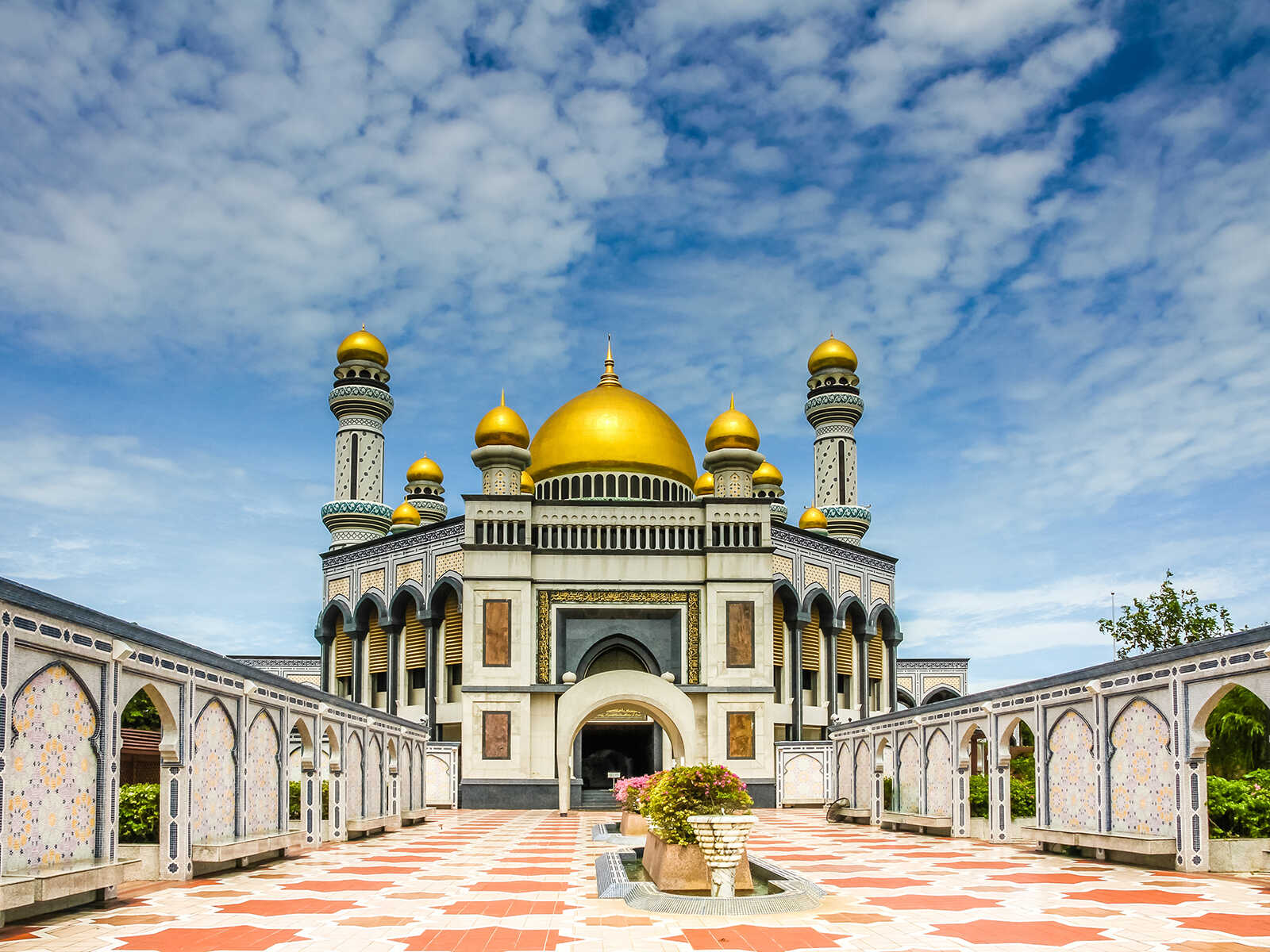
Often referred to as the Kiarong Mosque, the Jame' Asr Hassanil Bolkiah Mosque is the largest mosque in Brunei and a truly impressive sight. It was built to commemorate the 29th Sultan of Brunei, Hassanal Bolkiah, and features 29 golden domes, symbolizing the 29th ruler. Its grand scale and intricate detailing make it a masterpiece of contemporary Islamic design.
The mosque’s sprawling grounds include beautifully landscaped gardens and fountains, providing a serene environment. Inside, visitors will find opulent chandeliers, exquisite calligraphy, and intricate patterns that reflect the highest standards of Islamic art and architecture. The Jame' Asr Hassanil Bolkiah Mosque can accommodate several thousand worshippers, making it a significant center for the Bruneian Muslim community.
Ash-Shaliheen Mosque
Located near the Prime Minister's Office, the Ash-Shaliheen Mosque offers a distinct architectural style compared to its more famous counterparts. Its design draws inspiration from Moroccan and Andalusian architecture, featuring red brickwork, intricate tile patterns, and a unique minaret. Completed in 1999, it provides a fascinating contrast and demonstrates the diverse architectural influences present in Brunei.
Interesting Fact:The Ash-Shaliheen Mosque's design, inspired by the Alhambra in Spain, includes distinct geometric patterns and traditional Moroccan elements, making it a unique addition to Brunei's mosque landscape.
Al-Ameerah Al-Hajjah Maryam Mosque
Situated in the Jerudong area, the Al-Ameerah Al-Hajjah Maryam Mosque, though perhaps less frequented by tourists than the two grand mosques in the capital, is nonetheless a beautiful and significant place of worship. Its clean lines and elegant design offer a peaceful atmosphere, reflecting modern interpretations of Islamic architecture.
Visitor Etiquette for Mosques
To ensure a respectful and rewarding visit to Brunei's mosques, it's essential to observe proper etiquette:
- Dress Modestly:Both men and women should dress modestly. For women, this typically means covering your head, shoulders, and knees. Long sleeves and trousers or a long skirt are recommended. Some mosques provide abayas (full-length cloaks) and headscarves for visitors. Men should wear long trousers and a shirt with sleeves.
- Remove Footwear:Always remove your shoes before entering the prayer halls or any carpeted areas of the mosque. Look for designated shoe racks.
- Respect Prayer Times:Mosques are active places of worship. Non-Muslims are generally requested to avoid visiting during prayer times, especially during Friday prayers. Check visiting hours beforehand.
- Maintain Silence:Speak softly and avoid any loud conversations or disruptive behavior. Remember, it is a sacred space.
- Photography:Photography is often permitted in the exterior areas and sometimes inside, but always be respectful. Avoid taking photos of worshippers without their explicit permission, and refrain from using flash during prayer times.
- No Public Displays of Affection:Maintain a respectful distance and avoid any public displays of affection.
Beyond the Mosques: Exploring Brunei
While Brunei's mosques are undoubtedly highlights, the country offers a wealth of other experiences. After immersing yourself in the spiritual grandeur, consider delving into the nation's regal history at the Royal Regalia Museum, which showcases artifacts from the Sultan's coronation and various gifts received.
For a taste of local life, a visit to Kampong Ayer, the historic water village, is a must. Here, you can witness a community thriving on stilts above the Brunei River, offering a unique cultural insight. If you're an nature enthusiast, consider an excursion to the pristine rainforests of Ulu Temburong National Park for an unforgettable eco-adventure, though it's a journey outside the capital.
Tips for a Rewarding Visit
Planning your visit thoughtfully can enhance your experience:
- Transportation:Taxis and ride-sharing services are available for getting around Bandar Seri Begawan and to the mosques. Some local buses also serve the main routes.
- Best Time to Visit:The cooler, drier months from February to April often provide more comfortable weather for exploring. Early mornings or late afternoons are ideal for photography and avoiding the midday heat.
- Guided Tours:While self-exploration is easy, a local guide can provide deeper insights into the history, architecture, and cultural significance of the mosques.
- Hydration:Brunei's tropical climate means it can be hot and humid. Carry water, especially when walking between sites.
Exploring Brunei's stunning mosques is more than just sightseeing; it's an immersive journey into the heart of a devout nation. Each mosque tells a story of faith, heritage, and architectural brilliance, leaving visitors with a profound appreciation for Brunei's unique identity.