
A Guide to Brunei's Islamic Architecture and Heritage
Brunei Darussalam, the "Abode of Peace," is a sovereign Islamic sultanate where faith and culture are inextricably woven into the fabric of daily life. This deep devotion is beautifully expressed through its magnificent Islamic architecture and rich heritage, offering visitors a profound glimpse into a unique Southeast Asian nation.
The Heart of Faith: Iconic Mosques of Brunei
Brunei's skyline is dominated by the shimmering domes and towering minarets of its grand mosques, each a testament to meticulous craftsmanship and spiritual devotion. These structures are not merely places of worship but also cultural landmarks that tell the story of the nation's Islamic identity.
The Omar Ali Saifuddin Mosque: A Vision of Grandeur
Often hailed as one of the most beautiful mosques in the Asia Pacific, the Omar Ali Saifuddin Mosque in Bandar Seri Begawan is an exquisite example of modern Islamic architecture blended with Italian and Mughal influences. Completed in 1958, it stands majestically on an artificial lagoon, its golden dome reflecting brilliantly in the water, creating a postcard-perfect scene.
The mosque features marble minarets and domes, a main dome covered in pure gold, and a stunning interior adorned with stained glass windows, intricate mosaics, and imported materials from various countries, including granite from Shanghai and crystal chandeliers from England. A stone ceremonial barge, a replica of a 16th-century royal barge, floats in the lagoon, adding to its ethereal beauty.
Travel Tip:Non-Muslim visitors are generally welcome outside of prayer times. Remember to dress modestly, and women may be provided with a robe (abaya) and headscarf to wear during their visit.
Jame' Asr Hassanil Bolkiah Mosque: A Symbol of Modern Brunei
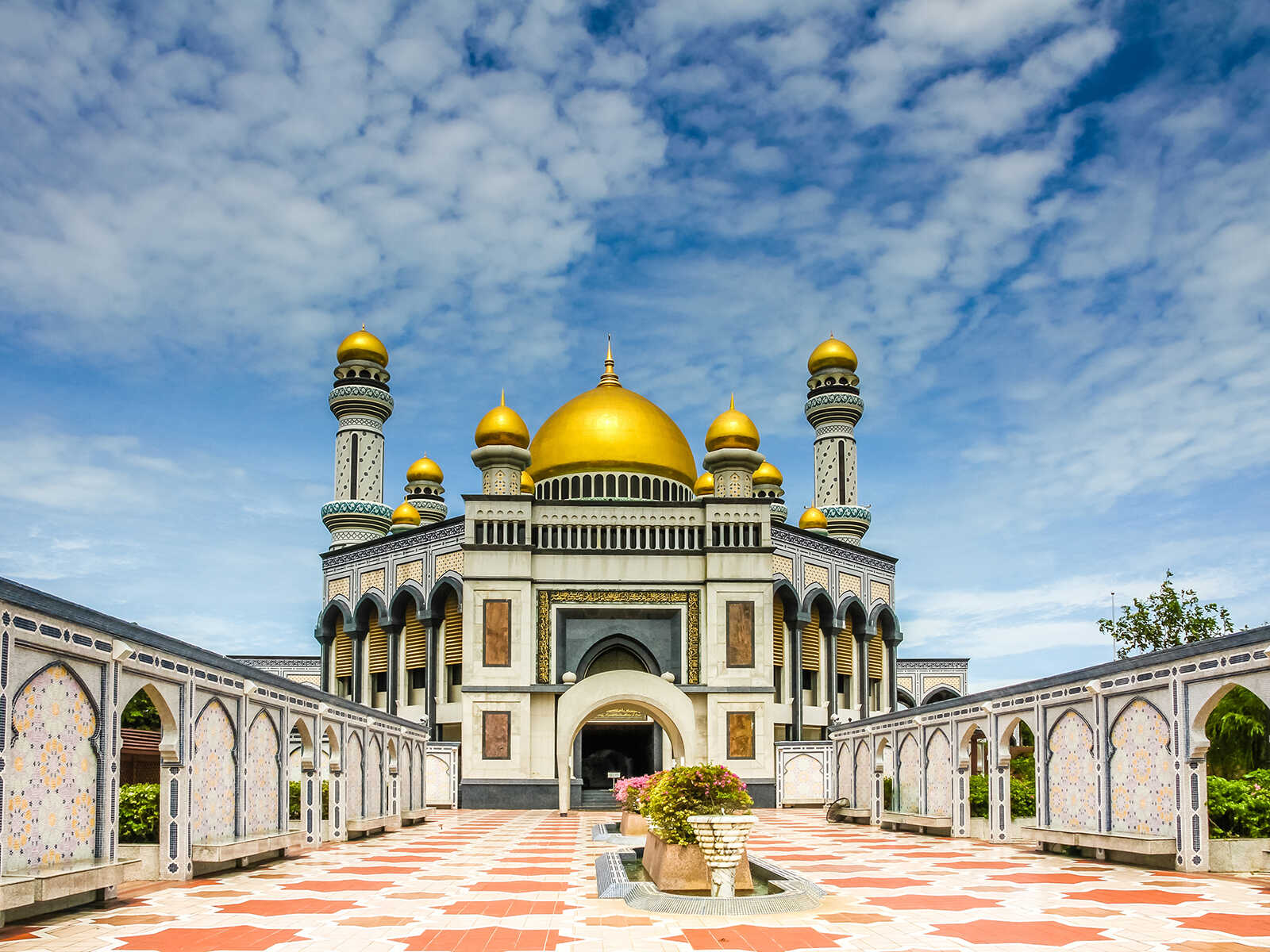
Equally impressive, and sometimes referred to as the Kiarong Mosque, the Jame' Asr Hassanil Bolkiah Mosque is the largest mosque in Brunei and a stunning example of contemporary Islamic design. Built to commemorate the current Sultan's reign, its 29 golden domes symbolize the 29th Sultan of Brunei. The mosque boasts four towering minarets, each reaching 58 meters (190 feet).
Inside, the mosque is lavishly decorated with intricate patterns, marble, and beautiful calligraphy. The expansive prayer halls, separate for men and women, can accommodate thousands of worshippers. Its vast, well-maintained gardens and courtyards provide a serene atmosphere, making it a prominent landmark and a vibrant centre for Islamic learning and prayer.
Other Architectural Gems
Beyond these two titans, numerous other mosques across Brunei showcase diverse architectural styles, from traditional Malay designs to more contemporary interpretations. Each one, regardless of size, serves as a community hub and a visual reminder of the nation's faith.
Beyond the Mosques: Preserving Heritage
Brunei's Islamic heritage extends far beyond its places of worship, encompassing its unique cultural practices, historical sites, and the preservation of its royal legacy.
Kampong Ayer: The Water Village's Enduring Legacy
Known as the "Venice of the East,"Kampong Ayer is a historic water village that has been continuously inhabited for over 1,300 years. This sprawling settlement of stilt houses connected by wooden walkways offers a living testament to traditional Bruneian life. While not overtly architectural in the grand sense of mosques, its unique construction and community spirit embody a significant part of Brunei's heritage.
Here, you'll find mosques, schools, police stations, and even fire brigades, all built on stilts above the Brunei River. A visit to Kampong Ayer provides a fascinating insight into the traditional Malay way of life, intertwined with Islamic customs and community values that have been passed down through generations.
The Royal Regalia Museum: A Glimpse into the Sultanate's History
To truly understand Brunei's identity, a visit to the Royal Regalia Museum is essential. Housed in a magnificent building, the museum showcases a rich collection of artifacts related to the Sultanate's history and the life of His Majesty Sultan Hassanal Bolkiah. While not strictly an architectural marvel in itself, its contents beautifully illustrate the historical and cultural heritage that underpins Brunei's Islamic monarchy.
Visitors can marvel at the royal chariot used during the 1992 Silver Jubilee, the Sultan's coronation regalia, ceremonial armoury, and a vast collection of gifts received by the Sultan from world leaders. The museum offers context to the nation's deep reverence for its monarchy and its Islamic traditions.
Islamic Arts and Calligraphy
Brunei's commitment to Islamic art is evident in the intricate designs found within its mosques and public buildings. Geometric patterns, floral motifs, and beautiful Arabic calligraphy adorn walls, ceilings, and domes. These artistic expressions are not merely decorative but convey deep spiritual meanings, reflecting the unity of God and the beauty of creation. Observing these details offers a deeper appreciation for the artistry ingrained in Brunei's Islamic identity.
Cultural Traditions and Festivals
Islamic festivals are celebrated with great fervor in Brunei, providing a vibrant display of its cultural heritage.Hari Raya Aidilfitri(Eid al-Fitr), marking the end of Ramadan, is a time of open houses, family gatherings, and prayer. Similarly,Hari Raya Aidiladha(Eid al-Adha) emphasizes sacrifice and charity. These events offer a unique opportunity to witness the communal spirit and religious devotion that define Bruneian society.
Practical Tips for Exploring Brunei's Islamic Heritage
To make the most of your visit while showing respect for local customs:
- Dress Code:When visiting mosques or other religious sites, modest attire is essential. For women, this typically means covering your head, shoulders, and knees. Men should wear long trousers and shirts with sleeves.
- Visiting Hours:Mosques are generally open to non-Muslim visitors outside of prayer times. It's advisable to check specific opening hours, especially during Friday prayers (mid-day) or major Islamic holidays.
- Photography:Photography is usually permitted in the courtyards and exteriors of mosques. Inside, it's often restricted or requires permission. Always be respectful and avoid photographing worshippers without explicit consent.
- Footwear:Remove your shoes before entering any mosque or a private home in accordance with local customs.
- Ramadan:If you visit during the fasting month of Ramadan, be mindful that many locals will be fasting from dawn till dusk. While restaurants generally remain open for non-Muslims, it's courteous to eat discreetly.
Brunei Darussalam offers a truly unique travel experience, where the echoes of ancient traditions resonate alongside modern development. Its Islamic architecture and rich heritage provide not just visual splendor but a profound insight into a culture shaped by faith, history, and a deep sense of peace.